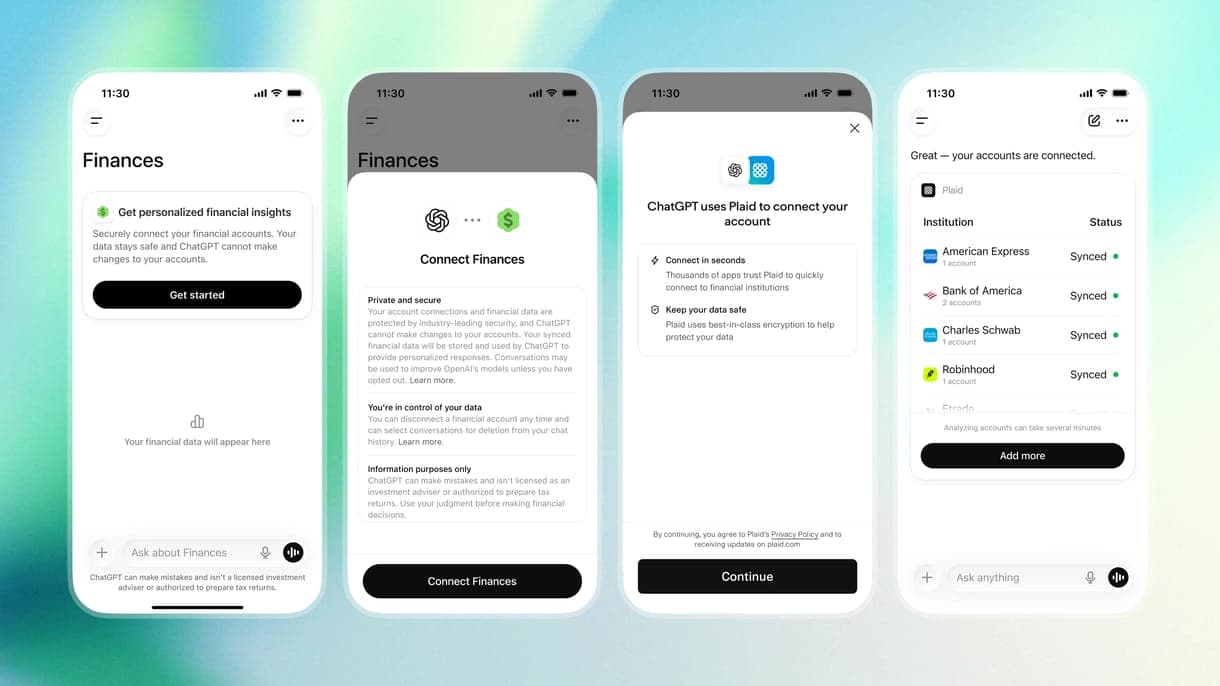
OpenAI is trialing a new feature that would let users link their bank accounts to ChatGPT. The intention is for the chatbot to gain a fuller picture of a user's finances so it can provide spending overviews, subscription roll-ups and suggestions for cutting costs.
How the connection works
ChatGPT will not connect directly to banks; the integration is mediated by Plaid. Plaid is a platform that links applications to financial institutions' systems, and the article states that about 12,000 financial institutions worldwide use Plaid's services.
What the feature can do
According to OpenAI, ChatGPT will be able to:
- provide an overview of spending, including digital subscriptions;
- flag changes in spending habits;
- offer suggestions for saving or reducing expenses.
OpenAI also notes that roughly 200 million people query ChatGPT on financial topics each month, so account linking could make the chatbot more helpful in those conversations.
Who can access it now and at what price?
The capability is currently limited: it is being tested first in the United States and is available only to users who subscribe to the $200-per-month ChatGPT plan — reported in the article as approximately 60,000 Hungarian forints. This cost and the geographic restriction shape who can use the feature during the trial.
Data control and privacy
OpenAI says users retain control over their data: they can disconnect their bank accounts from ChatGPT at any time. If a user requests disconnection, data deletion can take up to 30 days. The connection and permissions are managed through Plaid and OpenAI systems.
Plans for wider rollout
OpenAI has stated that after initial testing and improvements, it intends to make the feature available more broadly. No further details about timing or which additional countries will be supported have been provided.
Why this matters
Linking bank accounts could enable more personalized financial guidance and automated spending analysis in chat-based assistants. However, the current limited availability and the high subscription cost mean that, for now, the benefits will primarily reach paying users in the United States.