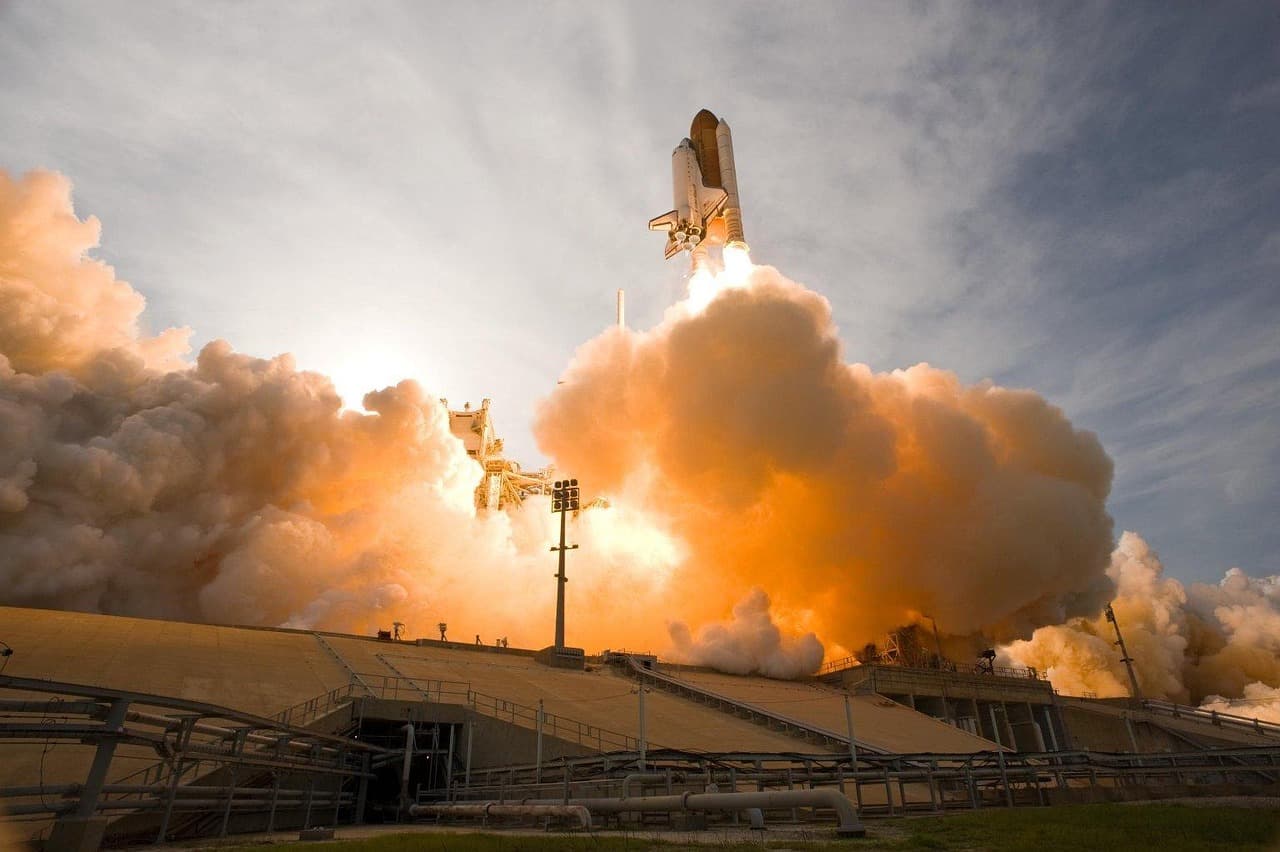
Over the coming decade, advances in artificial intelligence combined with expanding orbital lift capacity are expected to accelerate the industrialization of space. With greater payload and launch capability from platforms like Starship, the 2030s could see widespread deployment of space-based computation, manufacturing and other economic activity.
How AI unlocks space capabilities
- Autonomous spacecraft: AI enables vehicles to operate without continuous human control.
- Vehicles designed for AI rather than humans: spacecraft built around onboard AIs can tolerate hazards that would be fatal to crewed stations. As noted, “a speck of space debris that could puncture the International Space Station (ISS) with fatal consequences might leave an equivalent but uncrewed, unpressurized vessel largely functional.”
- Space-based assembly and manufacturing: in-orbit construction and later on-site manufacturing allow AI-driven systems to build large, complex structures without relying solely on Earth-based production.
Potential compounding advantages for first movers
The analysis raises the possibility that actors who establish an early foothold in space could gain compounding economic and strategic advantages, potentially leading to dominance. Mechanisms include:
- An industrial flywheel: initial infrastructure increases available energy and manufacturing capacity, lowering costs and enabling further infrastructure growth in a self-reinforcing cycle.
- Domain awareness and access denial: space-based operations can provide superior situational awareness and might allow a space power to limit others’ access to orbital or cis-lunar resources.
- Self-replicating probes: early actors could dispatch probes that replicate and expand into deep space, extending influence beyond near-Earth space.
Why this matters now
As AI Frontiers puts it, “Space is not a brand-new domain, but AI may be about to drastically accelerate its industrialization, demanding make-or-break decisions of leaders under ever-greater urgency and uncertainty.” The implication is that the AI–space relationship may shift from an academic topic to an urgent practical concern sooner than expected. Given communication latencies and vast distances, it is reasonable to expect some segments of solar-system activity to be carried out predominantly by autonomous machines operating in deep space, potentially reducing the role of slow, Earth-based human command.
Conclusion
The convergence of growing launch capacity and advanced AI could trigger a rapid expansion of space industry in the 2030s, but it also raises important strategic, policy and ethical questions: who will control space infrastructure, how will benefits be distributed, and what risks arise if autonomous systems come to dominate activities beyond Earth? The discussion suggests that timely, well-considered responses will be necessary to address these challenges.