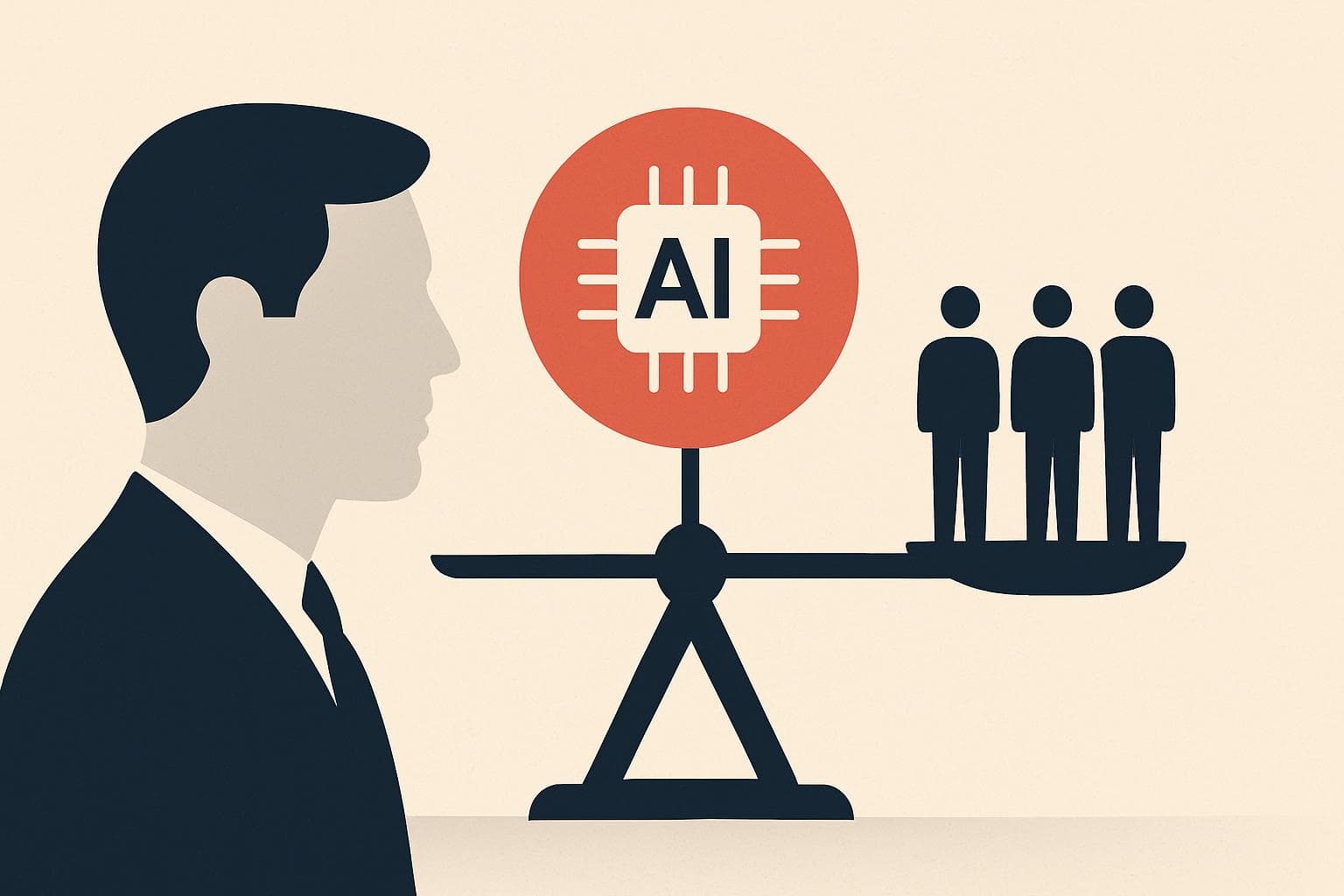
A large-scale survey conducted after 2025 shows that artificial intelligence (AI) is having a growing, visible effect on Hungary's labor market. Some 17.1 percent of respondents reported knowing someone who lost a job in recent times due to AI or robots, indicating that automation and AI are producing tangible local employment consequences.
How job content is shifting
Török Balázs, the AI expert and digital marketing consultant behind the research, stressed that AI not only eliminates certain positions but also rapidly changes job content and the skills employers expect. According to him, the relevant question is no longer whether AI will affect work, but how well people and organizations can adapt.
Which tools Hungarians use
The survey found that ChatGPT remains the most popular AI platform in Hungary: 60 percent of respondents use it daily. Google Gemini showed the largest growth and is now used regularly by 35 percent of participants. Daily usage rates for other tools were: Claude 21 percent, Copilot 18 percent, and Perplexity 11 percent.
Gender gap: men gain more from AI so far
A key finding is that AI benefits are currently unequally distributed by gender. Fifty-three percent of male respondents rated themselves as advanced or expert AI users, compared with 22 percent of female respondents. Nearly 40 percent of women said they use AI tools only at a basic or beginner level.
This gap shows up in measurable outcomes: among users reporting 10–40 hours per week of time saved thanks to AI, there are almost eight times as many men as women. That suggests productivity gains from AI are, for now, realized mainly by men.
Spending and loyalty differences
Spending on AI apps and subscriptions also differs by gender. Fifty-two percent of women reported not spending anything on AI services, compared with 37 percent of men. Among those who do pay, men spend on average about HUF 18,000 per month on AI tools, while women spend roughly HUF 12,000. This indicates that men are not only more likely to try new solutions but are also more willing to pay for advanced functions or multiple tools.
At the same time, women proved to be more loyal users: 80 percent of female respondents said they did not cancel any AI subscriptions in the past year, while the same figure for men was 64 percent. Over one-third of men had canceled at least one AI subscription, which may reflect more active experimentation and faster switching when a service fails to meet expectations.
Training at workplaces matters
The research highlights that AI is becoming a competitiveness factor on the labor market. Employees who are confident in using AI tools, who develop their skills and have access to organized training, gain clear advantages. Those who received structured AI training reported noticeably higher shares of saved work time than users without such support. Among large companies, 68 percent of employees received AI training, whereas at smaller firms the rate was about 37 percent—though this is an improvement compared with 2025 results.
Török Balázs emphasized that AI creates competitive advantage only when combined with knowledge, practice and organizational support. Therefore, companies should not merely provide AI tools but also back them up with training and deliberate preparation, because AI may soon become as fundamental a work tool as the internet or office software.
Summary
The survey's data indicate that AI already exerts a tangible impact on employment in Hungary: jobs and job descriptions are changing in many cases. So far, however, the benefits are uneven: men report higher advanced knowledge, greater time savings and higher spending on AI, while women are less likely to capture these advantages despite greater subscription loyalty. Corporate training and support will be crucial to broaden access and help the workforce adapt.