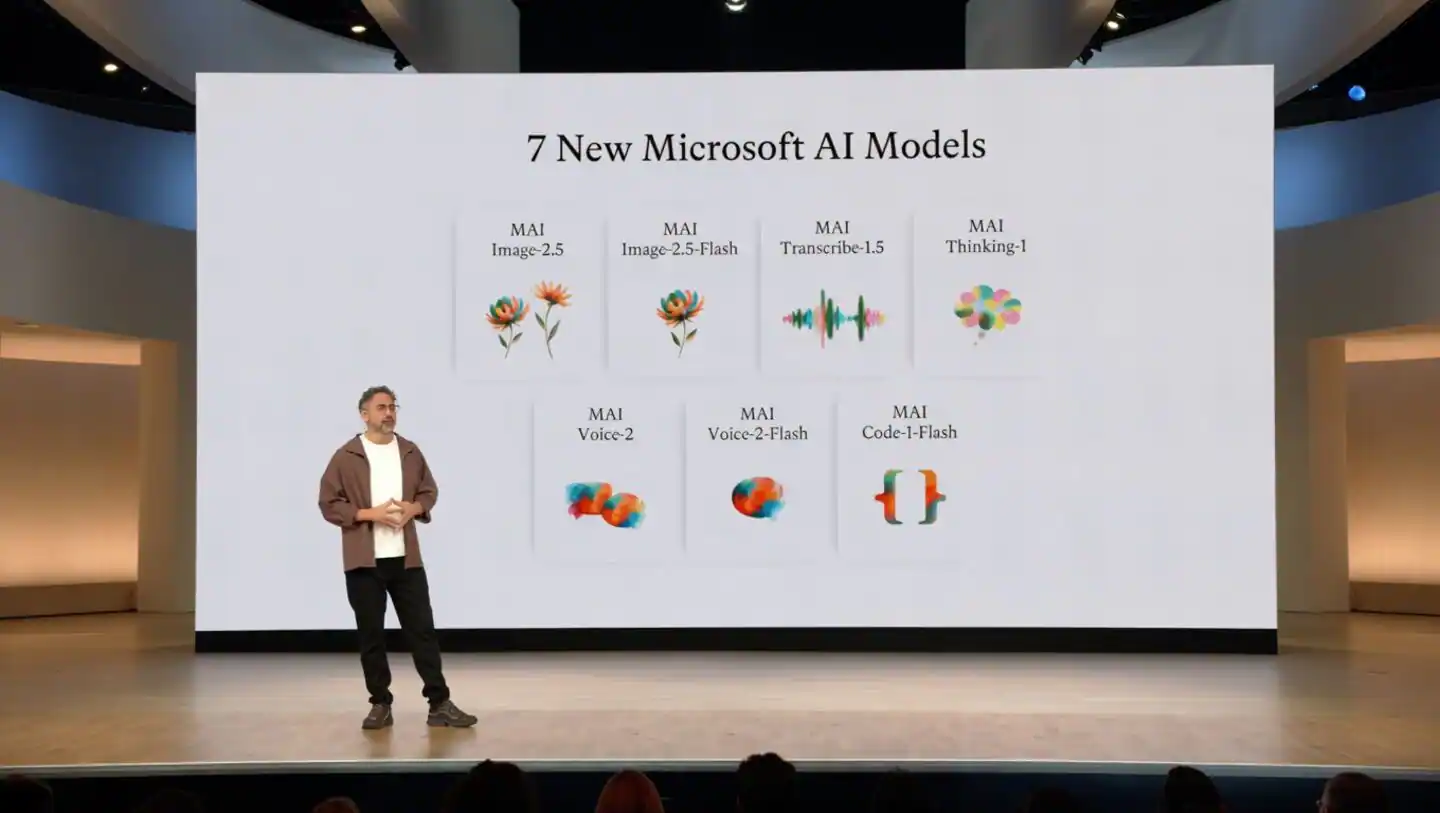
Microsoft presented MAI-Thinking-1 at the Build conference as its first reasoning-oriented model. According to the company, the model uses 35 billion active parameters, roughly 1 trillion total parameters, and supports a 256K token context window.
Published benchmarks and chosen opponents
Microsoft highlighted two comparisons: on the SWE-Bench Pro coding benchmark MAI-Thinking-1 reportedly matched Anthropic’s flagship Claude Opus 4.6; for overall human-preference evaluations the model reportedly outperformed Sonnet 4.6, described in the coverage as a cheaper, mid-tier alternative.
Why the comparisons provoked controversy
Observers have urged reading the matchups, not just the scores. The central critique is that Microsoft put its single strongest axis — coding — up against a flagship competitor while testing general ability against a second-tier rival. That asymmetry suggests the company emphasized the area where the model performs best and avoided direct general-purpose comparisons with the top competitors. Critics argue that a model that genuinely reached frontier performance across domains would not need to pick opponents this carefully.
The coverage also notes that MAI-Thinking-1’s general reasoning capability may not surpass open Chinese models such as DeepSeek, and could fall short of true frontier systems in broader assessments.
Conclusion
Microsoft’s demonstrations highlighted a strong showing in a targeted benchmark and a win against a mid-tier model on human-preference measures. Analysts say the opponent selection shapes perception: without broader, impartial comparisons it remains unclear whether MAI-Thinking-1 represents frontier-class performance across multiple domains. Independent benchmarks and wider head-to-heads will be necessary to clarify the model’s real standing.