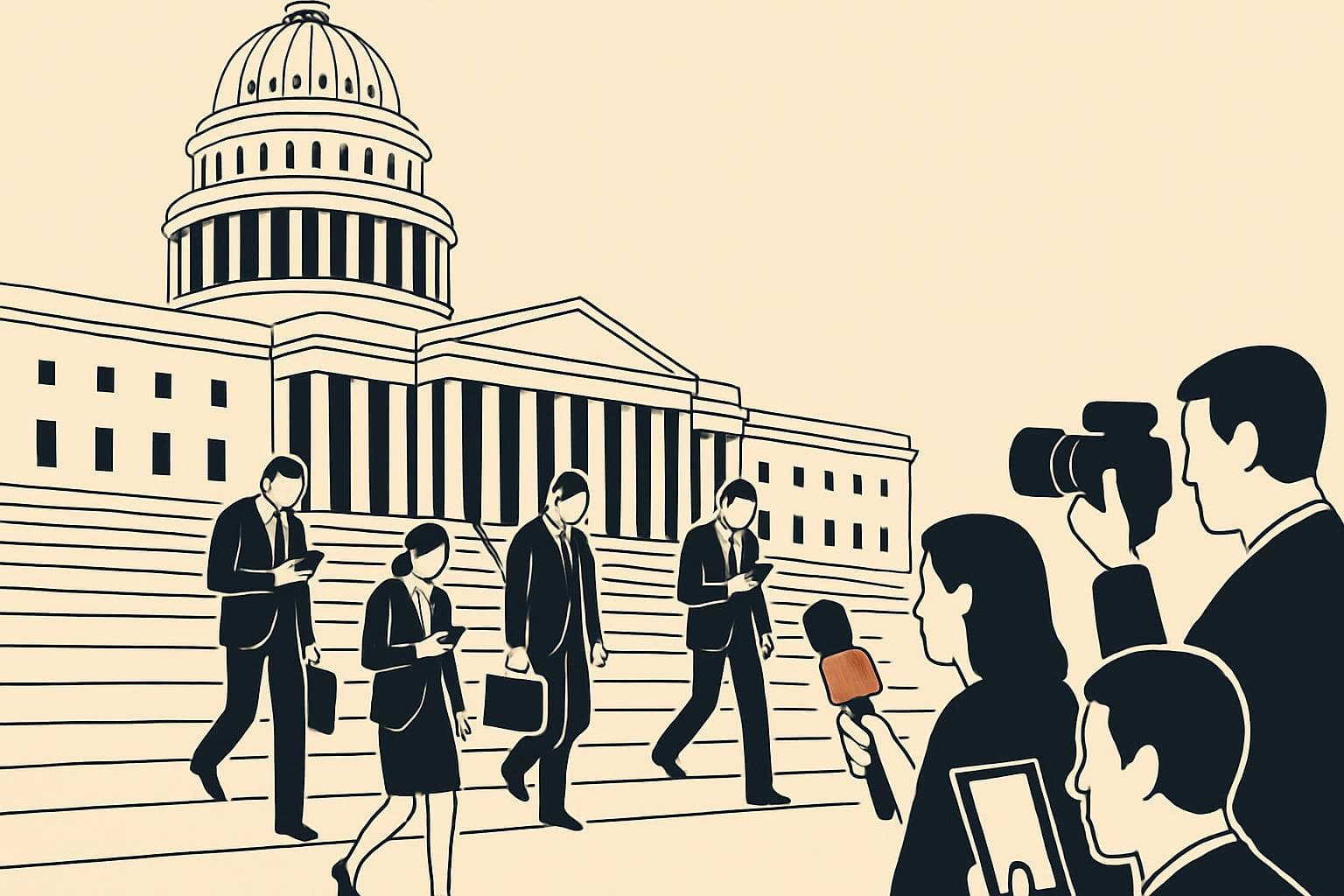
Senator Adam Schiff (California) plans to introduce two bills on Monday that focus on greater transparency for paid political influencer content and on prohibiting AI-generated impersonations of political candidates and committees.
The proposed measures
-
The Promoting Authenticity with Influencer Disclaimers Act would amend the Federal Election Campaign Act to require labels on certain posts from influencers when those posts are paid for by political committees. The legislation would mandate that “audiovisual or audio-only content” explicitly state if it was financed by a political committee.
-
The AI Ads Act would ban what Schiff’s office described as “fraudulent misrepresentation of political candidates or committees through content generated by artificial intelligence.” Schiff first introduced this bill in 2024 as a member of the U.S. House of Representatives; the measure seeks to extend existing prohibitions on impersonation of candidates to include AI-created content and to tighten restrictions on damaging fraudulent material.
Why Schiff is proposing these bills
Schiff’s initiatives respond to two recent primary contests in California. In the Democratic gubernatorial primary, millions of dollars were spent on paid posts by news influencers, largely funded by billionaire Tom Steyer’s campaign. California’s digital disclosure rules already revealed the scale of those payments, with some news influencers receiving hundreds of thousands of dollars to produce pro-Steyer content.
The Los Angeles mayoral race provided a second prompt: Republican Spencer Pratt’s viral but ultimately unsuccessful campaign relied in part on a surge of quickly produced AI-generated video ads.
Schiff has argued that these developments show existing campaign ad guardrails are not keeping pace with changing forms of political speech. He warned that wholly AI-generated ads and paid influencer posts can reach audiences beyond traditional billboards or broadcast television.
Regulatory context and enforcement
Consumer advertising on social platforms is frequently the subject of enforcement by the Federal Trade Commission (FTC), which has acted against unlabeled ads. However, political videos and campaign communications typically fall under the jurisdiction of the Federal Election Commission (FEC). Observers have noted an outdated loophole that makes it easier for political actors to fund influencer posts than to produce labeled paid content in other commercial contexts.
Both parties have used this gap, funneling millions each cycle to creators and online commentators who accept payments from political or issue-focused groups. Recent legislative efforts include the PAID Act—the Senate counterpart to a bill introduced earlier this year by Representative Mark Takano (D-Calif.)—and a related ad-transparency proposal from Senator Sheldon Whitehouse (D-R.I.) that would require influencers to disclose paid political speech.
While Democrats have largely driven the push for tighter rules, support is not wholly partisan: in Texas, moderate Republicans backed a change to state election rules requiring influencers paid more than $100 to post on behalf of a candidate to append disclosures.
Challenges for AI regulation
Regulating AI-generated political content presents distinct difficulties. Rapid integration of AI tools into creative workflows may blur the line between human-made and machine-generated material, complicating enforcement and identification of prohibited content.
Why this matters
Schiff’s bills aim to close a loophole that allows political committees to reach voters through paid influencer content without clear labeling, and to reduce the risk that AI-generated fake portrayals of candidates will shape electoral outcomes. If enacted, the measures would extend existing campaign transparency and impersonation rules into the digital and AI era.