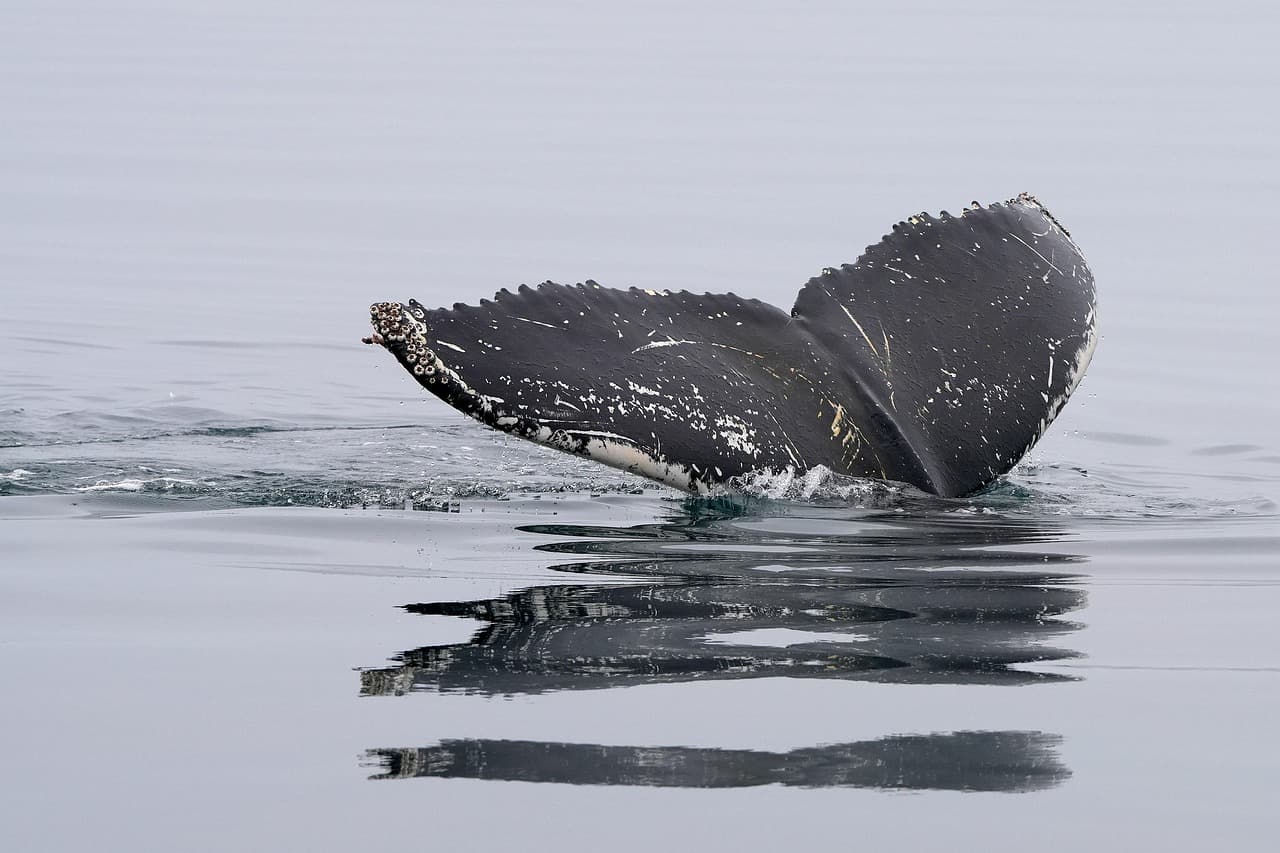
WhaleSpotter, an AI-powered system using thermal cameras, detects gray whales in real time and issues alerts to ship captains so vessels can change course. Newly installed in the San Francisco Bay, the system is designed to provide warnings even in glare, darkness, or light fog, giving large ships enough lead time to avoid collisions.
How it works
WhaleSpotter’s algorithm processes input from heat-sensing cameras mounted on shore stations or on vessels. Whales are warm-blooded, and the water emitted from their blowholes and exposed body surfaces is typically at least 3.6 °F (2 °C) warmer than surrounding seawater. Thermal cameras can detect blows and breaches up to 4 nautical miles away.
When the algorithm detects a whale, the system sends a short video excerpt plus vessel telemetry (GPS location, bearing, time of day) to an onshore data center. A team of human experts validates the clip in about 30 seconds and can then send an alert to nearby ships. A shipboard dashboard receives verified whale locations in real time; the elapsed time between classification and alert can be as little as 1 minute. The system operates human-in-the-loop and achieves 99 percent accuracy according to reported figures, helping reduce fatigue from false alarms.
The cameras are housed in shoebox-sized enclosures that protect against salt water and environmental hazards, and a stabilization system keeps the view steady. To avoid delays from transmitting high-resolution video to a remote data center, inference runs on undisclosed local hardware. WhaleSpotter has not released technical details of its algorithm, but press reports describe a neural network trained on hundreds of thousands of thermal images, including negative examples such as birds, breaking waves, and boats.
Deployment and background
The WhaleSpotter system stems from more than a decade of research at the Woods Hole Oceanographic Institution (WHOI). In 2024 the research team formed a company to commercialize the technology. The shipping company Matson provided early support and placed units on vessels serving Alaska and Hawaii, making Matson the first container carrier to deploy the technology commercially. Today, more than 70 WhaleSpotter systems are deployed across vessels, ports, and offshore energy operations. The San Francisco installation is the first to include both stationary and moving cameras.
Why it matters
Ship strikes are a longstanding maritime conservation problem: the conservation group Ocean Wise estimates that ships strike and kill about 20,000 whales of all kinds worldwide. Traditional mitigation relies on human visual lookout (effective only in high-visibility conditions) and hydrophones to pick up whale vocalizations (effective only when whales vocalize). In recent years, warmer ocean temperatures have driven larger numbers of gray whales into San Francisco Bay in search of food; a study by the Marin County Marine Mammal Center and the California Academy of Sciences found that roughly 40 percent of whales that die in the Bay were struck by vessels.
By combining sensors, on-site AI inference, and human validation, WhaleSpotter aims to reduce these strikes—especially in low-visibility and nighttime conditions.
Quick facts
- Within a week and a half of operation the system logged 6,600 whales.
- Thermal difference used for detection is typically at least 2 °C between whale-associated water and surrounding sea.
- Thermal cameras can detect blows up to 4 nautical miles away.
- Time from classification to alert can be as short as 1 minute; human-in-the-loop operation yields reported 99% accuracy.
WhaleSpotter illustrates how advances in sensors and AI, combined with domain expertise and workflow integration, can provide practical tools for marine wildlife protection.