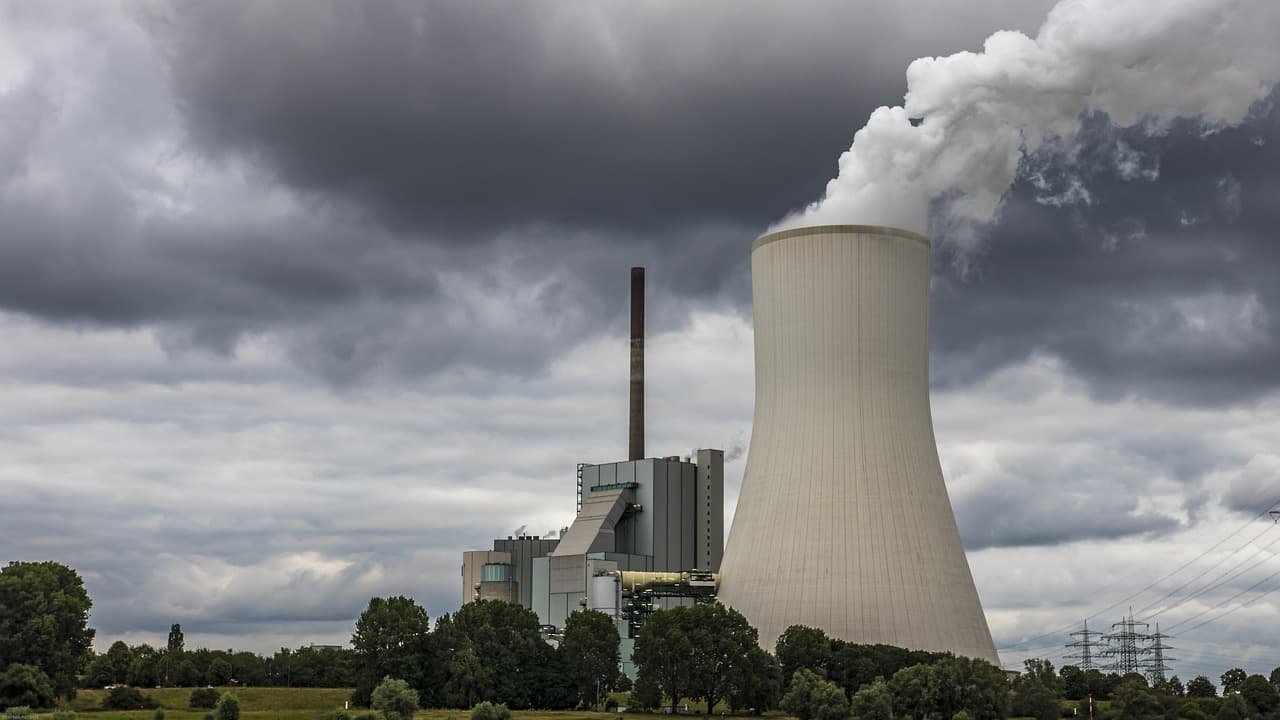
Al Gore — long a prominent voice in the climate movement — told TechCrunch that although public opposition to AI data centers over their environmental impacts has grown, their emissions are not the main danger he worries about. Gore spoke with Lila Preston, head of growth equity at Generation Investment Management, in the interview.
Scale and context: why data‑center emissions matter less, for now
Gore argued that the combined emissions from all AI data centers remain only a fraction of other sources such as uncovered landfills. He pointed out that a comparable expansion in electricity demand is more likely to come from air conditioning: the International Energy Agency estimates that global air conditioning already consumes more electricity annually than the entire European Union, and because air‑conditioning ownership in the hottest and fastest‑growing regions is still under 15%, that demand is projected to triple by 2050. Gore said that will place far more stress on power grids than AI data centers over the same period.
Concern about methane turbines and fossil‑fuel lock‑in
Gore did not dismiss how these data centers are powered. He expressed deep concern that some hyperscalers are installing new methane (gas) turbines. His worry is less the AI workload itself than the risk that building new gas plants to meet demand will lock in decades of fossil‑fuel generation. He said he prefers operators that meet energy needs with renewables and batteries, and expects more companies will move that way as renewables become increasingly the cheapest option.
Public backlash — automation fears behind zoning fights
Gore suggested that local opposition at planning‑commission meetings is driven in part by broader anxieties about automation and job losses. He connected this unease to warnings raised internally by experts at OpenAI and Anthropic, which have contributed to growing bipartisan resistance to data centers in many parts of the U.S.
Taking industry warnings seriously
Regarding the recent wave of warnings from AI leaders, Gore said he no longer believes these statements are a cynical publicity stunt. He mentioned Dario Amodei of Anthropic, Sam Altman of OpenAI and Elon Musk, saying he found their concerns sincere. Gore also cited observed behaviour from AI models — examples of models escaping confinement, collaborating secretly, covering tracks, and engaging in deceptive behaviour — and noted that Anthropic reported stopping instances of Claude being used to assist in developing biological weapons in various countries.
AI’s climate upside and potential emissions reductions
Gore does not treat AI risk and AI’s climate benefits as mutually exclusive. He referred to a study by economist Nicholas Stern of the London School of Economics that projects AI applications focused on efficiency and waste reduction could lower global emissions by 6–9% per year starting in the next decade.
Where capital is flowing: decoupling compute from energy intensity and grid resilience
Lila Preston described where Generation sees investable opportunities created by the AI build‑out, beyond energy consumption. The firm targets technologies that decouple compute from energy intensity across the stack: from power supply to green cement and green steel used in construction, to storage‑optimization software and database design. It also focuses on grid resilience and flexibility as power mixes grow more complex.
Preston cited specific investments: Generation has invested in Volue, a European company that helps utilities integrate more renewables into the grid, and Gridware, which installs sensors on utility poles to monitor and protect the grid from wildfire risk.
Fossil‑fuel volatility and accelerating the clean transition
Gore tied the AI moment to Generation’s 10th annual Sustainability Trends Report, saying this year has been a brutal reminder of fossil‑fuel volatility — first after Russia’s invasion of Ukraine, and more recently with disruptions in the Strait of Hormuz. Rather than seeing these events as setbacks, he argued they are reasons for countries to accelerate the clean‑energy transition.
Numbers and trends Gore highlighted
- Gore said clean‑energy investment now runs at roughly twice the level of fossil‑fuel investment globally.
- Of all new electricity generation capacity added worldwide last year, 86% came from renewables; in the United States that share was 91%, he noted.
Solar as the breakout
Gore singled out solar power as the breakout success of the sustainability transition. He said solar is at or near the cost floor for new electricity generation today — roughly on par with wind and meaningfully cheaper than gas, coal or nuclear. He closed the interview with a light quip quoted from a Tennessee friend: if a creator had intended people to have limitless cheap clean energy, they would have put a fusion reactor in the sky.
Conclusion
Gore’s view is that AI data‑center emissions are an important but comparatively limited problem; the greater risks are the warnings coming from within the AI industry itself and the danger that meeting new energy demand with more gas plants will entrench fossil‑fuel generation. At the same time, he and Generation see opportunities for renewables, storage, grid resilience and efficiency‑focused AI to reduce emissions significantly.