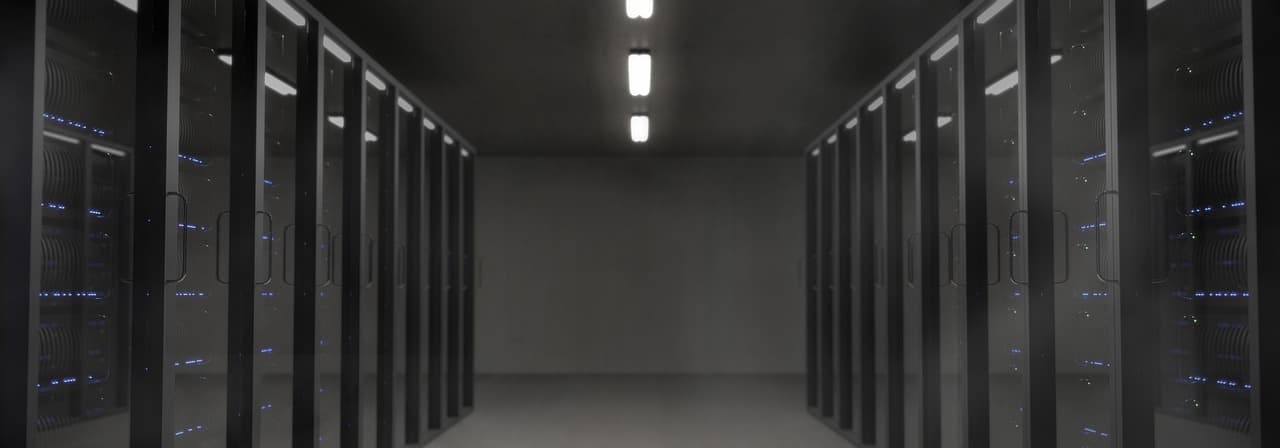
While voters cast ballots across the United States, the author spent several days in Ashburn, Virginia — part of what’s commonly called Data Center Alley, one of the world’s largest clusters of data centers. Observations on the ground indicate that much of the backlash against large AI data centers stems from their enormous electricity requirements rather than solely from cultural or anti‑tech sentiment.
Along the main roads concrete, monolithic buildings bearing names like Skybox and CloudHQ dominate the landscape. There are two main ways to power the kind of data centers AI firms want: connecting to the regional grid or generating electricity onsite.
Loudoun County and grid connections
In Loudoun County, Virginia, many data centers are tied into the existing electrical grid. One facility visited by the author, operated by Equinix, maintains large diesel generators for backup but gets its primary power from the local utility, Dominion Energy. Much of Dominion’s generation comes from natural gas — cleaner than coal or oil but not renewable.
The average data center operating in that part of Virginia today has a power capacity of 54 megawatts, a draw higher than that of Denver International Airport. That comparison highlights how significant a single site’s demand can be and why grid strain and local environmental impacts are central to community concerns.
Community response and regulatory changes
Elena Schlossberg, a prominent Virginia activist opposed to data centers, said she frequently encounters industry framing the dispute as a culture war; she insists the core issue has always been power. Recent protests have prompted state actions requiring data centers to fully pay for new transmission lines to the grid and to ensure those costs are not spread among other customers. Developers say they are preparing for potential rules that could cut their grid access during peak demand.
Schlossberg also worries about downstream consequences of a strained grid: facilities relying more on diesel generators, or Dominion Energy expanding fossil fuel inputs rather than renewables to meet demand.
When the grid isn’t enough: on‑site generation and pollution
Across much of the country where new AI‑scale facilities are proposed, the scale desired is so large that developers choose rural locations with little grid infrastructure and bring their own power — so‑called behind‑the‑meter generation, typically natural‑gas turbines, plus diesel generators for backup.
Reports indicate Anthropic agreed to pay $3.4 billion for gas turbines, described in coverage as the largest power‑generation purchase by an AI company.
Even if nearby grids existed, they often would be insufficient. The smallest data centers attractive for AI training are about 300 megawatts. Ideal facilities can approach 6,000 megawatts — roughly the electricity draw of the city of Chicago, which is served by more than 20 power plants within the city and additional plants beyond.
Large‑scale on‑site power production lessens strain on the grid but creates local impacts. Natural‑gas turbines emit air pollutants, and diesel backup is worse. In the rush to establish capacity, companies have sometimes violated environmental rules: the Environmental Protection Agency found that Elon Musk broke air quality laws when he set up dozens of turbines to power a data center in Memphis.
What comes next
Portraying opposition as a culture war obscures a central reality: it is difficult to make a small town comfortable with a facility that consumes power on the scale of a small city. Companies can improve local acceptance through better tax deals, hiring, and community engagement, and protests have pushed some to do so. But asking a small community to host the equivalent of a theme park, an international airport, an industrial plant and the power plants needed to run them naturally provokes concern.
Industry insiders increasingly describe their limits not primarily in political terms but in available electricity. If new data centers must generate their own onsite power, developers will look for places with minimal population resistance — for example the Permian Basin, where natural‑gas infrastructure is accessible — or consider international projects: Google announced plans to spend $15 billion on data center projects in Malaysia the day after the elections.
And in an attention‑grabbing remark hours after midterm results were reported, Elon Musk suggested that “data centers in space” look appealing, hinting at radical alternatives. For the foreseeable future, though, the question of where and how massive electricity will be supplied remains the most tangible battleground in the fight over AI‑scale data centers.