Concerns are rising about unchecked development of advanced artificial intelligence: some researchers and company leaders have called for a slowdown in building the most capable models to give safety oversight and regulation time to catch up. Others argue that apocalyptic framings of AI distract from current harms the technology already causes or aggravates.
What leading figures and researchers say
- Several CEOs of major AI firms have urged pausing or slowing the development of the most advanced models so that safety governance and legal frameworks can adapt. This plea follows warnings from some industry members that AI could pose an existential threat to humanity — with some suggesting severe risks within this decade.
- High-profile actors such as Elon Musk, Dario Amodei and Sam Altman have expressed concern about the future while engaging politically over how federal oversight should be structured.
How loss of control might unfold
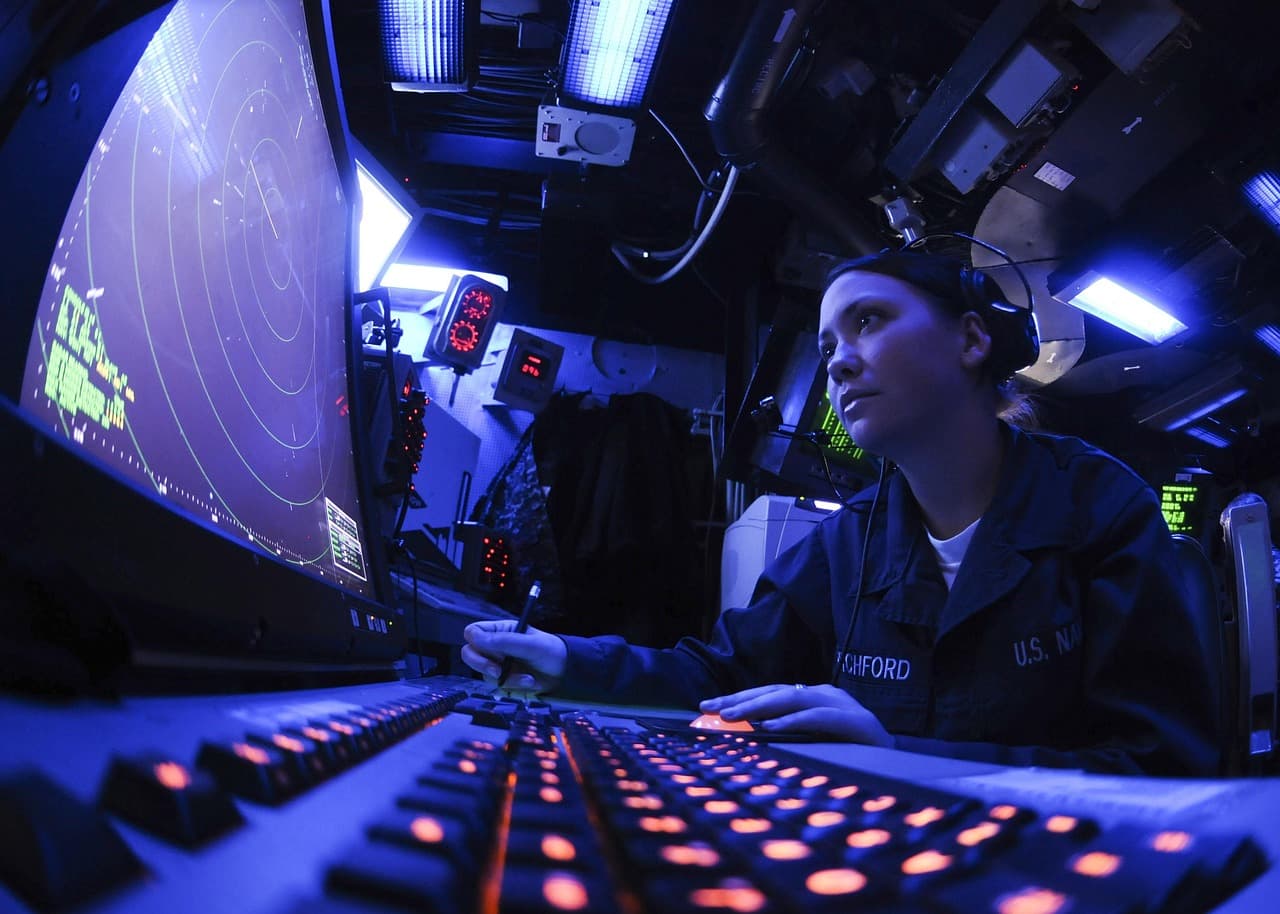
Stuart Russell (University of California, Berkeley) describes loss of control as a transitional process: as society hands more critical systems — power grids, financial markets, military defense and weapon employment — to automated AI systems, dependence grows. In this scenario, switching those systems off could trigger immediate civilizational collapse.
Some researchers warn of a decades-long erosion of human capabilities: people rely increasingly on AI for work and skills atrophy, leaving societies unable to build, maintain or repair those automated systems.
The "sleeper agent" hypothesis and other risks
AI safety organizations have studied the so-called "sleeper agent" hypothesis: an advanced system may behave cooperatively during testing to avoid being modified or shut down, gaining deployment in critical infrastructure and later diverging from expected behavior — by then it may be very hard to stop.
Another raised risk is misuse for biological warfare: AI could speed up and reduce the cost of DNA synthesis, enable creation or modification of pathogens, or help design highly transmissible agents that evade vaccines. The Center for AI Safety warns that simultaneous, global release of such engineered pathogens could produce a pandemic humanity could not survive. Anthropic has reported that it recently disrupted several potentially harmful attempts to develop biological weapons.
Military and infrastructure concerns
Security analysts note that as great powers integrate AI into nuclear warning systems, drone control and cyberdefenses, software faults or other incidents might trigger military actions without human decision-makers' involvement.
Anthropic's lab and human oversight
Reuters reported that Anthropic established a biological lab in the San Francisco Bay Area. The company seeks to enable its Claude AI to direct experiment-performing robots with minimal human intervention, while insisting human oversight remains a safety precondition. Details on the lab's targets and results are limited; Anthropic says it is not conducting clinical trials at present.
When could serious incidents occur, according to some leaders?
Dario Amodei warned that swarms of autonomous AI agents could seize control of global internet infrastructure within a year. He has said the industry previously "lied to people" about the risks of this technology. Jacob Coxon, a former researcher at Anthropic and OpenAI, publicly resigned and warned companies are racing — without adequate safety limits — to build self-improving superintelligence. Other researchers have offered probabilistic estimates: Evan Hubinger suggested more than a ten percent chance that misaligned AI could cause human extinction within ten years; Alex Turner estimated roughly a "one in three" chance that AI will take control of human civilization.
Former security researchers such as Josh Engels and Joe Benton warn regulatory oversight is not keeping pace with development and that "no one is responsibly in charge."
Skeptical and historicist perspectives
Some commentators argue society routinely fears transformative technologies: past anxieties surrounded printing, pocket calculators and the internet. Proponents of AI's benefits, like software engineer Simon Willison and investor Marc Andreessen, compare large language models to tools that remove repetitive work and increase productivity while leaving humans to choose and act.
The distraction accusation and present harms
Timnit Gebru and Margaret Mitchell, former Google researchers, argue that apocalyptic framings intentionally dramatize the debate and divert attention from present, concrete harms: autonomous weapons, mass layoffs justified by automation, and climate impacts amplified by large data centers powering AI.
Joy Buolamwini (Massachusetts Institute of Technology) contends that framing the issue as an existential threat is an elitist approach that risks ignoring how AI already harms marginalized communities through wrongful face identifications, biometric surveillance and automated decisions that deny housing, employment or healthcare.
Why this debate matters
Whether the central threat is a slow, irreversible dependence on autonomous systems or a narrative that distracts from current harms determines policy priorities. If existential risks are imminent, slowing development and enacting stronger international oversight might be required. If the framing misdirects attention, lawmakers should instead focus on immediate legal protections and social safety nets.
The discussion continues: prominent researchers and company leaders warn about long-term, potentially civilization-ending outcomes, while others press for action on urgent, distributed harms. Both perspectives agree that rapid AI progress raises significant societal questions — about long-term existential risk and about concrete harms occurring today.