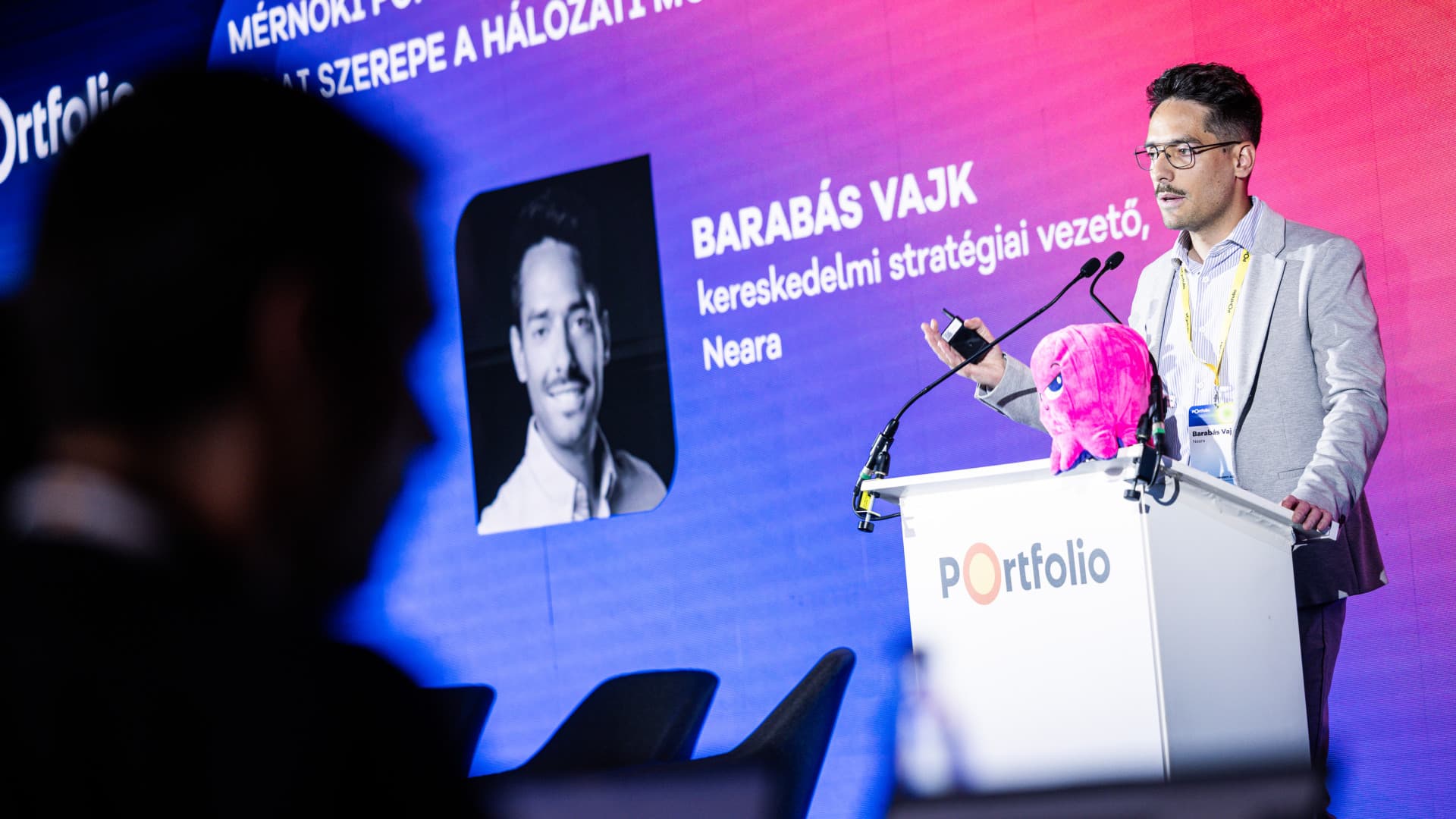
At the Portfolio AI in Energy 2026 conference, Barabás Vajk, Head of Commercial Strategy at Neara, argued that combining physics-based digital twins with artificial intelligence significantly expands the capabilities of network modelling. A digital twin — a realtime virtual copy of a system — helps critical infrastructure owners run “what if” scenarios and links detailed asset-level engineering insight to network-level strategic visibility.
Why it matters now
Vajk noted that the energy sector faces in the next decade roughly the same volume of challenges it has seen in the past century. Network operators are under growing pressure from multiple directions: aging assets and workforce, extreme weather, costs of constrained generation, and simultaneous regulatory, governmental, consumer and production requirements.
What Neara’s solution does
Neara’s physics-based digital twin offers extensible solutions for major challenges, including increasing flexibility and reliability, mitigating wildfires, responding to extreme weather, asset management, risk and value optimization, and planning and construction tasks.
According to the company’s global portfolio, Neara has modelled more than 15 million network assets across all terrain types and over 3 million kilometres of network, and its digitalisation and optimisation solutions are used by more than 40 utilities worldwide.
How AI enables scaling
The automatic network model generates a single engineering-grade network model from heterogeneous data sources. AI can produce a usable network model from billions of raw LiDAR points within minutes. It also enables processing and organising hundreds of thousands of images for image-based component and fault detection, automatically associating each image with the correct asset.
Vajk said that without this step, network-level modelling would not be economically scalable. The system automatically recognises components and fault types, allowing inspectors to review only the most important issues instead of every photograph. This approach typically requires about 1,000 times less manual effort than purely human identification.
Where AI falls short
There are areas where AI is not a substitute for engineering. Physical structural and thermal limits are calculable and cannot be learned solely via machine learning or pattern recognition: recognising what a component is does not automatically tell you what loads it can withstand. Therefore, engineers remain the decision-makers in network modelling; AI removes bottlenecks but does not replace professional judgement.
Conclusion
In network modelling, artificial intelligence and digital twins are powerful tools that enable scalability, deliver cost savings, better operational efficiency and increased reliability. However, they are force-multipliers for engineers rather than replacements: use AI where human resources cannot scale, and keep humans where judgement matters.