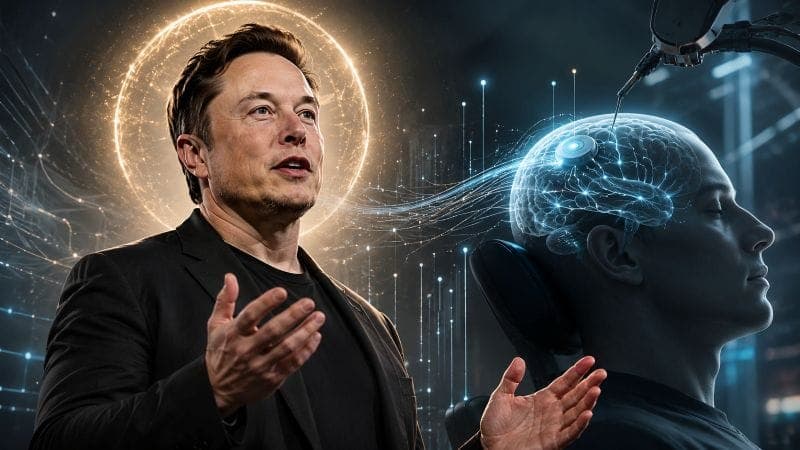
At the Samson International Smart Mobility Summit in Tel Aviv, Elon Musk said Neuralink is developing technologies he described as “Jesus‑level,” then clarified he meant “miracles in the scientific sense.” He outlined specific therapeutic aims: reversing paralysis, restoring sight to the blind, and enabling people to walk again.
What Musk referenced
- According to Musk, Neuralink has implanted Telepathy chips in 21 patients, devices that allow those patients to control external devices by thought alone.
- He cited the first recipient, Noland Arbaugh, who was paralyzed in a diving accident; Musk said Arbaugh now plays shooter games and designs 3D models using only his mind.
- For restoring sight, Musk described a blindsight approach that would feed camera signals directly into the visual cortex, bypassing damaged eyes. He said the first human implant for this program is planned by year‑end.
- Musk stated that the blindness program has already received an FDA breakthrough designation.
- To restore walking, Neuralink envisions using dual chips that would bridge signals wirelessly across a damaged spinal cord.
Production details, timing and price targets
Musk also mentioned an operative target of “600 seconds” for the surgical procedure and suggested a pricing goal approaching that of consumer devices. His framing treated these aims as production milestones with quarter‑level timelines rather than distant research objectives.
Why this matters
Musk chose the “Jesus” analogy because the listed use cases map directly onto New Testament miracles and because he wanted to emphasize that the company has moved from research goals to concrete deployment milestones. At the same time, the current scale — 21 implanted patients — is far from the millions that would be required for mass availability, a gap that remains a major challenge.
Summary
Elon Musk publicly framed Neuralink’s near‑term aims as delivering medically transformative brain‑computer interfaces that he likened to scientific miracles. The company points to early human implants and regulatory progress, and it has set operational and pricing targets, but broad clinical adoption would still require overcoming substantial hurdles.