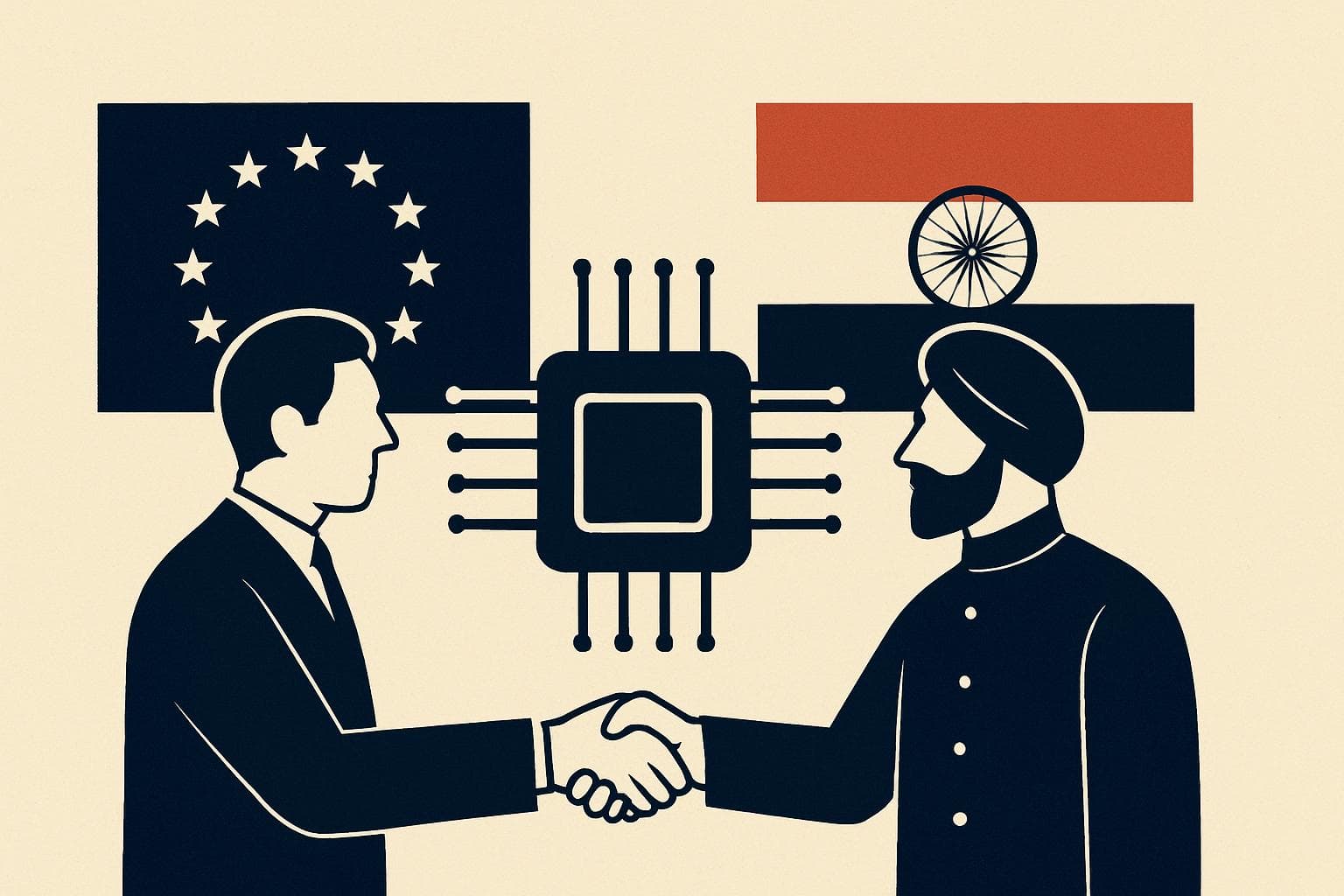
At the third meeting of the EU–India Trade and Technology Council (TTC) in Brussels, the European Union and India agreed on a set of research, technology and industrial measures and opened formal negotiations on India's association to the Horizon Europe research programme. India, with roughly 1.5 billion inhabitants, and the EU aim to complete the association negotiations by the end of 2026.
Key elements of the agreement
Following the TTC meeting, the parties announced four priority commitments:
- creation of the first EU–India Innovation Centre focused on development and testing of electric vehicle charging technologies;
- launch of a deep‑tech and cleantech startup partnership;
- enhanced cooperation in semiconductors, high‑performance computing (HPC), quantum technologies, artificial intelligence (AI) and 6G;
- strengthening cooperation across agri‑food, pharmaceutical and clean‑energy technology supply chains.
Within digital and strategic technologies, AI — notably for health‑care applications — received special emphasis. The partners also agreed to prepare joint projects in high‑performance computing aimed at supporting natural disaster forecasting, climate modelling and bioinformatics research.
Semiconductors, supply‑chain security and standards
In the semiconductor sector, the discussions focused on bolstering supply‑chain security and encouraging chip manufacturing and electronics investments. On the digital side, work continues on mutual recognition of trust services: the interoperability of digital wallets and electronic signatures will be examined, and measures to support mobility of highly skilled IT professionals were endorsed. The parties also pledged closer coordination in setting international technology standards, especially for 6G networks.
Ongoing and prior joint R&D activity
Over the past four years the EU and India have jointly funded research and development projects worth a total of EUR 60 million. These projects have addressed topics such as hydrogen from waste, reducing marine pollution and recycling electric‑vehicle batteries. In the second half of the year the partners plan to share experience on developing hydrogen valleys and harmonising safety standards for hydrogen technologies.
Trade focus and institutional leadership
The TTC's trade working group is currently concentrating on strengthening supply chains for certain agri‑food products, active pharmaceutical ingredients and clean‑energy technologies — areas that are partly contested between the parties. On the Commission side, the council's work is led by Henna Virkkunen (Executive Vice‑President for technological sovereignty, security and democracy), Ekaterina Zaharieva (Commissioner for startups, research and innovation) and Maroš Šefčovič (Commissioner for trade and economic security).
Why this matters
The package advances both the EU's strategic technology objectives and India's industrial and digital ambitions. Opening talks on Horizon Europe association should deepen scientific and innovation ties between Indian and EU researchers and institutions. Strengthened cooperation in semiconductors, HPC, quantum, AI and 6G can contribute to safer global supply chains and more coordinated standards. The TTC also aims to finalise its reinforcement by the end of 2026, as foreseen in the comprehensive strategic roadmap adopted at the EU–India summit earlier in the year.