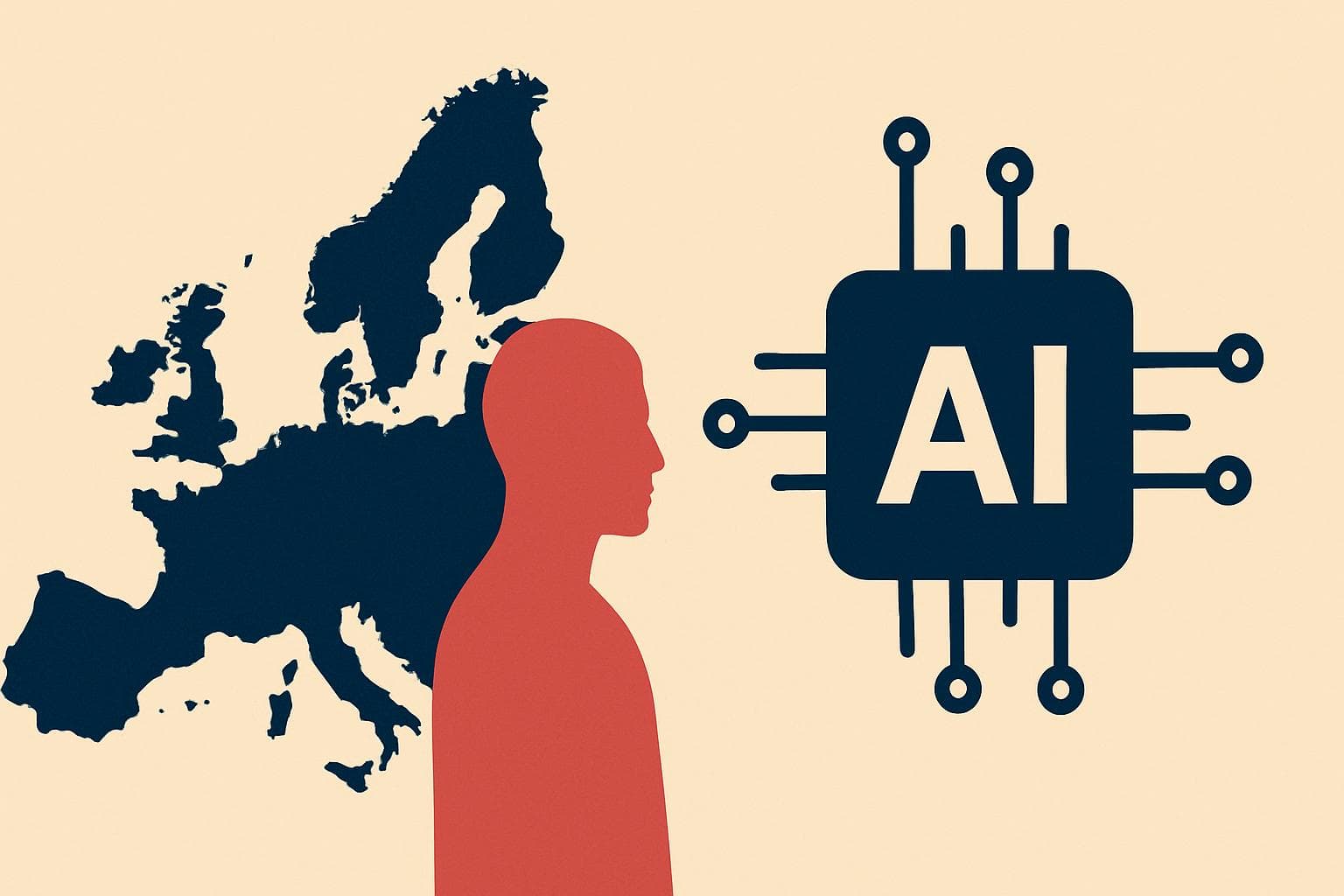
A piece of commentary argues that Europe currently trails the United States in advanced artificial intelligence (AI). It notes that only one European company, Mistral, is anywhere near the cutting edge, and that Europe has only a fraction of the roughly 25 gigawatts of AI compute that the US controls.
What’s at stake?
The Europe 2031 research project — undertaken by the author with a group of tech policy thinkers and investors — warns that if Europe does not change course it risks becoming an economic backwater, stripped of assets and slipping into instability. That project drew inspiration from a report by the AI Futures Project, which warned that AI could pose an existential threat to humanity as early as the early 2030s.
Real risk or alarmism?
The debate is mixed. Some Europeans suspect leading AI companies of using talk of catastrophic risk as marketing — the argument being that "our products are so powerful they could destroy the world; imagine what they could do for your B2B sales." The author counters that such a view underestimates the real and in many respects still poorly understood power of the technology.
The article recalls that as early as 2019, well before AI became a multibillion-dollar commercial industry, many senior AI figures were already worried about the technology’s real-world implications. When figures like Dario Amodei speak of "existential danger," they mean it; they likewise argue that a positive AI outcome could help eliminate climate change, poverty and disease.
The author draws a historical analogy: a century ago it would have been prudent to listen to the physicists who warned that splitting the atom could produce a devastating new weapon, rather than dismissing them as offering "mere moonshine." The point is that warnings from knowledgeable experts should be treated as live possibilities, even if they sound like science fiction.
Build securely, don’t freeze from fear
The author’s position is that the possibility of extreme scenarios — up to and including human extinction — should not paralyze European efforts to develop a safe and secure AI industry. Europe should take the risks seriously while actively building its own capabilities under appropriate safety and ethical standards.
Industry signal: Mistral considers designing its own chips
As a concrete development, Mistral’s CEO told CNBC in May that the company is investigating designing its own chips to reduce token costs and decrease reliance on Nvidia.
In sum: Europe’s present situation is worrying, but the remedy is not panic or inaction. The recommended course is investment in a European AI industry that is both competitive and built with safety and oversight in mind, informed by the legitimate warnings of experts.