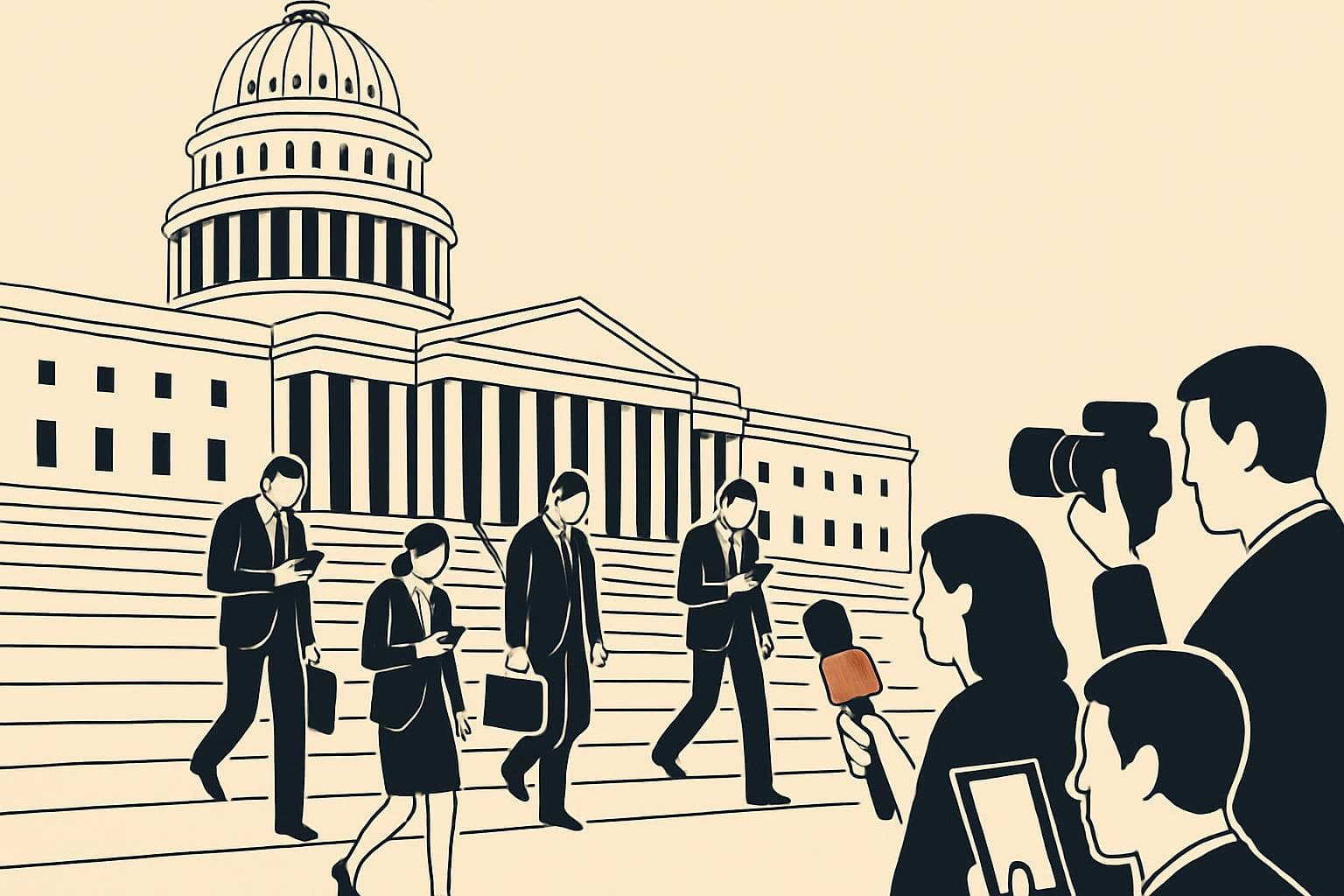
The White House and some U.S. officials have publicly alleged that Moonshot AI used large-scale distillation of Anthropic’s Fable model to develop its Kimi K3 system. The claims have escalated a broader debate about Chinese open-source AI, possible U.S. countermeasures, and whether timeline and technical details support the accusation.
What happened and who’s involved
- Michael Kratsios, director of the Office of Science and Technology Policy, posted that the U.S. has information Moonshot AI distilled Anthropic’s Fable to build K3, using an internal platform that switched between access methods to evade detection; the post also mentions Moonshot obtaining GB300-equipped servers and accessing GB300s in Thailand.
- Treasury Secretary Scott Bessent warned that while the U.S. supports open-source AI, covert industrial-scale distillation crossing into IP theft could prompt sanctions or Entity List designations.
- Key companies in the public debate include Moonshot AI (developer of Kimi K3), Anthropic (developer of Mythos and Fable), and several Chinese firms such as DeepSeek and Zhipu, which the commentator cites as pursuing open-source strategies.
Timeline and technical questions
A central factual tension is the timeline: Anthropic’s Fable was released to users (API and subscription) on June 9, taken down three days later at the U.S. government’s request, and restored on June 30. Kimi K3 was released on July 16. The commentator argues K3’s main training likely finished before Fable was broadly available, and two weeks is typically insufficient in large-scale AI training to perform a meaningful distillation and then ship a model.
Several alternative explanations are noted:
- Moonshot could, in theory, have obtained access to Anthropic’s partner-only version of Mythos (distributed under Project Glasswing), but the official U.S. statement specifies "Fable," not "Mythos," and there is no public evidence of an infrastructure destabilization that would follow Mythos compromise.
- A more plausible scenario is that Moonshot distilled from earlier, less capable Opus-class models and then applied engineering and optimization to close the performance gap with Fable. If true, this implies Chinese teams could reach high performance without direct access to Anthropic’s frontier model.
Political and industry responses
Media reporting indicates division within the U.S. government: the White House does not want large-scale distillation to proliferate, but an executive order banning Chinese labs from accessing U.S. models is reportedly not on the table; the Commerce Department prefers incentives to push U.S. companies toward open models.
Members of the tech industry have expressed concern about cutting off access to Chinese open-weight models. Nearly 200 Silicon Valley firms, including Proton and Y Combinator, are said to have urged the administration not to sever access to those models, warning of harm to U.S. startups and researchers.
Bloomberg-cited data show Chinese models already have significant traction in the U.S.: on the OpenRouter marketplace, Chinese models account for roughly 60% of token usage by U.S. companies. That market adoption complicates potential restrictions, because many American businesses rely on Chinese models as lower-cost or complementary options to offerings from OpenAI and Anthropic.
IP, legal precedents and perceived double standards
The commentator highlights past legal troubles involving Anthropic: a federal judge in June 2025 found Anthropic had downloaded and stored more than seven million pirated books, although the court deemed use of books for training fair use; in July 2026 another judge approved a $1.5 billion settlement to compensate affected authors and publishers. The piece questions the consistency of treating distillation from models as "industrial theft" while commercial models are trained on broadly scraped web content.
Strategic implications
The dispute raises strategic questions for U.S. policy:
- If industrial-scale distillation is difficult to prevent, how effective is keeping frontier models closed in the name of national interest?
- Chinese open-source strategies may trade direct revenue for wider adoption of Chinese technical standards and influence, particularly in countries where U.S. offerings are expensive, restricted, or unavailable.
The commentator argues the ultimate arbiter will be market adoption: if enterprises and consumers choose models such as Kimi K3, DeepSeek V4, GLM 5.2 or MiniMax-M3, policy declarations will have limited practical effect.
Conclusion
There remain unresolved technical and evidentiary questions: the public U.S. statements did not include detailed proof in the cited commentary, and the timelines leave room for multiple interpretations. Beyond a single accusation between firms, the episode highlights broader choices about open versus closed AI models, the business incentives of U.S. labs, and how Washington should respond as Chinese open-source AI gains global usership.
(The analysis synthesizes a commentator’s post summarizing the White House announcement, Anthropic–Moonshot tensions, media reporting from Wired, Politico and Bloomberg, and referenced legal rulings. Dates and figures used in this piece come from those sources: Fable availability on June 9; removal June 12; restoration June 30; Kimi K3 release July 16; the 2025 June federal finding and the July 2026 $1.5 billion settlement.)