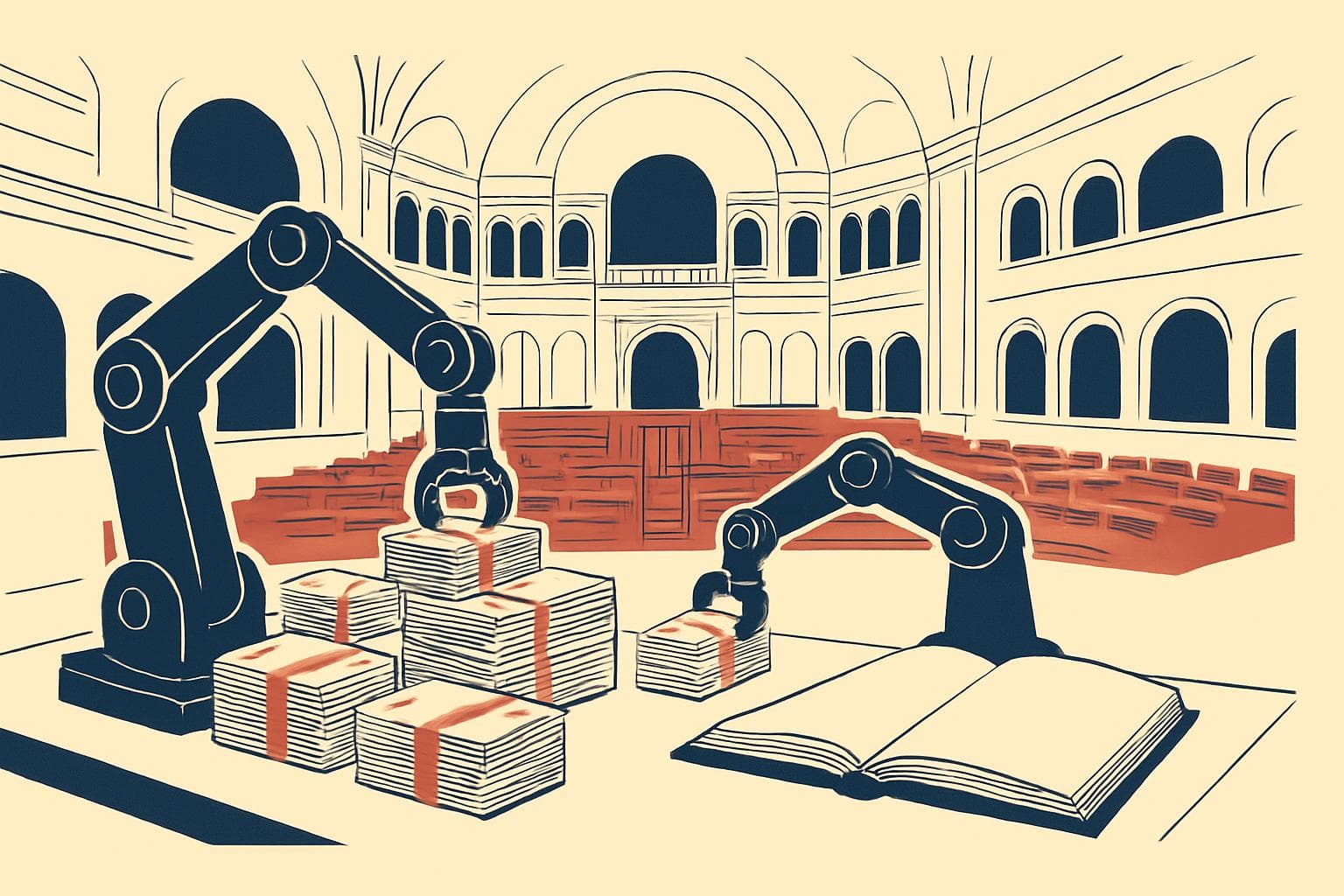
The transformation of the media market is a worldwide phenomenon. Traditional revenue sources — notably print sales — are declining, the linear television market is contracting, and an increasing share of advertising budgets flows to global digital platforms. At the same time, artificial intelligence (AI) is reshaping both content production and business operations, prompting reorganizations and widespread job cuts.
US figures and examples
In the United States, more than 17,000 jobs in the media and entertainment sector had been eliminated by the end of November 2025; these cuts affected broadcasters, film studios, digital publishers and newsrooms. Multiple reinforcing factors lie behind the trend: slowing growth in streaming, changes in ad spending structure and investor pressure to reduce costs.
Major players have not been spared. About 2,000 jobs disappeared after the Paramount–Skydance merger, and Warner Bros. Discovery and NBCUniversal have also carried out substantial reorganizations. Newsrooms such as CNN, CBS News and NBC News announced layoffs as they shift resources toward digital operations (Photo: Dee Karen).
The role of AI in job cuts
AI is accelerating change both directly and indirectly. According to Challenger, Gray & Christmas, more than 54,000 US jobs in 2025 were tied directly to AI-driven automation. Today AI mainly appears in preparatory content work, translation, research and administrative tasks, but companies are increasingly exploring broader efficiency gains through the technology — which may lead to further structural change.
Online media and platform dependence
The shift is particularly visible in online media: many publishers built business models on traffic from social networks and search. Algorithm changes left several players vulnerable, and as a result some international publishers deliberately reduce platform dependence and move toward subscription, community-based or direct reader revenue models.
The situation in Hungary
The same processes are visible in Hungary, albeit at a different level of maturity. Filó Angéla Katalin, founder of AI-Mentor, says most Hungarian companies remain in an experimental phase with AI tools — using them for content creation, translation or presentation preparation — and true business integration is still rare. She considers managerial decisions and organizational adaptation the biggest current challenges, more than the technology itself.
Economic figures show the total Hungarian media market reached 619 billion forints in 2024, while the combined revenues of the top 100 media companies operating in Hungary rose to 421 billion forints. The fastest-growing segment is not traditional media but the so-called "grey zone," now worth more than 40 billion forints. This category includes influencer markets, platform-based content production models and digital actors that are not captured by classic media statistics but increasingly capture slices of advertising and attention economy, data presented by Incze Kinga, CEO of Whitereport.
What should media companies do?
For media companies the decisive question is no longer whether the industry will change but which organizations can adapt quickly enough. Concurrent changes in consumer habits, ad market structures and the technological environment force firms to rethink business models. Organizational restructurings, mergers and cost-reduction programs have become the new normal as print circulations decline, TV audiences age and global platforms dominate much of the digital ad market.
Conclusion
The media industry's transformation is a complex, multi-layered process where AI acts as one catalyst among others. Short-term layoffs and consolidation reflect deeper structural shifts: different revenue models, evolving consumer behavior and the integration of technological tools into workflows. Those best positioned will be companies that can rapidly change organizationally and commercially and build new, sustainable revenue streams.