Google DeepMind and Google Research today introduced WeatherNext 3, a new AI-driven global weather model that the company says is its most advanced and accurate to date. Independent live evaluations by Brightband are cited in the announcement. The model learns directly from real-time observations and produces hourly, localized forecasts grounded in the latest satellite and station data.
Key technical advances
- Hourly updates: WeatherNext 3 generates a fresh forecast every hour using the latest available geostationary satellite mosaics, addressing the typical six-hour lag of many numerical weather prediction (NWP) systems.
- Higher spatial resolution: the model provides key surface variables such as temperature and moisture at 5-kilometer resolution, other surface fields at 10 kilometers, and atmospheric fields like wind speed at 25 kilometers. This represents roughly a fivefold increase in sharpness compared with WeatherNext 2, which produced forecasts on a 25-kilometer grid with 6-hour intervals.
- Training on real-world observations: rather than primarily learning from NWP outputs, WeatherNext 3 ingests live satellite mosaics and sparse weather station observations directly, improving representation of fast-changing, highly local phenomena.
Data inputs and outputs
- Satellite and station data: the model consumes 1-hour geostationary satellite mosaics alongside historical analyses and station observations, feeding a flexible Functional Generative Network (FGN) mesh transformer that outputs dense gridded fields, discrete cyclone tracks, and station-level predictions.
- Precipitation skill: WeatherNext 3 trains on two high-quality precipitation datasets — NASA’s IMERG and Google’s satellite-radar-based global precipitation reanalysis. Compared with baselines, medium-range forecasts show CRPS improvements up to 60% versus IMERG, 30% versus MRMS, and 10% versus rain gauge measurements for early lead times.
- Renewables-focused variables: the model predicts 100-meter wind speeds (approximately turbine hub height) and high-resolution cloud cover and surface radiation estimates to support wind and solar generation forecasting.
Why it matters globally
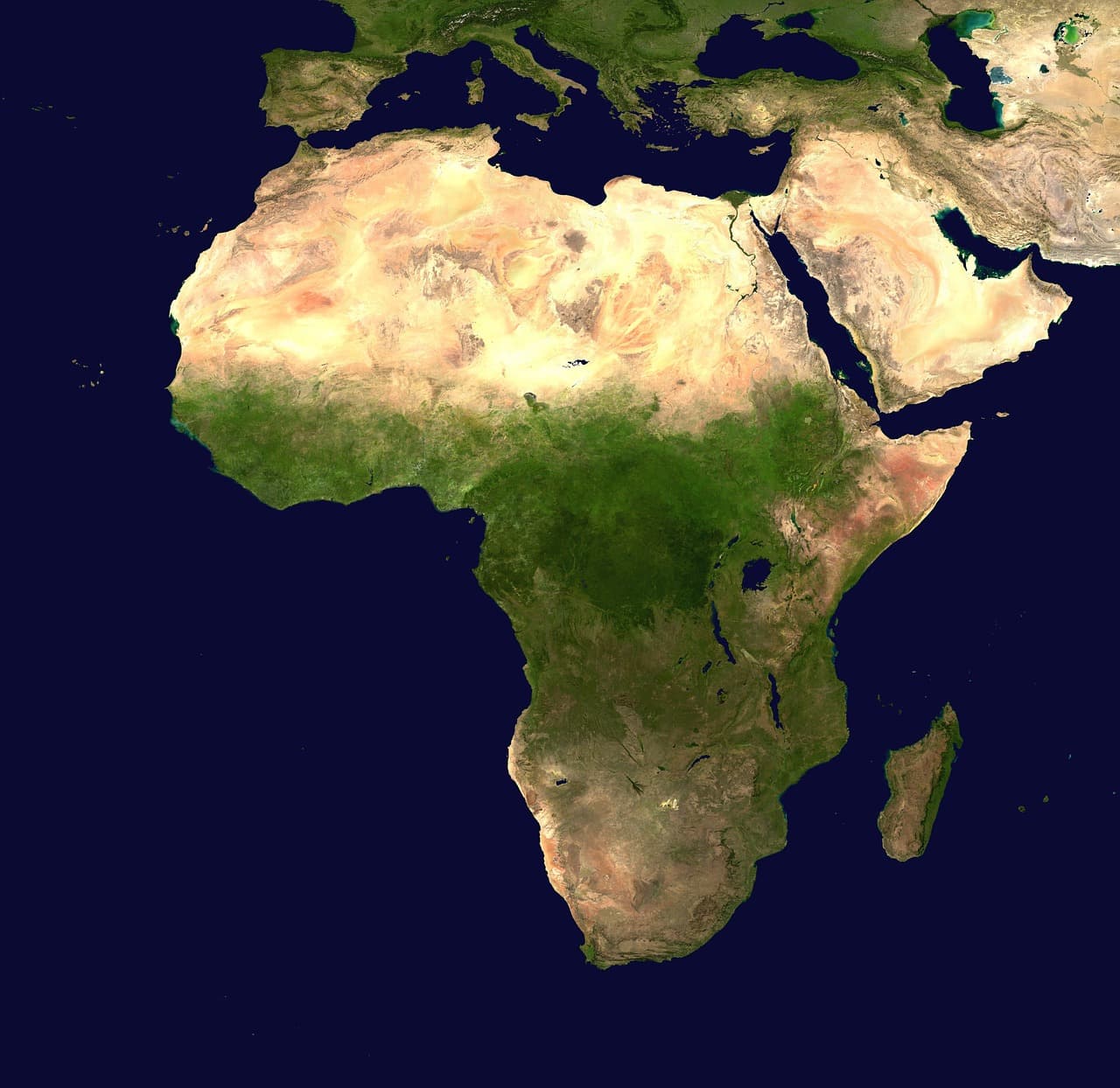
Because the model learns from continuous, global real-time observations, it is better suited to capture rapid developments such as sudden storms or sharp coastal/valley temperature gradients. That is particularly relevant for regions that historically lacked access to high-resolution forecasts due to the computational costs of regional models — notably parts of Latin America, Africa, and the Asia-Pacific. WeatherNext 3’s hourly, 5 km grid aims to bring localized, high-fidelity forecasts to billions of people and local businesses in those regions.
Integration into Google products
Google says WeatherNext 3 will begin powering weather experiences across its ecosystem today, including Google Search, the Gemini app, Google Maps, Google Maps Platform Weather API, and Google Earth Engine. High-resolution forecast data will be accessible for research and operational use via BigQuery and Earth Engine, and bulk downloads via Google Cloud Storage.
The company also reports that for planning a day or more ahead, precipitation forecasts can be up to 50% more accurate, with the largest gains where forecasts were previously less reliable.
Limitations and guidance
Despite improved data and modeling approaches, atmospheric unpredictability remains. Google notes that official severe weather warnings and public-safety advisories should continue to come from local meteorological agencies or national weather services.
Further resources
Google points users to technical papers, the Weather Lab visualizations, and Brightband live leaderboards for detailed performance information and real-time visualizations of WeatherNext 3.