Physician and immunologist Derya Unutmaz has followed artificial intelligence for years, but a turning point came in late 2025 when GPT‑5 Pro assisted him and his lab in re‑examining a 2022 experiment. The work addressed a basic immunology question with broad implications: how does glucose influence the development and specialization of T cells, the immune cells that participate in viral defense, cancer cell killing, responses to some bacteria and parasites, and distinguishing healthy from threatened tissue?
The original 2022 experiment exposed early developing T cells to two different conditions: a low‑glucose environment, and an environment containing a glucose‑like molecule that blocks glucose use, deoxyglucose. Deoxyglucose disrupts cellular energy production and protein synthesis; because proteins coordinate intracellular activity and mediate signals outside the cell, the researchers expected similar outcomes from the two glucose‑limiting conditions.
Instead, the results diverged. T cells exposed to deoxyglucose overwhelmingly differentiated into cells associated with inflammatory responses, notably the Th17 lineage. Low‑glucose conditions also produced some inflammatory‑biased T cells, but not at the magnitude seen with deoxyglucose, and the effect of early deoxyglucose exposure persisted after the molecule was removed.
The discrepancy could not be explained by energy limitation alone, indicating an additional mechanistic factor that the team could not initially resolve. Because they could not interpret the finding at the time, the researchers shelved the experiment.
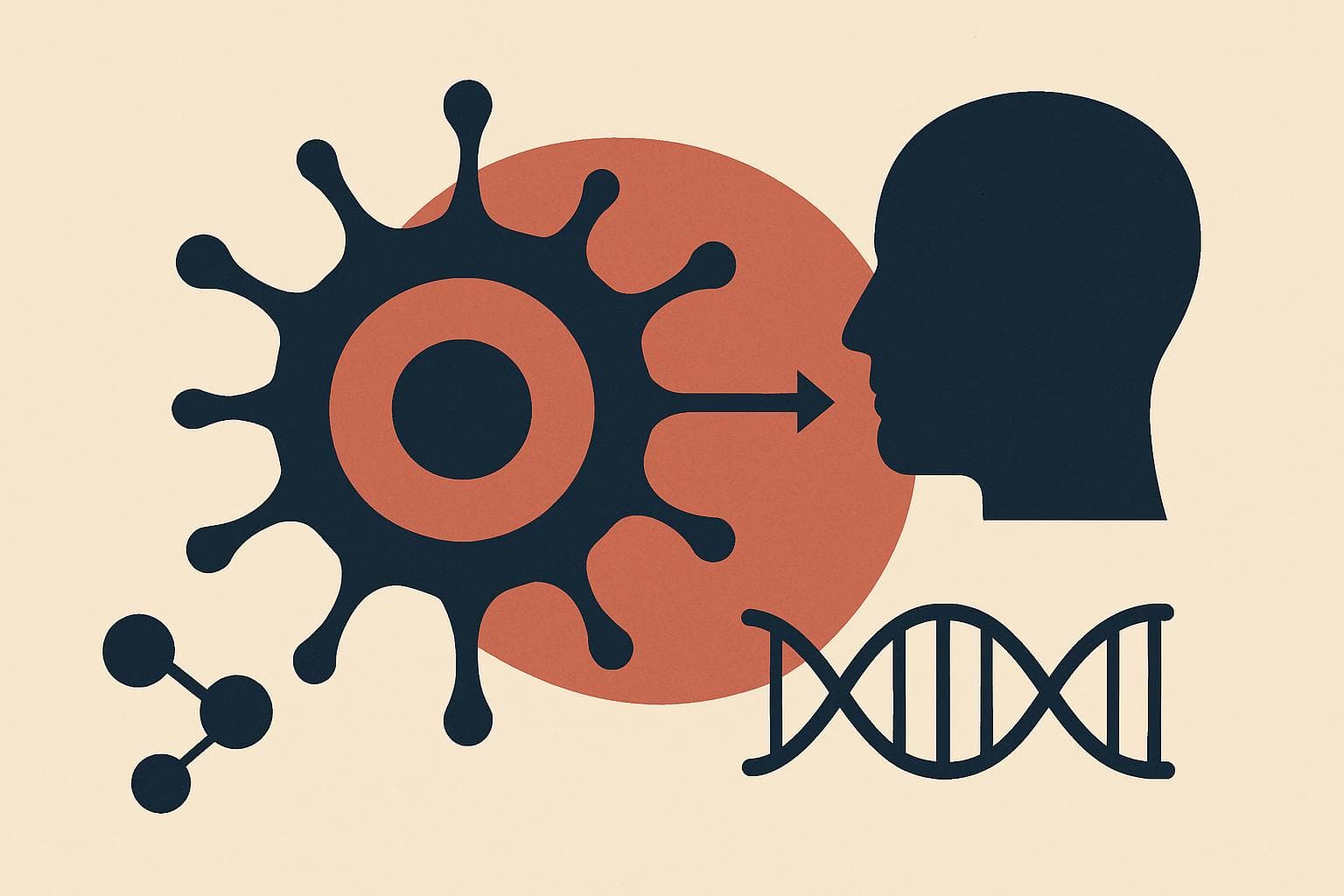
After GPT‑5 Pro became available in late 2025, Unutmaz uploaded the data and asked the model to analyze it. GPT‑5 Pro proposed that deoxyglucose interfered with the synthesis of a protein called IL‑2. IL‑2 can prevent T cells from becoming the Th17 inflammatory subtype; by reducing IL‑2 production, deoxyglucose would remove a barrier to Th17 differentiation, potentially explaining why deoxyglucose induced far more Th17‑type cells than simple glucose restriction.
Unutmaz described the model’s suggestion as a “really remarkable insight” that, in hindsight, made clear sense; the connection lay outside his immediate area of focus and had been missed by his lab.
He then tested the model’s predictive ability using an experiment he had already run but not yet published. That experiment concerned CD8+ T cells targeting a form of lymphoma and demonstrated enhanced cytotoxic activity against the lymphoma cells. When asked to simulate the same experiment, GPT‑5 Pro correctly forecast the increased killing ability of the CD8+ cells — a prediction the model could not have learned from published sources because the results were not yet public.
Unutmaz says advanced models like GPT‑5 Pro now act more like collaborators: they can accelerate literature reviews by processing the hundreds of new papers published weekly, help identify unanswered questions, refine hypotheses, and simulate experiments to prioritize which wet‑lab tests are most promising. This approach can eliminate weeks, months, or even years of experimental iterations and substantially speed progress in biology.
Nonetheless, domain expertise remains essential: AI may generate plausible mechanistic hypotheses, but human experts must judge their significance and feasibility. Someone lacking Unutmaz’s experience would not have been able to assess whether the mechanism flagged by GPT‑5 Pro in the T‑cell experiments was meaningful.
The ability of AI to generate insights and accelerate research also raises safety and ethical concerns. The same capabilities that speed beneficial medical and biological discoveries could lower barriers to misuse, including efforts to design or deploy biological or chemical agents. OpenAI’s Preparedness Framework outlines the organization’s approach to tracking such risks and building protections against AI capabilities that could cause severe harm.
Unutmaz is optimistic about AI’s trajectory and considers it unlike prior technological shifts, such as the internet or the industrial revolution. He has also used tools like Codex and GPT‑5.2 Deep Research for compiling large cancer‑mutation datasets and producing research materials, including a draft textbook focused on T cells, with the aim of accelerating precision immunotherapy efforts.
He said he feels fortunate to witness and take part in this period of discovery: “To not only be able to witness it historically but participate a little bit, I feel truly lucky and privileged to do that.”
Why this matters
The case illustrates how advanced generative models can complement human expertise in biological research by suggesting novel mechanistic explanations and predicting experimental outcomes, thereby accelerating hypothesis selection and experimental design. At the same time, it underscores the continuing need for expert validation and responsible governance to manage the potential risks associated with powerful AI capabilities.