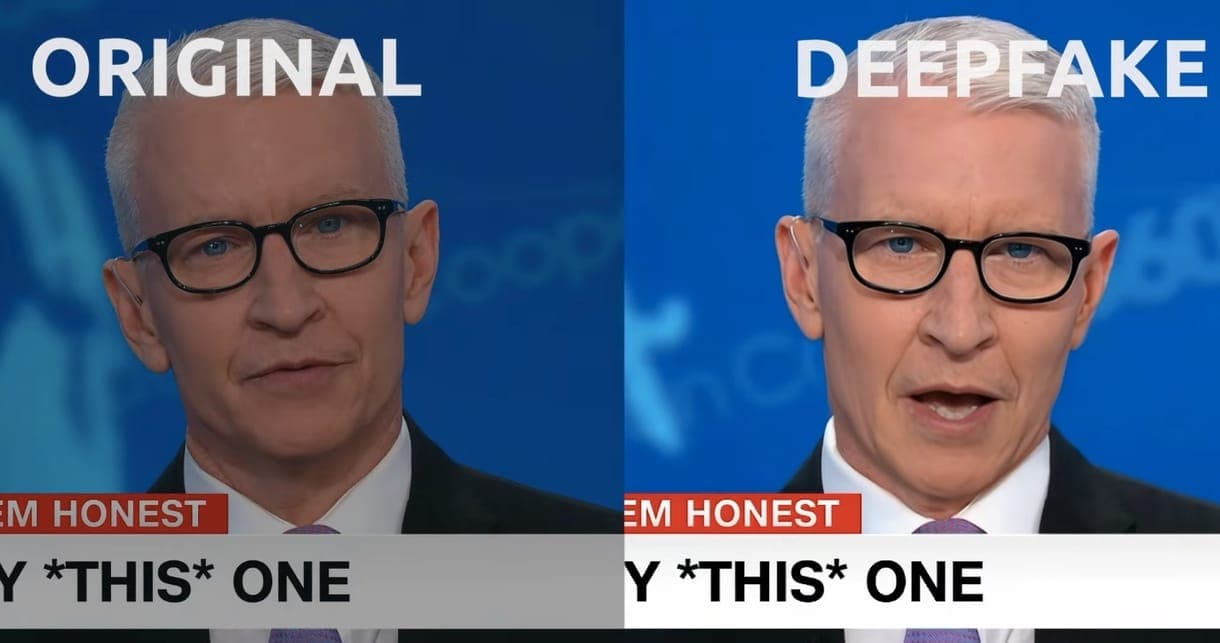
Magyar Telekom commissioned a survey of 1,010 Hungarian residents aged 18 to 65 to assess awareness of deepfake content, how it affects media consumption, and who people consider responsible for countering manipulated images, videos and audio. The study aimed to map recognition skills, attitudes and intended responses to encountering such material.
Key findings
- 84 percent of respondents said they often suspect that the content they encounter may be manipulated.
- When scrutinizing suspicious videos, 42 percent look for unnatural facial expressions, 30 percent check for mismatches between voice and lip movements, and 40 percent view unusually high visual quality itself as a possible red flag.
- Experts recommend also watching for eye movement, continuity of skin tone between face and body, body outlines and shadows, and evaluating whether context and content seem plausible in everyday situations.
Recognition test: images and videos
Participants were asked to judge three images or videos as real or deepfake.
- For images, more than half correctly identified the manipulated version, but 49 percent misclassified a genuine photo as a fake, indicating a broader erosion of trust.
- For videos, a clearly flawed synthetic clip was correctly identified as manipulated by 69 percent of respondents, yet only about one third suspected a more polished fake that matched mouth movements to voice.
- Sixteen percent of respondents did not believe a genuine video and thought it was manipulated.
The survey also found that older people and those with lower educational attainment are easier to mislead with such content.
Concerns and perceived risks
- 54 percent believe the spread of deepfakes increases the risk of deception; 44 percent expect growing mistrust of online content; 43 percent think distinguishing reality from fiction will become harder.
- Respondents see the greatest risks in politics (47 percent), finance (42 percent) and crime (39 percent).
- On privacy risks, 59 percent of 18–26-year-olds fear that deepfakes could be made of themselves or loved ones.
How people would react to finding manipulated material about themselves
- If they found a manipulated photo, video or audio of themselves, 36 percent would report it to the platform hosting the content, while 26 percent would consider legal action.
- One in eight respondents would be completely unsure how to respond.
Magyar Telekom recommends documenting any discovered fake—taking screenshots or saving videos, recording the URL and available metadata—so these can be attached as evidence to follow-up reports. After documentation, the company advises reporting the content to the hosting service and consulting legal counsel about further steps.
Who should act?
Sixty-two percent of respondents expect the platforms where such images and videos appear to provide solutions. The government and technology companies were each named by 48 percent as key actors. Individual responsibility was less emphasized: roughly one third believe users themselves have a major role in stopping the spread and recognizing manipulated content.
Magyar Telekom’s position
Pereszlényi Zoltán, deputy commercial CEO of Magyar Telekom, said the public looks to the tech sector, including telco companies, for help in detecting deepfake use and promoting ethical practices. Magyar Telekom states it aims to complement network reliability with digital guidance and ongoing education so users can safely and critically navigate an environment increasingly affected by manipulated content.