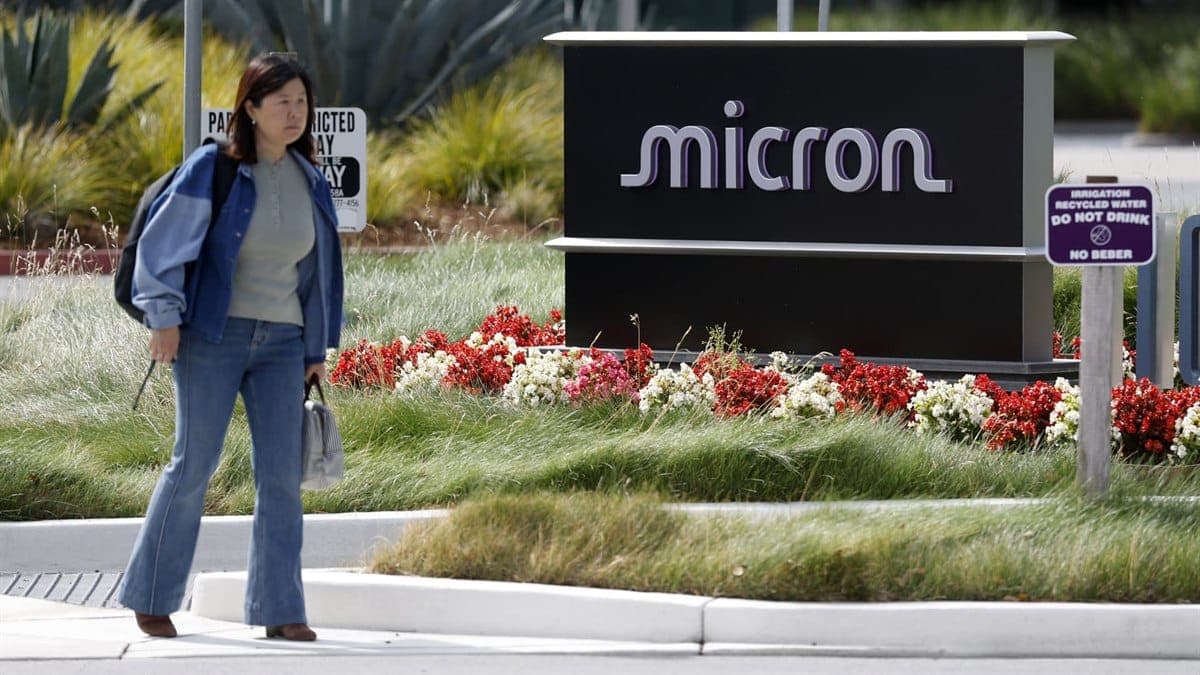
Micron Technology’s stock price briefly topped a $1 trillion market capitalization on Tuesday after a single-day gain of about 19 percent. The move placed Micron alongside other high-value memory makers, including Samsung.
What drove the surge?
Investors pointed to several market signals behind the rapid rise: Micron’s entire 2026 HBM (high-bandwidth memory) supply is reported to be sold out, HBM4 is already in production, and customers are committing to multi-year contracts at fixed prices. Those developments increase revenue visibility for the company and suggest tightening supply conditions.
How this matters in practice
Memory demand is growing faster than compute alone. According to the reporting, each generation of frontier AI models consumes more memory than the previous one, and agent-style workloads have pushed that curve even steeper. Long-context inference, key-value (KV) caches, and persistent agent state require multiples of bandwidth and capacity compared with pure inference use cases.
The piece argues this is not merely a short-term logistics squeeze: when an entire calendar year’s worth of HBM is sold out before the chips are shipped, demand behaves more like infrastructure draw than a conventional market. The reporting also notes that some service providers, including Anthropic, have rationed tokens for paying users, indicating constraints in capacity or service delivery.
Key takeaway
The market reaction reflects a deeper trend: AI requires not only more compute but substantially more memory than current global manufacturing capacity readily supplies. That shift has implications for memory vendors’ revenues, contract structures, and where future investment flows.