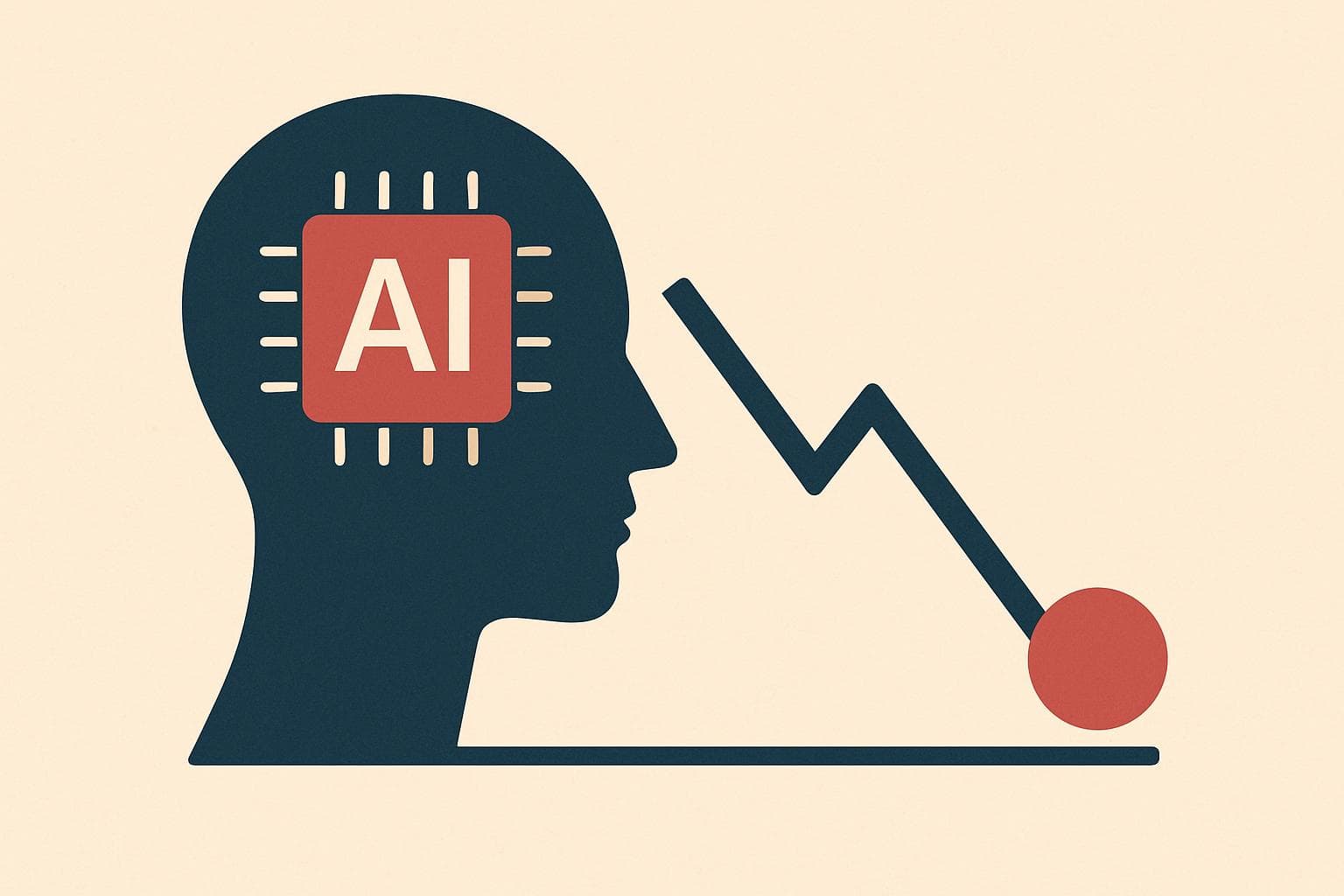
The Bank for International Settlements (BIS) — often described as the "central bank for central banks" — has issued a warning that the current buildout of artificial intelligence (AI) investments shows parallels to earlier technological revolutions and capital booms that ultimately ended in painful reversals.
Why this matters
The BIS report argues that major technological shifts tend to attract investment well in excess of what near‑term returns justify. The concern is that AI may follow the same trajectory at a time when the global expansion relies, at least in part, on this single investment upswing to sustain growth.
Historical parallels
The BIS notes that some of history's biggest technological breakthroughs — such as canals, railroads and the internet — generated massive investment waves, often years before clear economic payoffs emerged. Those episodes frequently concluded with investment reversals that induced economy‑wide recessions.
What the report says
As the BIS puts it: “These episodes ended with an eventual reversal in investment, inducing economy‑wide recessions.” The institution highlights that the scale and speed of the current AI investment boom, coupled with expectations of large productivity payoffs, resemble those precedents and therefore present potential downside risks in the near term. If realised returns fall short, the current surge in AI spending could become "a protracted investment bust" with knock‑on effects throughout the financial system.
Where the stresses could emerge
Investors have already bid up valuations of companies expected to dominate AI, lenders have financed unprecedented infrastructure buildouts, and suppliers have scaled up to meet demand. These bets have helped keep financial conditions loose and supported global growth.
However, the BIS warns that if investors start to question AI's payoff, hyperscalers could cut back their spending. That would leave engineering firms, data‑centre developers and other suppliers — many of which expanded and took on debt to finance that growth — struggling to service obligations.
Stress could also spread through the fast‑growing private credit market. The BIS notes that direct‑lending funds exposed to AI borrowers have already faced redemption requests, forcing some to liquidate assets and return capital.
International financial linkages
An AI‑led equity correction could reduce global wealth, the BIS adds, because U.S. stocks represent an outsized share of global equity markets. A U.S.‑centric repricing could therefore have worldwide consequences.
The broader message
The AI boom is unfolding within a highly concentrated ecosystem of hyperscalers, suppliers and private lenders connected by debt and often opaque financing structures. Those links create multiple channels for a slowdown to propagate through financial markets at a time when policymakers are already dealing with persistent inflation, stretched public finances and recurring supply shocks.
The BIS cautions: “Should inflation rise significantly or AI‑led investment turn to a bust, the macroeconomic consequences could be amplified by existing financial vulnerabilities.”
Bottom line
AI may ultimately deliver the strong productivity gains that markets expect. But reaching that outcome could require navigating a historic investment cycle, renewed inflationary pressures and financial vulnerabilities simultaneously — a combination of challenges that policy makers have rarely had to face all at once.