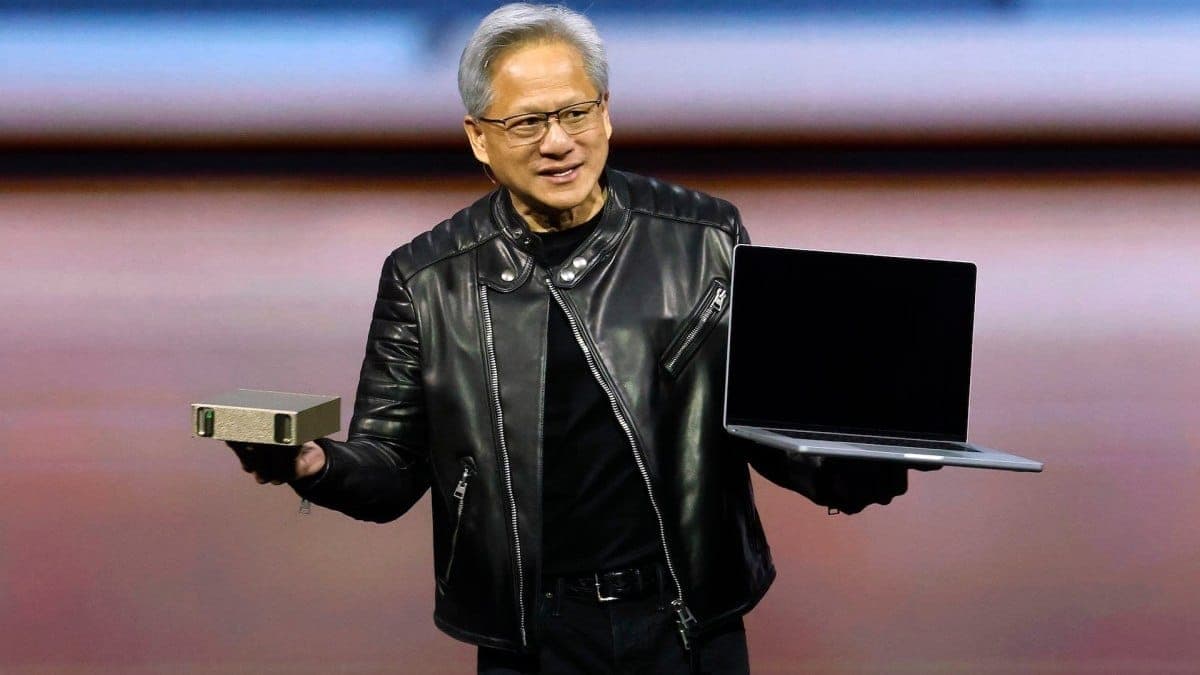
At GTC Taipei 2026, Nvidia introduced a consumer chip called RTX Spark, built on its GB10 design. Nvidia stated that the new chip can deliver up to 1 PFLOP of FP4 compute and provide 128 GB of unified memory—specifications the company says are sufficient to run 120‑billion‑parameter models locally on a single machine.
Partners and software adaptation
According to the announcement, Lenovo and HP are developing desktops and/or workstations around RTX Spark. Microsoft said it will adapt Windows to support the new architecture, and Adobe is re‑architecting Photoshop and Premiere Pro to take advantage of the chip's capabilities.
Why this matters
The significance of RTX Spark lies in combining two of Nvidia's strengths: the widely adopted CUDA software ecosystem and large unified memory that allows big models to reside and execute on one system. Local AI until now often required a trade‑off: either rely on CUDA—which is primarily tied to Nvidia hardware—or use large unified memory like Apple's M‑series chips provide. Nvidia's prior PC chips lacked that unified memory approach; RTX Spark aims to bridge that gap.
Concentration of an ecosystem
Observers have noted that Nvidia already exerts substantial influence over the cloud infrastructure used to train many models. With RTX Spark, the same software and hardware stack can increasingly appear on desktop machines, meaning that much of the local AI ecosystem could run on a single vendor's stack. Commentators framed this as local AI becoming effectively Nvidia AI that the user happens to own.
Timing and considerations
Nvidia and its partners have announced plans to support the new hardware, but exact availability dates and shipping timelines depend on manufacturers' schedules and the completion of software adaptations. The technical specifications and partner plans were presented at GTC Taipei; companies involved may disclose further details in the coming weeks and months.
Summary
RTX Spark marks a notable step by bringing datacenter‑style features—CUDA compatibility plus large unified memory—into consumer PCs. How quickly the hardware and software ecosystem adopts it, and how competitors respond, will determine whether this reshapes local AI development and deployment.