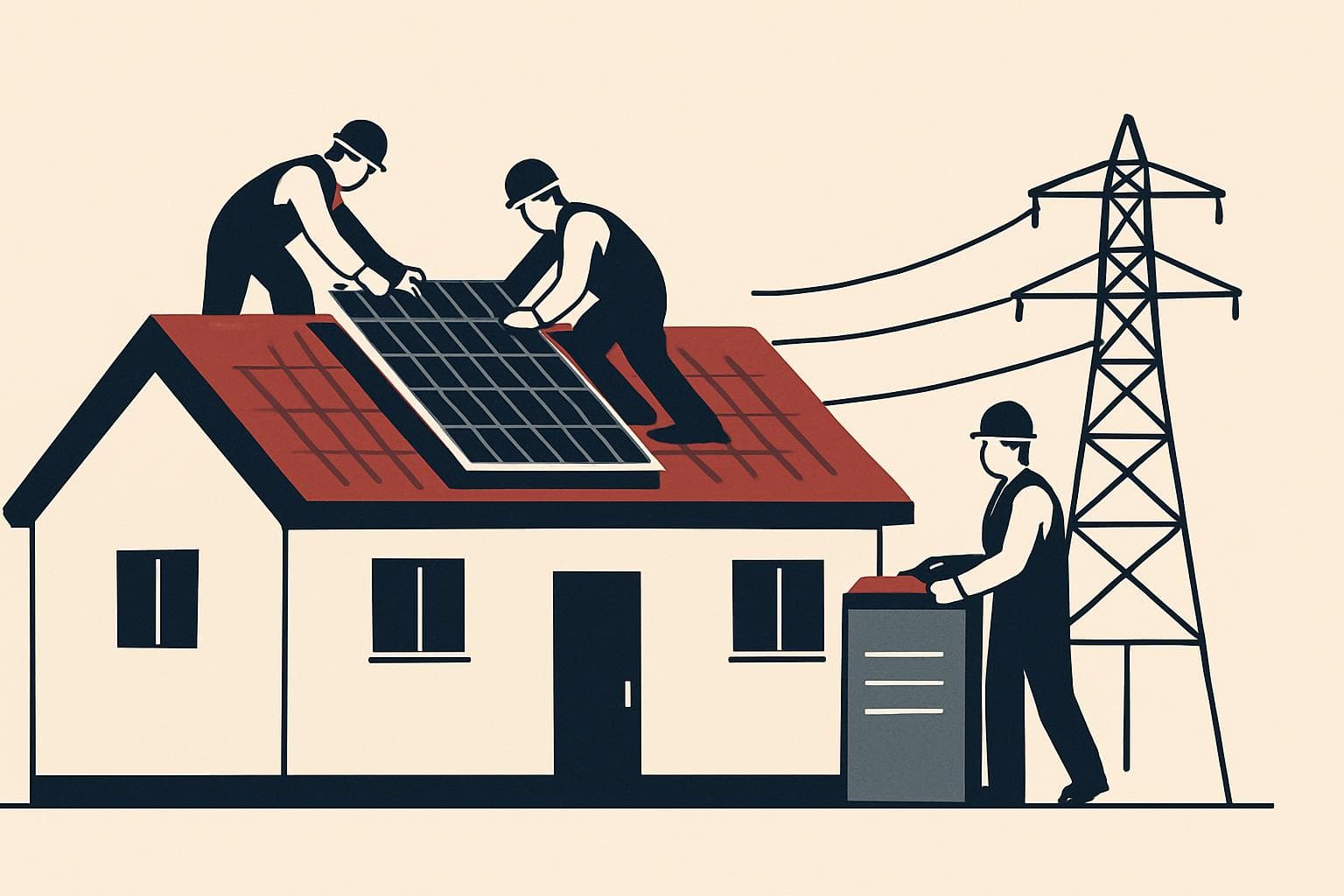
OpenAI unveiled the Grid Protectors Program, a national initiative intended to make future compute campuses reduce or shift electricity use when local grids are under strain. The company said it will work with utilities, regulators and policymakers to create location-specific arrangements so campuses can lower demand during peak periods.
Why this matters
Reliable electricity is essential for households and businesses during winter cold snaps and summer heat waves. OpenAI cites projections that U.S. data center capacity could exceed 100 gigawatts by 2030, and says that presents an opportunity to design campuses that help rather than stress the grid. The company wants its campuses’ flexibility to become a resource utilities can call on in critical moments.
Georgia pilot and Effingham campus
Georgia is the program’s initial focus. For its planned Effingham County campus, OpenAI committed to pay the full infrastructure and electric-service costs required to serve the project. The company intends to use Effingham as a pilot that can serve as a model for future sites.
Under an agreement with Georgia Power, OpenAI said it can provide up to 1,000 megawatts of flexible demand response — roughly equivalent to the average electricity demand of about 700,000 households. OpenAI noted that number exceeds the combined populations of Washington, D.C., and Boston in household terms.
Technical approaches and operating principles
Newer compute facilities differ from data centers built even a few years ago, allowing more flexibility in power demand. Depending on local needs and available equipment, OpenAI said campuses could reduce consumption, supply power from on-site generation or storage, and use batteries and power controls to smooth demand swings.
The company argues that because power lines, substations and other grid assets are fixed costs whether demand is low or high, steady year-round demand from compute campuses can help spread those fixed costs across more sales. At the same time, flexibility to reduce demand at peak times can limit the need for costly new generation, which could help lower costs for other customers.
OpenAI emphasized it will pay its own energy and infrastructure costs and that large computing facilities must cover the costs they create and help utilities manage the systems they depend on. The firm also stated that flexibility is not a substitute for investment in new energy supply and transmission; both are needed.
Customer impacts and projected savings
Georgia Power projects approximately $950 million in annual customer savings beginning in 2029 from its portfolio of large-load agreements and expected growth, including Project Camellia. The utility estimates that represents at least $15 per month in benefit for a typical residential customer using 1,000 kilowatt-hours.
OpenAI said long-term contracts and financial assurances can protect other customers if a project is delayed, downsized or canceled. The company will work with utilities, regulators and policymakers to tailor arrangements that reflect local grid needs, specify how much demand can be reduced, how quickly and for how long.
Outlook
OpenAI presents the Grid Protectors program as a way to strengthen grid reliability and prevent families and small businesses from bearing disproportionate costs of AI infrastructure. The company plans to share additional commitments as local agreements are finalized and to collaborate with utilities and regulators on practical, site-specific solutions.