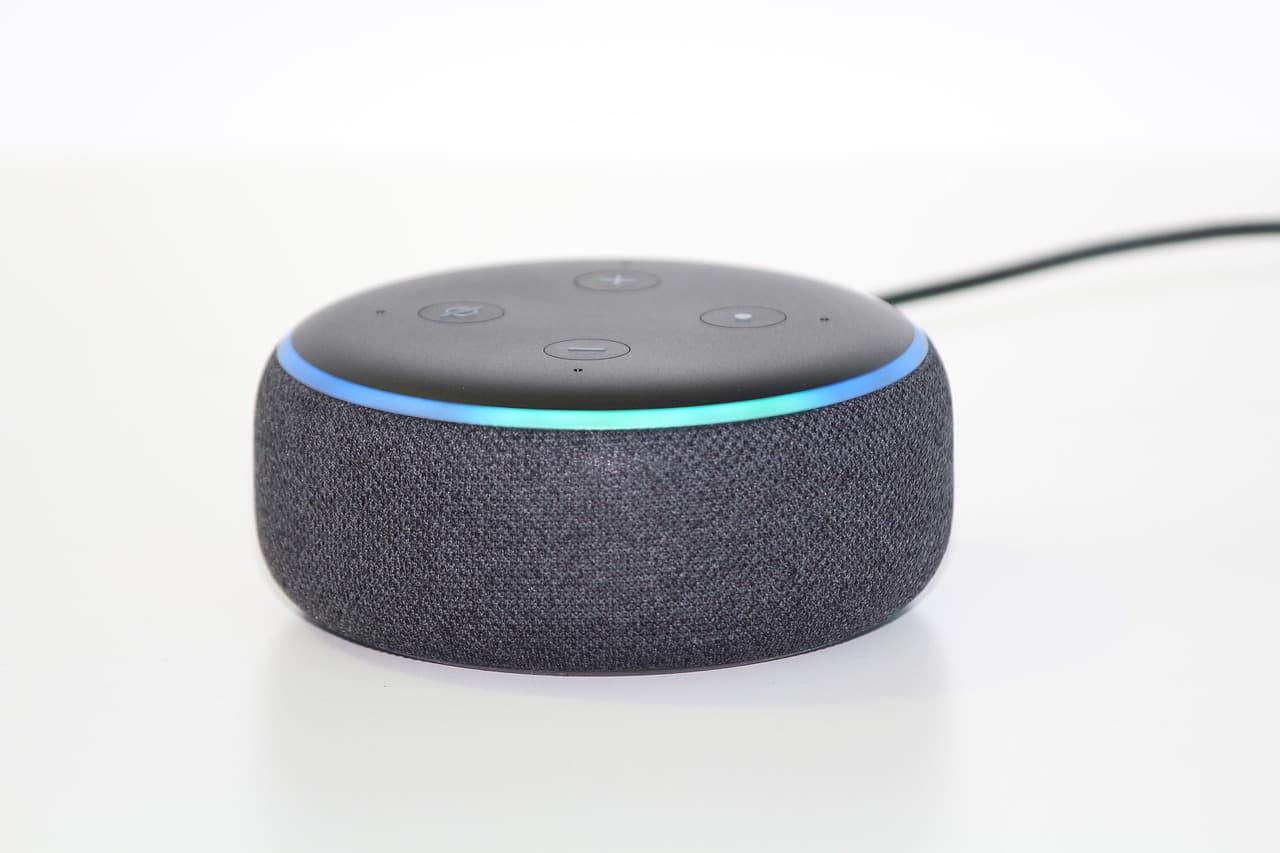
Panos Panay, Amazon’s Senior Vice President of Devices, Alexa & Leo, spoke at TechCrunch Disrupt on Thursday about his view that personal computing will shift from app-focused interactions toward ambient computing — devices that use sensors and AI to act in the background on users’ behalf.
Panay framed the current state of interaction as one where users must explicitly tell tools what to do, using smartphones and apps in a "point, shoot, return" pattern. By contrast, he said ambient devices will listen, sense and infer what tasks or reminders are needed, proactively helping users without requiring direct commands.
"As it works in the background, you’re able to stay more present. You’re able to get more done. You’re about to spend more time with people… you’re not afraid if you miss something. It’s incredibly powerful," Panay said.
Bee: Amazon’s new ambient hardware
On Thursday Amazon introduced a family of Bee devices intended to embody this ambient approach. The lineup includes a wrist-worn band that can be detached and worn as a pendant, and a credit-card-sized device that magnetically attaches to the back of a smartphone.
The Bee devices passively capture audio and create notes about the user’s day, extracting to-dos, reminders and insights that may be useful later. To address privacy concerns, Amazon designed the system so the devices do not store raw audio recordings: audio is processed in real time and then deleted. Transcripts are encrypted with keys generated and controlled by the user’s device, meaning no one else — including Amazon employees — can access those files unless the user deliberately shares them.
Panay said privacy and user control were central to the design of these ambient products. "You have to give customers that control," he said. "Every product is different, but for Bee specifically, as an example in the ambient space like that, you have to design with privacy in mind. And that’s what we do. That’s critical."
Apps won’t disappear, but their role may change
Panay, who joined Amazon after 19 years at Microsoft where he oversaw Surface device development, suggested that ambient computing could reduce reliance on traditional app-driven interactions. He predicted a generational shift in which people won’t automatically ask for an app to do something, but instead expect devices to understand their needs.
He clarified that he does not expect a single form factor to replace others. Rather, Panay envisions an "intelligence layer" that ties multiple devices and form factors together, using sensors to better understand users and bring AI into the surrounding environment. "I’m not a proponent that says one form factor is going to replace another... I think there’s an intelligence layer that connects it all… and it has to be useful," he said.
With Bee and its ambient strategy, Amazon is positioning personal AI and sensor-rich devices as a path away from app-centric workflows while emphasizing privacy and user-controlled encryption for sensitive data.