Paul Shearer’s seven-year-old daughter produced a six-word line — “Put some brain in your thinking” — that has been widely circulated as a neat aphorism. Beyond its wit, the sentence has been read as a diagnosis: in an era of widespread AI, thinking and the biological brain are being treated as separable components.
This interpretation gains urgency against several contemporary trends: historically low PISA scores, ongoing debates about cultural and literary decline, and analyses such as those cited from Graphite that estimate roughly 50 percent of online articles may be primarily AI-generated. Together, these indicators feed a narrative in which cognitive labor is increasingly outsourced to models and automated agents.
What’s changed: the decoupling of mind and substrate
The author frames this as a generational shift. For many adults, the brain and thinking remain a natural unit; for children of Generation Alpha, accustomed to AI tools from early life, the link appears looser. The child’s phrasing — to “put some brain in your thinking” — implies that the brain is now an optional ingredient rather than the default medium of thought.
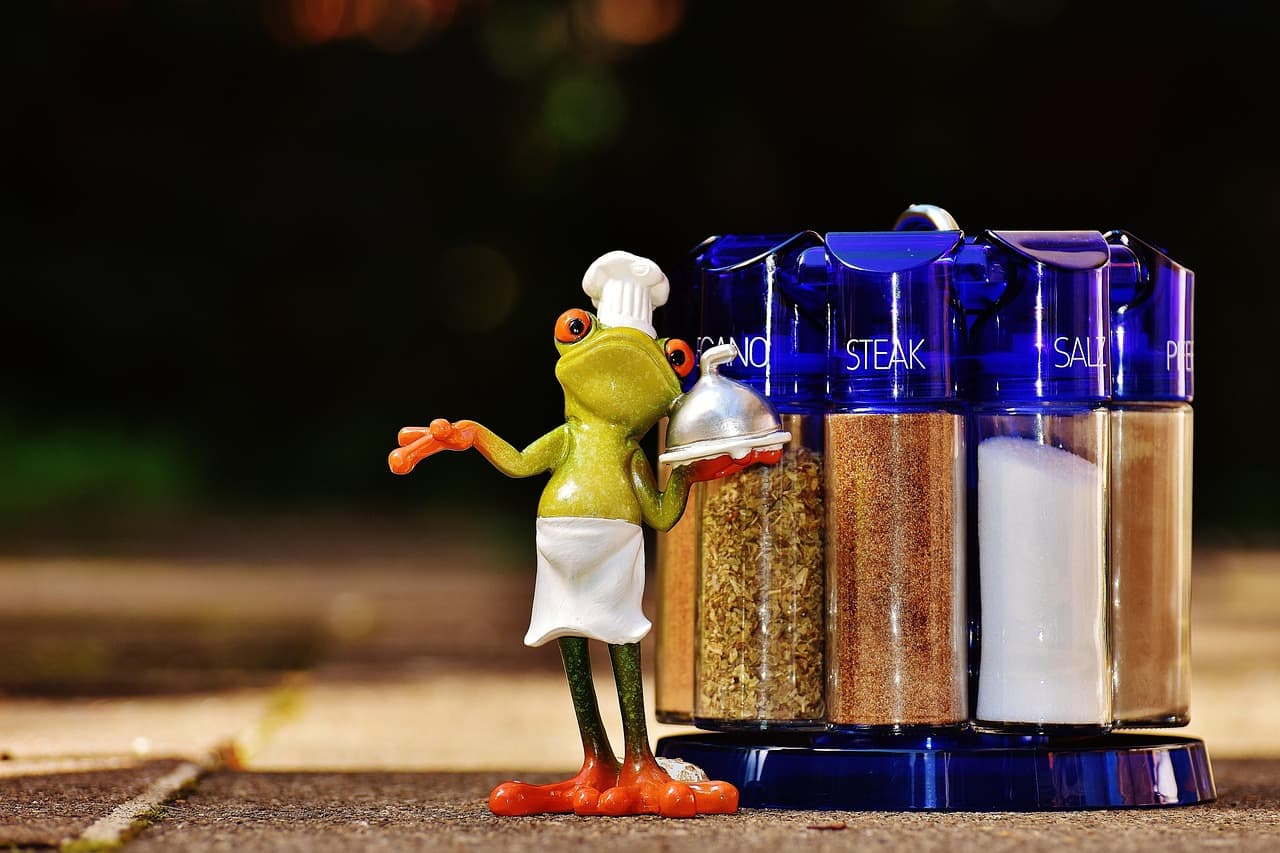
Using culinary metaphors, the essay argues that the brain has become a kind of luxury spice: valuable, but optionally added. Both human cognition and AI-produced output count as “thinking” in practice, which creates winners and losers depending on who learns to mix the ingredients well. Those who stop exercising biological thinking risk becoming little better than the bots that can replace them.
Risks: cognitive atrophy and social consequences
Cognitive atrophy — declining attention and mental stamina — is depicted as reversible, but only if attention itself becomes the engine of recovery. The text warns that the ease of delegating reasoning and composition to models undermines habits that sustain critical thinking and creativity, capacities essential for informed public discourse and complex decision-making.
The author sees this not simply as vanity; if attention and cognitive effort continually yield to shortcuts and prompts, public culture and the knowledge ecosystem will be incrementally hollowed out.
Possible responses: collective and individual strategies
Several responses are considered and critiqued:
- Global bans or mass rejections of AI tools: theoretically effective but practically unlikely given international competition and entrenched interests.
- “Friction-maxxing”: intentionally introducing inconvenience into daily life to rebuild tolerance for effort and attention (for example, reducing convenience automations).
- Political experiments such as delegating decision-making to different age groups are mentioned as provocative ideas but are acknowledged as impractical.
Overall the author is skeptical that any single macro policy will fully reverse ongoing trends, given economic and geopolitical pressures driving the AI race.
Practical steps — how to “put some brain in your thinking”
The essay recommends concrete individual actions: temporarily delete AI apps for a week as a test, prioritize handwriting and reading printed books rather than audio, write emails and code yourself rather than relying on assistants, and undertake physical training without mechanical aids. These measures aim to restore the routines that exercise human cognition.
An observation attributed to an OpenAI staffer is quoted: many people would benefit from doing less and thinking more. The author frames this as reclaiming a human prerogative: to use one’s own mind rather than fear it and replace it.
Conclusion: turning a line into a slogan
The author urges turning the child’s sentence into a practical slogan — a brief corrective comment to signal that someone’s output appears overly AI-dependent. He reports he already uses it as a reply to AI-generated comments and invites others to adopt it. The underlying claim is pragmatic: urging people to notice when they are outsourcing thought and to rebuild habits that require active cognitive effort.
If you have enough attention to read a long essay, the author concludes, you have enough brain left to start putting it back into your thinking — but doing so requires deliberate, sustained practice.
Still Life with a Skull and a Writing Quill — Pieter Claesz, 1628 (illustrative reference)