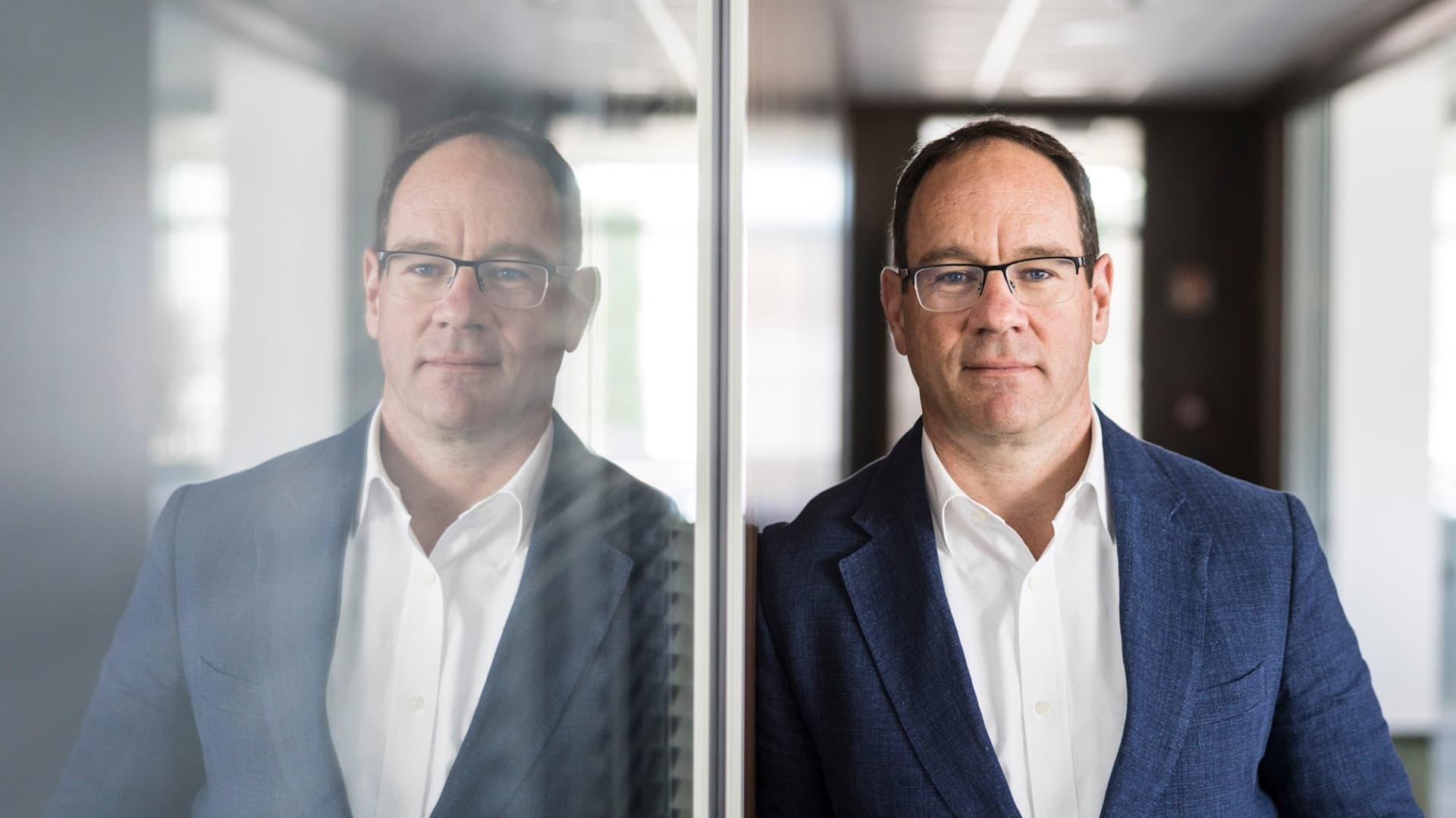
After 12 years as CEO of CIB Bank, Pál Simák will step down and take up a new international role within the Intesa Sanpaolo group. He will begin the position next week, tasked with building the Next Gen Acquisition Machine — a digital customer-acquisition platform intended to offer an alternative for clients who might otherwise turn to fintech providers.
What Simák says he achieved at CIB over 12 years
According to Simák, CIB Bank has undergone a major turnaround as part of the Intesa Sanpaolo International Banking Division. Problems that characterized the bank when he arrived — high non-performing loan (NPL) ratios and large project-loan and repossessed-property portfolios — have been substantially reduced. Today, the bank’s problematic loan stock is well below the market average, its real estate portfolio is less than 4% of total assets, and it currently has no repossessed properties.
He emphasised that the bank’s liquidity and capital position are strong, and that the Magyar Nemzeti Bank’s supervisory assessment ranks CIB among the domestic sector’s better risk-profiled institutions. Building on that foundation and full support from the parent bank, CIB achieved its highest profit in its 46-year history last year. Simák also pointed to corporate culture improvements: employee engagement metrics have remained above 90% over the past three to four years.
Three strategic cycles, all goals met
Simák described the past 12 years as three distinct strategic cycles aligned with the group’s four-year planning horizon. The first focused on cleaning up the bank and returning it to growth; the second on improving efficiency and cost/income ratios for sustainable profitability; the third on accelerating growth, boosting profitability, and strengthening employee engagement.
He argued the bank’s size and market position provide a solid base. Despite a drop in interest rates from roughly 18% to around 6% over the last three years, revenues did not fall; in fact, CIB posted its best revenue result in history last year. This performance was driven by a less interest-dependent, diversified revenue mix — growth in volumes, higher fee income, and strengthened treasury activities.
The Next Gen Acquisition Machine role at Intesa Sanpaolo
Simák said his appointment fits Intesa Sanpaolo’s four-year strategy, which places greater emphasis on international growth. Reporting to Paola Papanicolaou, head of Intesa Sanpaolo’s International Banking Division, his concrete brief is to build a digital customer-acquisition platform that can meet the needs of new markets and customer segments and act as an alternative to fintech solutions.
He stressed that he will bring managerial experience from Hungary rather than a turnkey technology solution, but that the new platform will reuse proven elements from CIB — for example, digital identity and account-opening processes.
AI’s role in the future of banking
Simák believes artificial intelligence will accelerate development and improve cost efficiency. AI will play a key role in proactive, data-driven customer support and advisory services that help customers make better decisions. He noted the strategic challenge of combining proven market features with new functionalities that will become important in a rapidly changing environment, including ongoing developments in crypto and stablecoin solutions.
Leadership changes at CIB
Luigi Fuzio will replace Simák as CEO; he comes from the group’s Slovenian sibling bank. Szabó Balázs has been appointed deputy CEO with broad responsibilities. According to Simák, Szabó’s more than ten years of CIB experience will provide stability and local knowledge to support execution of the next strategic cycle.
Economic policy outlook and the euro question
Regarding the recent government change in Hungary, Simák said that over his 18 years in the banking sector — including 14 years as CEO across two banks and four years as a CFO — he has seen the economy and the banking system survive several crises. Although some government and regulatory interventions in recent years were successful (for example, forintisation, debt brakes, subsidised lending), other measures reduced predictability and tied up resources. Despite that, he assesses the sector as much more stable and healthier than in the post-2008 period.
He argued that restoring growth requires improving competitiveness and opening up banking competition, backed by regular, candid cooperation among government, the Magyar Nemzeti Bank and the banking sector. On euro adoption, Simák warned that short-term profitability pressures could arise from the disappearance of many FX services and a lower interest-rate environment. However, he suggested that higher long-term credit demand and portfolio growth — as seen in other countries — could offset those effects, referencing Croatia’s experience where no dramatic bank revenue collapse was evident.
Where banking might stand in 12 years
Simák expects the core products of banking — loans, savings, payments — to remain, but distribution channels will change drastically. He foresees two dominant models: large digital platforms handling most flows, and highly personalised human service. New advisory formats outside traditional branches (in clients’ homes or offices, or at dedicated meeting points) will coexist with branches focused on complex products.
AI-driven personal financial assistants or “pocket banks” will make customers more informed, requiring banks to understand and integrate these intelligent agents. Nevertheless, because banking is fundamentally based on trust, personal human relationships will retain important value even in a digitally dominated landscape.
Key figures and names from the article:
- Pál Simák: 12 years as CIB CEO
- CIB Bank: 46 years old; recorded highest profit last year
- Real estate portfolio: less than 4% of total assets
- Employee engagement: above 90% over the past 3–4 years
- Interest rate environment: fell roughly from 18% to ~6% in the last three years
- Incoming CEO: Luigi Fuzio
- Reporting line for new role: Paola Papanicolaou, Intesa Sanpaolo International Banking Division
Photographs: Kaiser Ákos / Portfolio
The article’s preparation was supported by the Hungarian-optimized Alrite online dictation and video subtitling application.