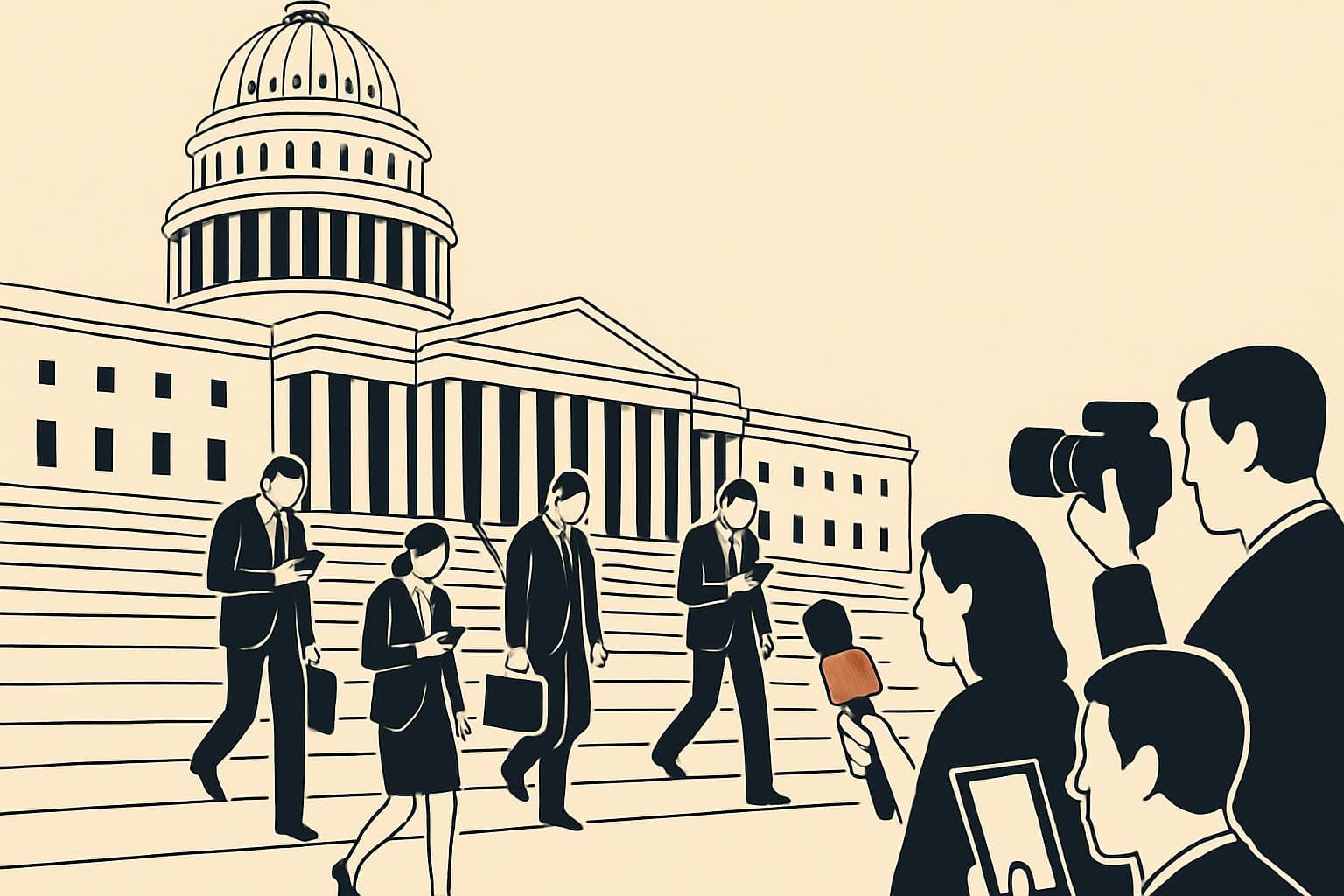
Pope Francis (XIV. Leó) was received by French President Emmanuel Macron on Friday, marking the start of the pope’s four-day visit to France. After their bilateral meeting, the pope delivered a speech in French at the Élysée Palace before ecclesiastical and state officials, in which he warned about the dangers of artificial intelligence (AI).
In his remarks the pope said, “we can lose our humanity in a paradise of machines that flood and define our daily lives.” He urged that “we teach the mind ethical discernment,” noting growing concerns about the regulation of AI tools.
President Macron argued in favor of creating an international body to prevent AI technology from becoming concentrated in the hands of a few. The two leaders therefore discussed the need for international coordination in AI governance.
The pope’s earlier stance on AI
Addressing AI has been a priority for Pope Francis early in his papacy: in May, in his first papal encyclical, he wrote that technology must serve humanity and must not function as an instrument of power. He called for the “disarmament” of AI.
Arrival and personal background mentioned
According to reports, churches across France tolled their bells for seven minutes at 10:00 on Friday to mark the arrival of the 71-year-old pope at Paris Orly airport, where Emmanuel Macron welcomed him. The pope’s paternal grandmother was born in Le Havre, Normandy, and emigrated to the United States at age 21 — a detail noted during the reception.
Bioethical concerns and recent French legislation
The Hungarian news agency MTI reported that in his opening speech Pope Francis also addressed bioethical issues, condemning “genetic manipulations,” surrogacy, organ buying and the possibility of “programmed death,” calling these deviations that turn science and technology into profit-driven enterprises.
Those remarks overlap with a recent domestic development: two months earlier the French parliament passed a law legalizing assisted dying, creating a so-called “right to die,” a measure that met strong opposition from the Catholic Church.
Why this matters
The meeting and the pope’s warnings underscore that technological advances — especially in AI — raise not only economic and security questions but also ethical and societal ones. The pope’s and President Macron’s calls for international regulation reflect a shared concern among Europe’s political and religious leaders to establish common norms that preserve human dignity and prevent the concentration of powerful technologies in the hands of a few.