In recent years expectations have shifted: artificial intelligence is no longer seen only as a disruptor of office work or programming, but also as a force reshaping creative professions. Digital artist Weiler Péter argues that precisely because AI is spreading, elements that reveal a human presence are becoming more valuable.
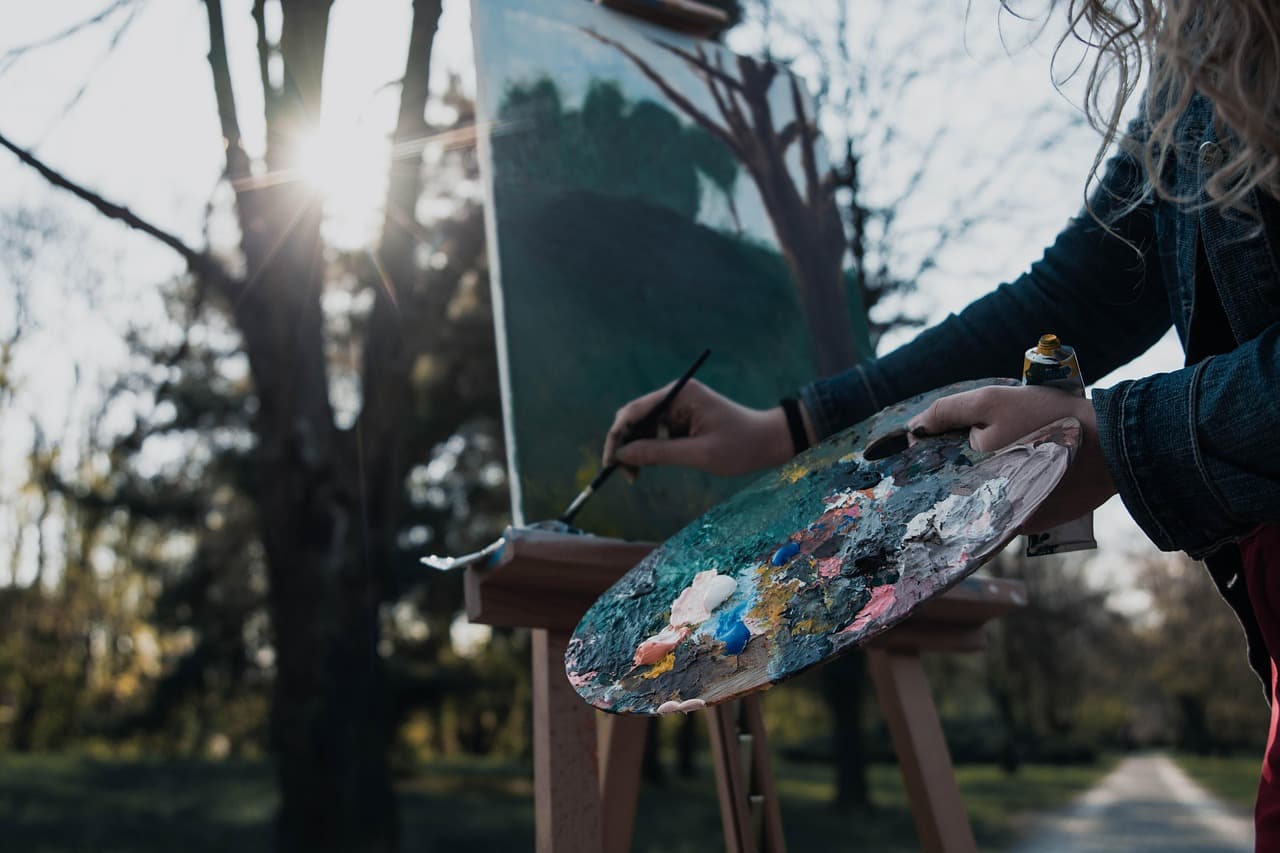
Weiler’s career illustrates the nuance of this transition: although he turned to digital tools as a teenager, he increasingly paints in traditional media — oil and brush. This is not a rejection of technology, but a recognition that audiences and markets are beginning to seek what current algorithms cannot reliably reproduce: chance, error, and the traces of a human hand.
At the same time, Weiler actively employs generative tools such as Midjourney and other image-generating systems. He treats these not as substitutes for creativity but as new creative collaborators: on several occasions a mistakenly generated detail inspired an entire series. In one example the system produced a tree covered in graffiti instead of a graffiti-covered wall — the “mistake” opened up a visual world he had not previously considered.
Resistance among young creators
Weiler notes a surprising level of AI rejection among early-career artists and designers; at his lectures he has encountered students who walked out when generative AI was discussed. The issue is not lack of familiarity — many young people often know the technology better than older generations — but fear that there will be no place for them in the market. That fear is not unfounded: logo design, simple graphic tasks, layout work, and video post-production are already areas where AI can perform tasks faster and more cheaply than humans.
A historical parallel: photography's impact on painting
Weiler draws a parallel with the arrival of photography. At that time many predicted the end of painting, yet new art movements such as Impressionism and abstraction emerged because painters no longer needed to replicate reality precisely. A similar shift may be under way today: technology may take over routine, industrialized creative tasks while artists move toward ideas, storytelling, and distinctive points of view.
Why art remains a human question
The discussion repeatedly returned to what makes something art. For Weiler, the answer lies not in technology but in people: art is essentially human communication. Behind a work there is someone who knows what it means to love, be disappointed, fear, or grieve — experiences that resonate with the audience.
The market for digital art
Meanwhile the market for digital art is still finding its footing. Early enthusiasm around NFTs has cooled significantly, several platforms have disappeared, galleries approach the field cautiously, and in Hungary there are currently few actors exclusively focused on digital art. Nevertheless, collectors exist who actively seek works from this new, tech-connected world.
Conclusion
Weiler Péter and other participants in the conversation argue that AI does not spell the end of art. Rather, it forces us to ask anew what makes a work genuinely human. Technology will transform routine creative labor, but human traces, chance, and storytelling will continue to hold value in artistic practice.
Topics covered in the conversation (timestamps)
- What does it mean to be a digital artist today? (00:33)
- How does he use Midjourney and ChatGPT image generation? (03:14)
- How is oil painting different from digital creation as an experience? (06:19)
- Why do many young artists reject AI? (08:00)
- Why test AI even if you oppose it? (15:11)
- Can a digital artwork have real value? (18:32)
- Which creative professions are most threatened by AI? (21:43)
- Is there a Hungarian market for digital art? (25:57)
- Why does the role of humans remain central to art? (32:21)
- Can an artificial intelligence create real art? (32:53)
(The podcast's earlier episodes are available in the show's archive.)