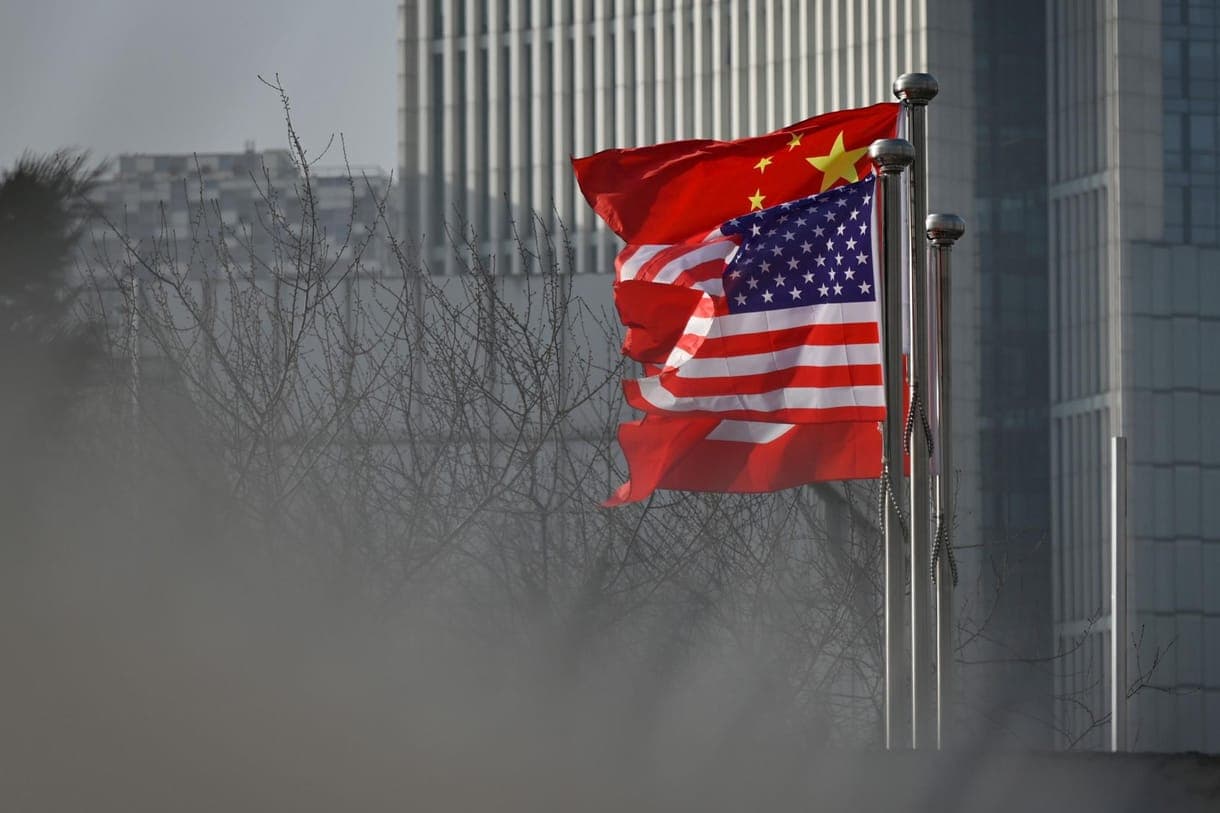
The US AI developer Anthropic warns that decisions made before 2028 may decide which country leads in advanced artificial intelligence, and whether democratic or authoritarian systems shape AI’s future. The company says China could rapidly close the gap with the United States — and potentially overtake it — unless Washington maintains and strengthens restrictions on chips and other critical technologies.
Why this matters geopolitically
Anthropic’s report argues that advanced AI is becoming one of the world’s most important geopolitical tools, affecting military advantage, cyber capabilities, economic growth, and global influence. High-performance AI models require enormous computing resources, and those resources are still largely provided by Western-manufactured chips.
Technological edge and export controls
According to the company, the United States currently holds a lead in technologies needed to build advanced AI systems. That lead is supported by firms such as Nvidia, whose hardware underpins many of the world’s leading models. US export controls have slowed some Chinese progress, but Anthropic warns that Chinese companies continue to look for ways to circumvent these restrictions.
Anthropic notes that some Chinese actors run sequences of queries against Western models that are not conventional “attacks” but function as a way to collect data and behavior to train their own models.
Security and systemic risks
The company expresses concern that authoritarian regimes could use advanced AI to reinforce censorship, automate mass surveillance, and expand state-controlled digital infrastructure. Advanced AI capabilities could also facilitate planning cyberattacks and discovering software and system vulnerabilities.
Policy timing and stakes
Anthropic says the coming year will be particularly critical for the United States and its allies, and that choices made before 2028 will heavily influence which actors control advanced AI development. The firm believes the US still enjoys advantages due to access to advanced technology and because leading AI companies are American, but that this edge is vulnerable if sanctions and protective measures weaken.
Related mention
The report recalls that the US military previously relied on Anthropic systems, but that Donald Trump’s administration moved to sever government ties with the company. Media reports indicate that the now-banned Claude model was used in planning an operation against Iran.
In sum, Anthropic warns that policies on chips and other critical AI components, and the strength of international sanctions, will be decisive in determining whether democratic-aligned states or China emerge as the dominant power in advanced AI by 2028.