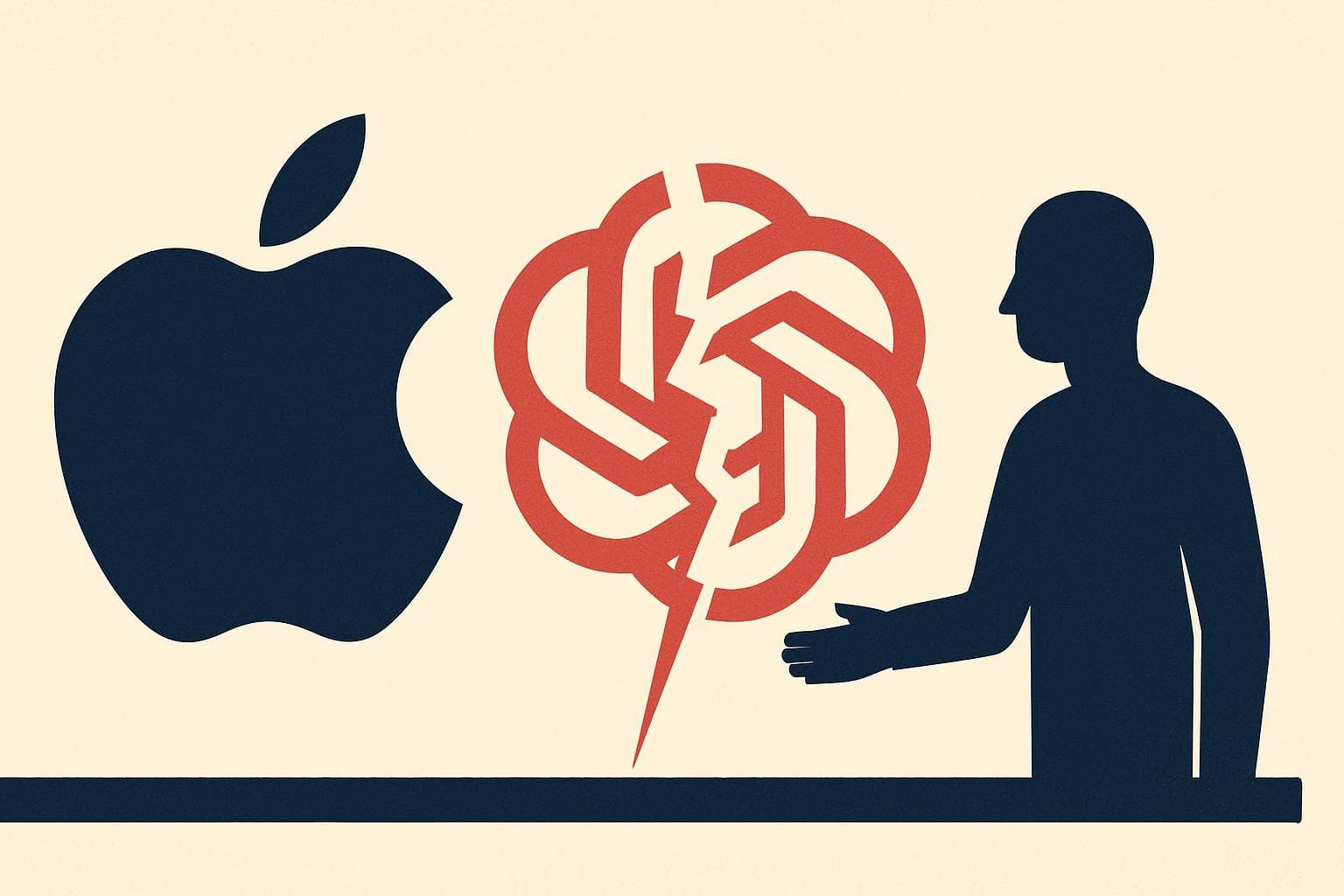
Apple filed a lawsuit on Friday accusing OpenAI and some of its employees of systematically directing current and former Apple staff to bring confidential information to OpenAI. The complaint claims organized recruitment and efforts to obtain corporate secrets for use at OpenAI.
Specific allegations, including a claimed security exploit
Among the allegations, Apple says former employee Chang Liu “exploited a rare, previously unknown authentication bug to access Apple’s shared network folders,” language that the complaint frames as essentially hacking. The reporting indicates Apple may have referred those facts to the FBI, as it has in other cases.
The suit also alleges that OpenAI engaged in conduct to encourage or direct employees to transfer Apple information to the company.
Responses from the companies
Apple said in a statement that it will always defend its teams’ hard work and innovations and is taking all appropriate steps to do so. Chang Liu could not immediately be reached for comment. OpenAI said in a statement it has “no interest in other companies’ trade secrets.”
Why the case matters for Apple’s business model
Beyond the immediate legal dispute, the case underscores broader tensions between Apple’s closed ecosystem and the rise of AI. Apple’s business relies heavily on consumers paying a premium for a tightly integrated, simple experience in which devices and services work seamlessly together. That walled-garden model is a central source of Apple’s commercial value.
AI, however, is described as an “ultimate simplifier”: it can combine disparate technologies from multiple places and surface them through a single conversational interface. While that capability has not yet fully reached consumer-facing products, the argument is that when it does, the importance of Apple’s software ecosystem could diminish because users may prioritize simple AI-driven experiences over device lock-in.
Jony Ive and OpenAI’s hardware ambitions
The dispute takes place against the backdrop of OpenAI’s hiring of Jony Ive in 2025. Ive, a key figure in the design of the iPhone, was reportedly recruited by OpenAI for creative and design work on projects including an as-yet-unreleased hardware product. Reporting suggests OpenAI may pursue hardware partly because Apple’s closed systems would otherwise block attempts to reach users in ways that bypass the Apple ecosystem.
The article notes that OpenAI’s need for hardware stems in part from the expectation that Apple will resist any effort that tries to breach its walled garden.
Limits of trade-secret litigation and the technology industry’s dynamics
The coverage also observes that Silicon Valley trade-secret suits are often ineffective and sometimes tragic, because information tends to leak out of companies regardless. The tech industry carries an ethos that talent and information should flow freely and that execution ultimately wins; that ethos conflicts with legal protections, and employees sometimes forget their legal obligations, occasionally facing severe consequences.
The piece warns that even if Apple succeeds in court, the decisive battles over AI-driven shifts in consumer technology might already be decided by the time litigation concludes.
Conclusion
The Apple–OpenAI lawsuit, from specific accusations about network access and employee recruitment to the broader strategic implications, highlights how AI is putting pressure on a company built around a closed ecosystem. While the legal outcome could set important precedents, it may not stop the broader technological changes that the reporting suggests are already underway.
Sources cited in reporting: Apple statement, OpenAI statement, the contents of the complaint, and prior reporting on Jony Ive joining OpenAI in 2025.