AstroForge, an asteroid-mining startup founded in 2022 and backed with $56 million in venture funding, is developing an onboard autonomous control stack to reduce reliance on extensive ground operations. The company has named its transformer-based system Solo.
Why AI for a startup?
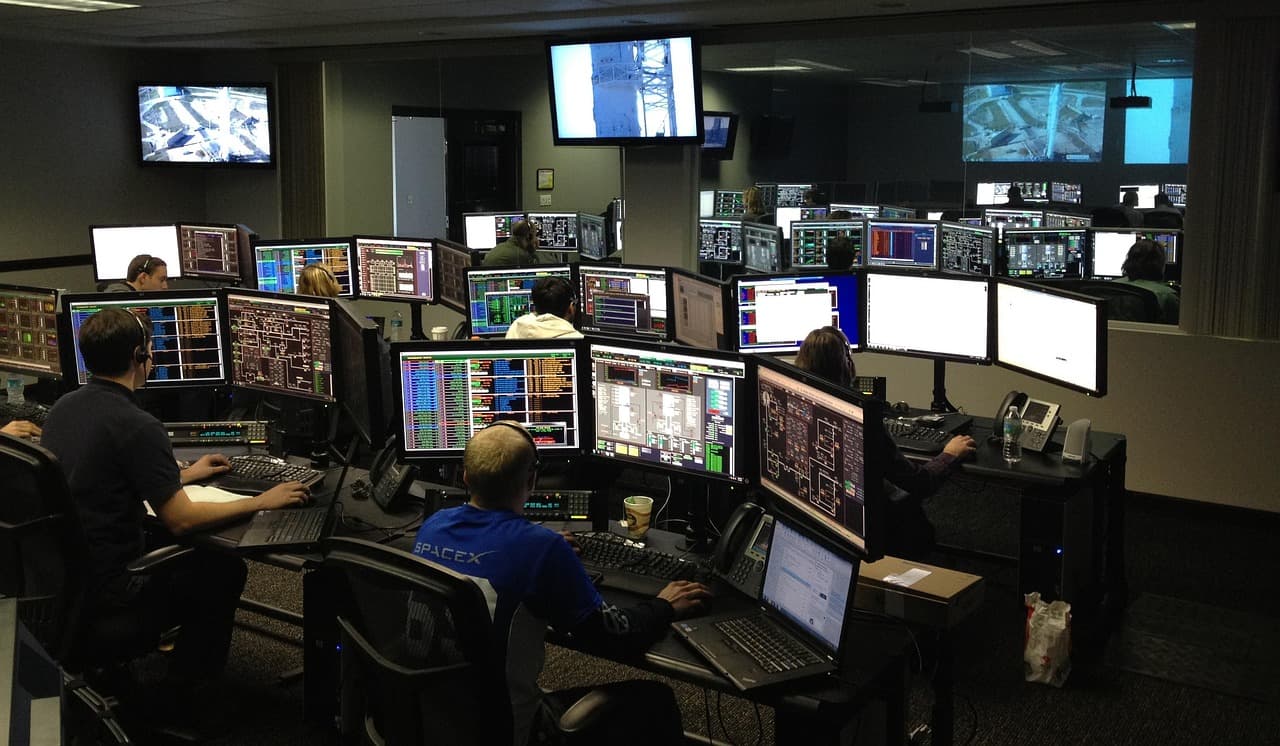
Large NASA missions build in redundancy and rely on teams of flight controllers on the ground — for example, the OSIRIS-REx mission, which rendezvoused with an asteroid in 2018, had about 100 operators per eight-hour shift. Startups typically cannot field comparable ground resources, so AstroForge is pursuing greater onboard intelligence.
The Solo architecture
Solo is an in-house transformer model that sits atop a control stack combining traditional control algorithms, subsystem models trained on test data (such as for power generation or navigation), and an overall intelligence layer trained on roughly 2,500 spacecraft sensors. Armand Awad, AstroForge’s head of flight software, said the team leveraged advances in transformer models coming from frontier labs.
Lessons from earlier missions
AstroForge has flown two prototype spacecraft that experienced anomalies preventing them from meeting most mission objectives. In 2025 the company launched its Odin spacecraft into deep space but struggled to maintain communications: there are only a limited number of ground antennas large enough to talk to spacecraft hundreds of thousands of miles away, and contact windows are brief.
Because AstroForge ultimately could not regain control of Odin, the team asked whether more onboard intelligence could have solved the problem. “Would that have been recoverable with all the data on the spacecraft? I don’t know, but I can tell you nothing onboard tried it, and I would love something onboard to try if the spacecraft is unrecoverable at launch,” said Matthew Gialich, AstroForge’s co-founder and CEO.
Gialich also contrasted the cost of building a dedicated ground network — he estimated roughly $200 million to put up five dishes around the world and run operations on them — with the alternative of embedding a model on the vehicle.
What Solo is expected to do
In theory, the onboard agent will perform anomaly resolution and similar tasks. Awad envisions Solo recognizing that it has lost track of its position, correlating a power anomaly with issues in its star tracker, and repairing the situation — for example, by power-cycling the affected component.
Test flights and schedule
AstroForge’s third vehicle, DeepSpace-2, is currently slated to launch alongside Intuitive Machines’ third moon mission, expected to fly by the end of 2026. On that flight Solo will operate in “shadow mode,” allowing engineers to exercise the system under real conditions before the company’s Autonomy-1 mission.
The company plans to fly its first fully autonomous spacecraft in 2027 on the first rocket launched by Stoke Space. That mission, backed by NASA, is expected to collect scientific data about the Sun.
How autonomous will the spacecraft be?
Gialich said he is taking a bold approach but remains cautious: “I don’t plan on flying radios that can receive from Earth on Autonomy-1,” he said, adding that the engineering team might persuade him to change his mind before flight, but for now he intends to fly without receive-capable radios.
Broader context
Most spacecraft autonomy today still depends on traditional control algorithms because of concerns about the reliability of neural networks. The first use of a neural network to control a satellite’s positioning in orbit occurred only last year, indicating the field is advancing but still new.
AstroForge’s effort to place transformer-based autonomy onboard could be an important test of whether smaller organizations can reduce dependency on expensive ground infrastructure by putting more problem-solving capability directly on their spacecraft.