OpenAI has begun broadly releasing its newest large language model, Sol. Observers consider Sol to be at least comparable to Anthropic’s Fable — a model whose public availability previously provoked enough concern inside the White House that access was temporarily restricted.
It’s unclear how approval happened
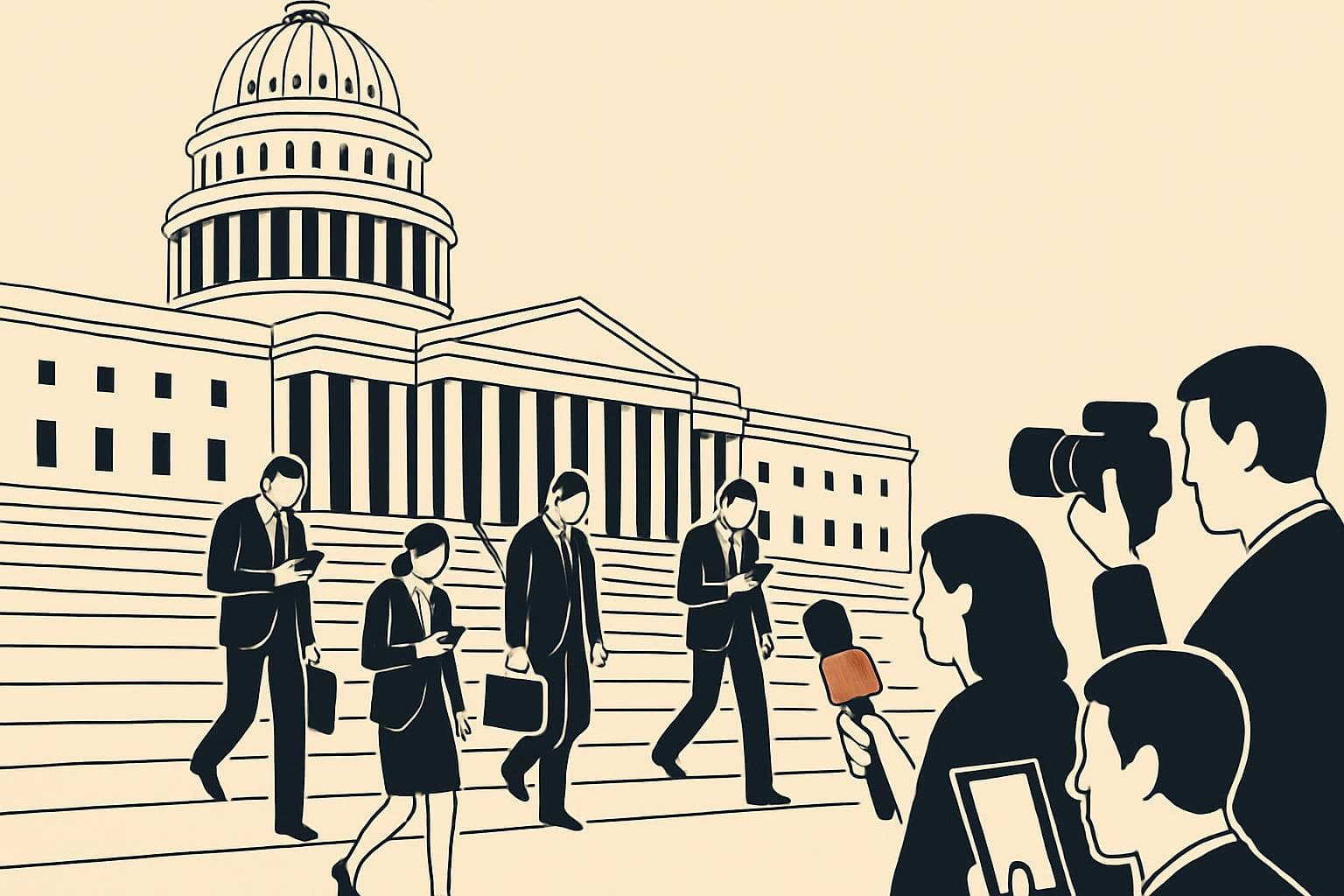
How these models received clearance for public release remains murky. Mina Narayanan, senior research analyst at Georgetown’s Center for Security and Emerging Technology, told TechCrunch she lacks visibility into the exact processes and does not feel there is enough information to judge whether they are adequate. Anthropic said it had conversations with the government, developed a classifier to detect jailbreak attempts, and implemented defensive gap strategies, but the precise content of government-company dialogues is unclear.
Dean W. Ball, a former Trump policy advisor now working at OpenAI, wrote in a newsletter that “nobody knows what the requirements are to get licensed.” Andy Konwinski, co-founder of Databricks, Perplexity, and the Laude Institute, said he has never met anyone who understands the approval process, including employees at frontier labs. He described the problem as existential: beyond safety, it’s about who has power to grant permissions.
Patchwork regulation amid executive-level guidance
Eighteen months into the Trump administration there is still little clarity about a path forward. Last month an executive order outlined a roadmap for evaluating frontier models, but specifics remain largely unfilled, and the order explicitly stated there will not be an “FDA for AI,” according to Sriram Krishnan, a former Andreessen Horowitz partner and recent White House AI advisor.
There is no settled agreement on which kinds of models require government scrutiny or which agencies should evaluate them. For now, the Department of Commerce’s Center for AI Standards and Innovation appears to be taking the lead, while the executive order instructs six cabinet agencies to determine a final process by early August. In practice, interim arrangements have been ad hoc.
Government briefings and external reviews
OpenAI CEO Sam Altman told CNBC that the process included conversations with officials such as Secretary of Commerce Howard Lutnick, Scott Bessent (mentioned in reporting as connected to the Treasury), and U.S. National Cyber Director Sean Cairncross. It is unclear who the expert testers were or what methodologies they used. OpenAI declined to share detailed information about the government process with TechCrunch, but pointed to results from several external evaluations by organizations including U.K. AISI, SecureBio, and Irregular, which are summarized in the new model’s safety card.
Like Anthropic’s Fable rollout, OpenAI previewed Sol to the government and select users before broad release, but the identities and selection criteria for those users have not been disclosed. In a late June blog post the company said it did not believe this form of government access should become the long-term default and that it would collaborate with the government to develop another way forward.
Politics and financial ties complicate oversight
The backdrop includes reports that Sam Altman offered up to 5% of OpenAI equity related to the administration’s so‑called “Trump Accounts,” and that OpenAI president Greg Brockman was the largest publicly known donor to Trump’s mid-term political operation. Observers say such political and financial ties are difficult to separate from the government’s comparatively light-touch approach to Sol’s regulation.
By contrast, Anthropic’s Fable was briefly pulled from wider access when the U.S. government barred its use by foreign nationals — partly because of real concerns about jailbreaks enabling harmful capabilities, and partly due to tensions between Anthropic and the administration. The threat of an export ban may have encouraged OpenAI to be more cooperative with unknown government requests.
Experts fear insufficient independent scrutiny
While an industry-friendly, hands-off regulatory stance may be attractive to companies, reliance on personal connections for access creates uncertainty and poor incentives. Konwinski worries that true experts — safety researchers, alignment researchers, interpretability researchers, data specialists, and engineers across the stack — are not sufficiently involved in model release decisions.
He argues an "open commons" approach, where researchers, government and private firms convene to reach consensus, would better balance safety and innovation, similar to institutions such as the FDA, NIH, or national labs.
Financial pressures and institutional proposals
Capitalist incentives also play a role: AI firms typically need to recoup large training costs soon after model release and to stay ahead of competitors. Ball notes that even with good intentions, legal obligations and fiduciary duties shape company behavior.
Ball has proposed third-party auditing organizations licensed by the government to evaluate frontier labs’ safety practices. Konwinski is similarly optimistic about new institutional formats — such as focused research organizations — that could enable disinterested academic and nonprofit experts to access and evaluate frontier models.
Political risk of continued secrecy
For now, secrecy around AI development persists, but it also creates political risks for an industry that Americans increasingly view skeptically. Remzi Arpaci-Dusseau, a computer science professor at the University of Wisconsin–Madison, said at the Open Frontier conference that there is no sense responsible actors are steering these changes.
At the same event David Siegel, founder of Two Sigma, urged attendees to imagine a troubling scenario: a small number of firms control the technology; secretive government labs judge whether it’s fit for use; and the public and scientific community have little access to that evaluation. The current situation suggests that scenario may already be playing out.