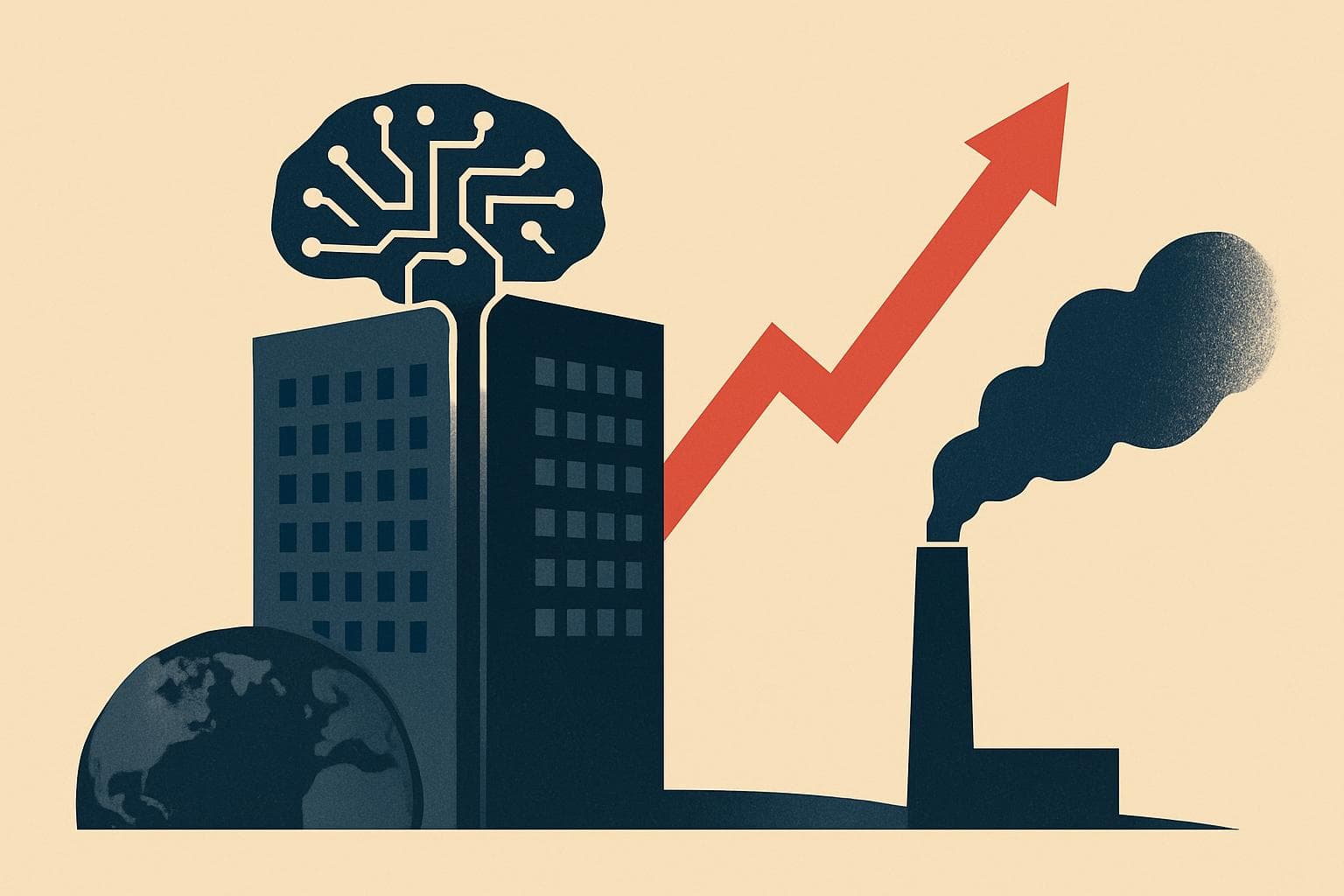
The rapid buildout of data centers to support artificial intelligence is forcing companies and regulators to reassess climate pledges. Major technology firms are reporting rising emissions as they expand compute capacity, and governments are weighing policy changes to attract new facilities.
Amazon has seen carbon emissions increase for two consecutive years, and its chief sustainability officer told Semafor that emissions are expected to continue rising for years. That statement underscores that the company’s AI ambitions are taking precedence over earlier climate commitments.
Other large firms have reported similar trends: Google and Meta have also recorded increases in emissions recently. These developments highlight the tension between providing the intensive compute that modern AI models demand and meeting emissions reduction goals.
EU deliberations and capacity gap
According to the Financial Times, the European Union is considering loosening some climate rules to make it easier to build data centers. Proponents argue such moves are needed to avoid falling behind economically as AI becomes more important.
The FT report notes that the EU recently endured a historic, climate-change-driven heatwave, yet it has far less AI-ready compute capacity than the United States — described as having barely 1/15th of the US’s AI-ready compute. That disparity is prompting European policymakers to consider regulatory changes to attract more data center construction.
Why this matters
- Operating the large-scale compute clusters used for modern AI consumes significant energy and can drive direct and indirect greenhouse gas emissions.
- Prioritizing short-term economic competitiveness and rapid capacity expansion risks delaying or undermining previously announced climate objectives.
- Looser rules and a surge in data center construction could produce regional differences in emissions trajectories and make it harder to meet collective climate targets.
Next steps and open questions
Companies, regulators and the public face choices about how to scale AI infrastructure while honoring climate commitments. Potential approaches include deploying more energy-efficient hardware, powering data centers with additional renewables, and improving transparency and oversight of emissions. The recent announcements — rising corporate emissions and the EU’s rule reconsideration — suggest AI expansion will be a major factor shaping climate policy and regulation in the coming years.