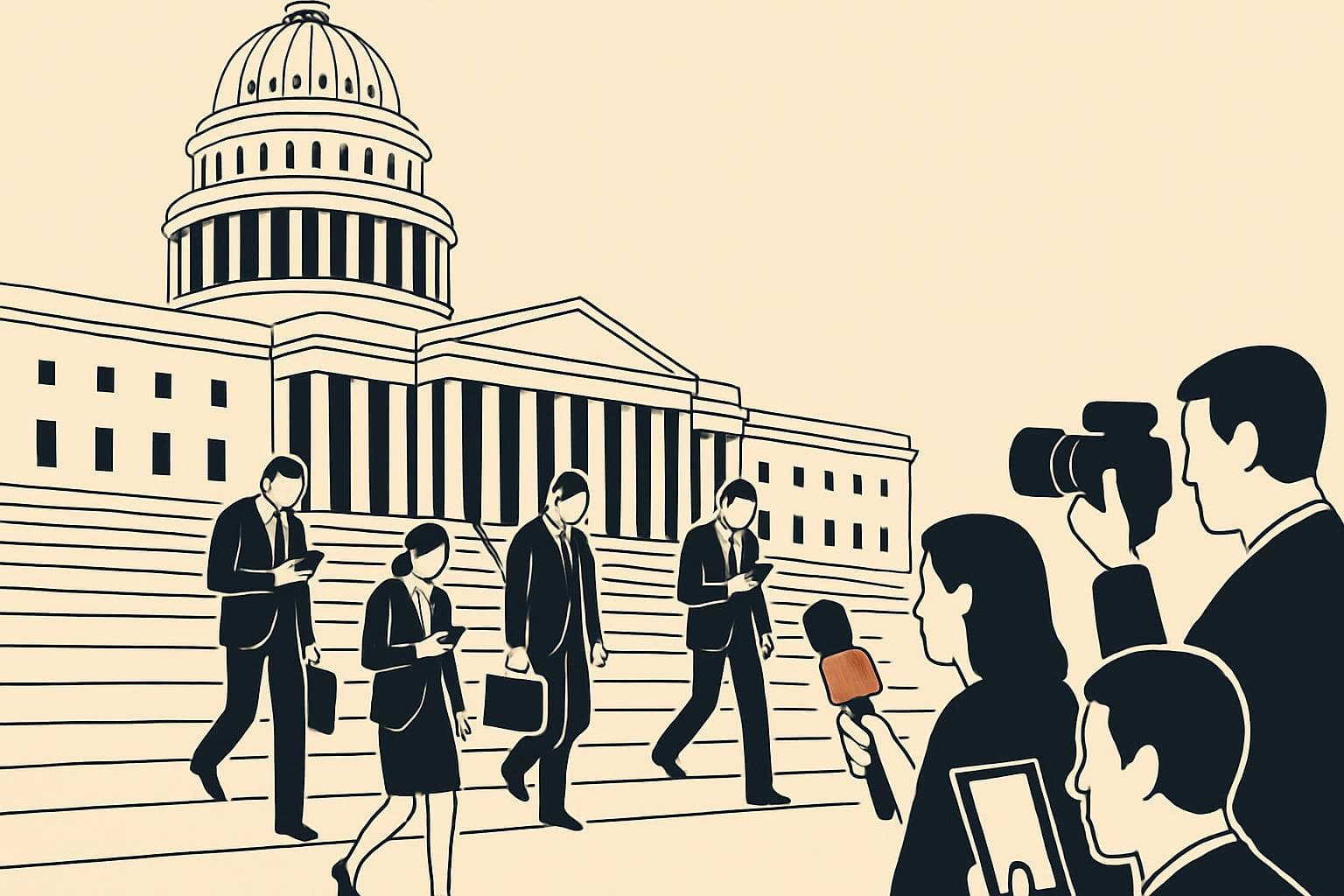
OpenAI has introduced GPT‑5.6 in three variants — Sol, Terra and Luna — positioned as its response to Anthropic’s Fable 5 and described by the company as performing well on various benchmarks. However, the model’s broad public release has been delayed: the U.S. government requested a staggered rollout that begins with a limited preview for a small group of trusted U.S. partners.
The Information reported this request one day before OpenAI’s announcement, adding that the government may grant access on a “consumer by consumer” basis during the preview (the duration of this process was not specified). OpenAI said it supports broad access and plans to make GPT‑5.6 generally available in the coming weeks, but at the government’s request it is starting with a limited preview.
What changed and why it matters
As a result, access to leading models will be constrained at least initially, especially for users outside the United States. Observers note the move follows Anthropic’s earlier decision to withhold or “un‑release” Fable 5, and some see a pattern in which frontier models are subject to government-mediated release processes.
The rationale and discourse around these steps emphasize security and geopolitical concerns. Senior industry figures have compared the race for advanced AI to historical, large‑scale national projects: Sam Altman previously likened ambitions for AGI to the Manhattan Project (New York Times, March 2023), and Dario Amodei of Anthropic has argued that superhuman AI could pose risks comparable to or greater than nuclear weapons (The Atlantic, March 2026; Amodei’s essay Policy on the AI Exponential, June 2026).
Impacts on the ecosystem
Analysts and commentators argue the decision could have several effects:
- Selected government partners may gain early access and associated advantages, while open source projects face the same safety expectations without equivalent support.
- Competitors in other jurisdictions, including Chinese projects like Z.ai and DeepSeek referenced by commentators, may accelerate and close gaps with Western frontier models.
- The current lack of clear regulation and the ad hoc, opaque nature of the authorization process may increase market uncertainty and affect investment and adoption.
Some commentators warn that framing the issue primarily as a safety problem can functionally become a control mechanism: whether because governments claim legitimate fear or companies emphasize danger to limit access, the outcome can be more centralized, less democratic distribution of advanced AI capabilities.
Positions and open questions
OpenAI’s public statement emphasizes a preference for broad availability while acknowledging the limited preview was initiated at the government’s request. Anthropic’s recent behavior — including withholding Mythos Preview earlier in the spring and the temporary pullback of Fable 5 — has been cited by some observers as an influence on current government actions.
Key uncertainties remain: the length and scope of the limited preview are unknown; the form of future government regulation and oversight is yet to be determined; and the long‑term implications for collaboration between industry and state actors are unsettled. It is also unclear whether this development represents a temporary precaution or the start of a lasting shift toward nationalized control over frontier AI.
Summary
The U.S. government‑requested, staggered release of GPT‑5.6 marks a shift in how cutting‑edge AI models are deployed, bringing security and geopolitical considerations to the forefront of distribution decisions. The immediate effects will likely include restricted access for non‑U.S. users and potential challenges for open source efforts, while the broader, long‑term consequences for the global AI landscape remain uncertain.
Media reports and company statements referenced in public discussion point to an ongoing debate over whether AI development should resemble a national, Manhattan‑like effort — a comparison that shapes both policy proposals and corporate rhetoric — and which will influence how the technology is governed and made available.