At the Computex conference in Taiwan, Nvidia unveiled a set of data-center initiatives: its first data-center central processing unit (CPU), an expanded DSX software suite, new workstation products, and a collaboration aimed at mass-producing humanoid robots.
Vera: Nvidia's first data-center CPU
Jensen Huang, Nvidia co‑founder and CEO, announced onstage that Vera is the company's first standalone CPU designed for data-center use. Nvidia positions the chip as a direct competitor to Intel Xeon, AMD Epyc and Amazon Graviton processors.
According to Huang, Vera delivers 1.8 times the performance of x86-based Intel processors on core AI tasks — the first time Nvidia has publicly compared its performance against the x86 standard. Nvidia said mass production of the Vera chip will begin in the third quarter of this year. Early enterprise customers named include Anthropic, OpenAI and SpaceX.
DSX software and energy efficiency
Nvidia has expanded its DSX open-source software suite, which supports design, deployment and management of data-center systems. The company says the new tools enable significantly better power management, allowing up to 40 percent more Nvidia accelerator chips to be run within the same energy budget.
The announcements also reflect an industry shift: AI data centers are increasingly focusing less on model training and more on inference and associated services.
New DGX Station for Windows workstations
Nvidia also introduced high-end workstations: DGX Station for Windows machines will be sold through Dell and other partners starting in the fourth quarter. Nvidia says these systems will simplify AI software development and deployment for Windows-using enterprises.
Humanoid robots with Unitree: ready-to-use out of the box
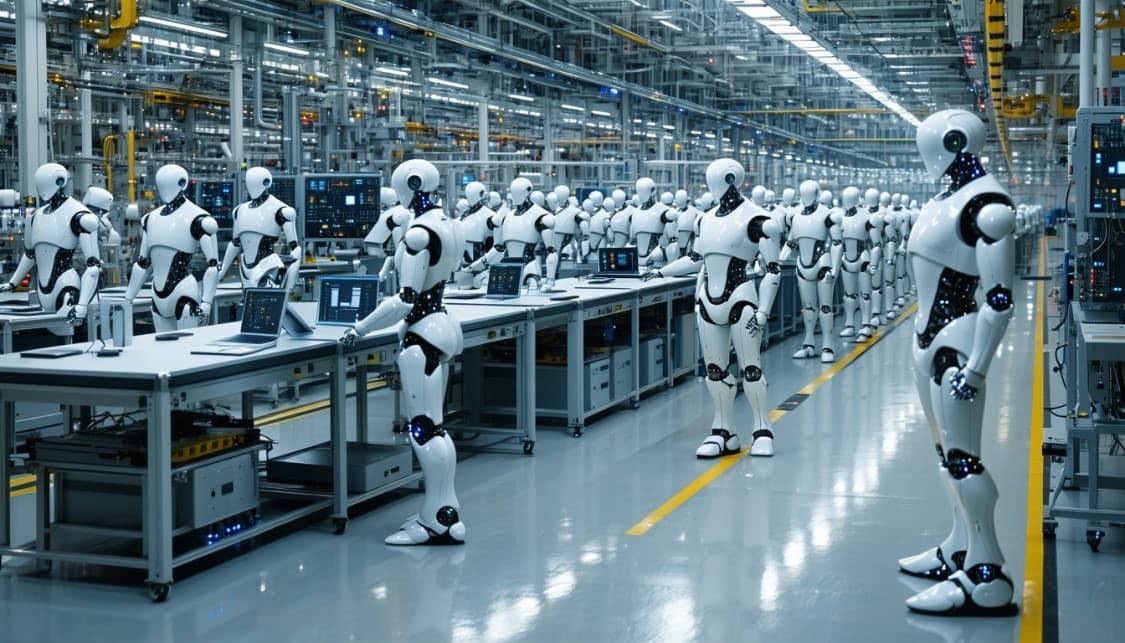
In robotics, Nvidia has entered a partnership with Chinese company Unitree to produce humanoid robots ready for mass production. The jointly developed machine will feature five-fingered hands and built-in chips and software. The project aims to spare researchers the assembly and fine-tuning work so that the robot is usable immediately out of the box.
Why this matters
These announcements show Nvidia positioning itself beyond GPUs as a full AI infrastructure provider: combining hardware (Vera CPU, accelerators), software (DSX) and industry applications (humanoid robots) to broaden its market role. The performance and energy-efficiency claims, together with the named enterprise customers, underline Nvidia’s ambitions in AI data centers and robotic applications.
(Source: Bloomberg reporting on Nvidia announcements.)