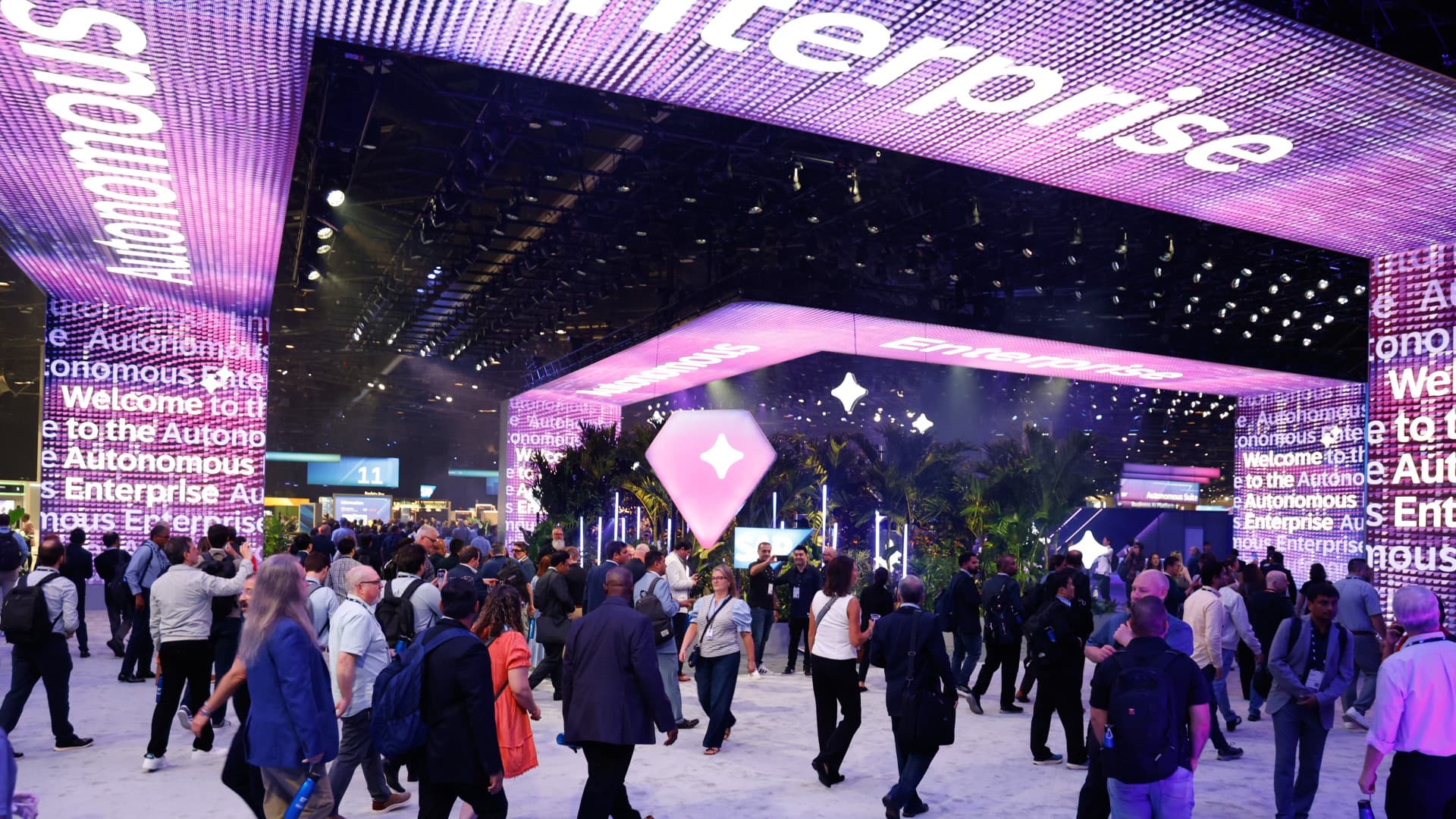
At the SAP Sapphire 2026 conference in Orlando, Christian Klein, CEO of SAP, announced that the company will position itself going forward as a "business AI" company. The announcement introduced an Autonomous Enterprise concept in which AI agents operate within the SAP ecosystem using customers' real corporate data and existing business processes.
The pillars of the Autonomous Enterprise
SAP presented the Autonomous Enterprise around three main pillars:
-
Customers can create their own AI agents in developer environments of their choice (for example Claude Code or Cursor). Daniela Amodei, co‑founder of Anthropic, appeared in a video message announcing a deeper collaboration between Anthropic and SAP; Anthropic’s Claude models are expected to play a key role in Joule agents.
-
Because agents will run inside the SAP software ecosystem, they can access corporate data and workflows already present in customers’ systems. That deeper context should allow agents to operate with more reliable business logic than standalone external LLMs.
-
Models and agents can be run inside the SAP environment, simplifying deployment and governance. To enable secure operation of autonomous agents in enterprise settings, SAP announced closer cooperation with NVIDIA: NVIDIA’s OpenShell technology will serve as the runtime layer for Joule Studio, aiming to ensure that customer-created agents operate in an auditable and controlled way near sensitive data.
Joule Work and Joule Studio: generative UIs and agent building
One of the conference highlights was Joule Work. With Joule Work, users can submit business requests in natural language via a chat interface; the platform then calls appropriate SAP AI assistants in the background and generates complete application interfaces in real time tailored to the task, which users can then edit. SAP describes this approach as a "generative UI" because it does not merely automate tasks but dynamically creates the required interfaces.
Joule Studio — promised for summer 2026 — will be the environment where companies can express instructions in natural language and build their own agents to perform real tasks within the SAP environment.
Models, data and acquisitions
Although SAP has not built its own large language model, it already offers RPT-1, a model designed for structural, tabular data and predictions based on real data. At Sapphire SAP showcased the next 1.5 version of RPT. SAP says RPT’s strength is working with numerical, tabular data across industries, which can help organizations that lack large data science teams handle complex data tasks.
To strengthen data capabilities in its AI ecosystem, SAP has completed three recent acquisitions: Reltio to provide master data for models, Dremio to enable a modern Iceberg-based data architecture, and Prior Labs to extend capabilities for handling non‑SAP data.
Partnerships and incentives
SAP announced a €100 million partner fund intended to accelerate AI adoption among its customers. Strategic partners named during the conference include Anthropic (Claude models) and NVIDIA (OpenShell runtime).
What this means for enterprise customers
SAP executives argue that autonomous agents will take over repetitive, monotonous parts of work — form filling, data copying, routine accounting entries — while users shift to supervisory and decision-making roles. Richard Grandpierre, SAP Business AI product lead, said generative UI will enable task‑specific interfaces without changing underlying code, though traditional interfaces will remain useful for some workloads such as spreadsheet work.
SAP also announced the introduction of 200 new agents for business processes, signaling how the company envisions the future of its software.
Current adoption and context
Citing a DSAG survey of German‑language SAP users, SAP noted that 43 percent of surveyed companies have already introduced AI into their operations, but only 3 percent of those use SAP Business AI tools. That gap underlies SAP’s announced partner fund and deeper integration efforts.
Summary
At Sapphire 2026 SAP outlined a strategy to move beyond classic enterprise software by embedding agents and generative interfaces that adapt to tasks, grounded in corporate data and governance. Partnerships with Anthropic and NVIDIA, plus data-focused acquisitions (Reltio, Dremio, Prior Labs) and a €100 million partner fund, are intended to make agent‑based automation auditable, deployable and useful in enterprise contexts.