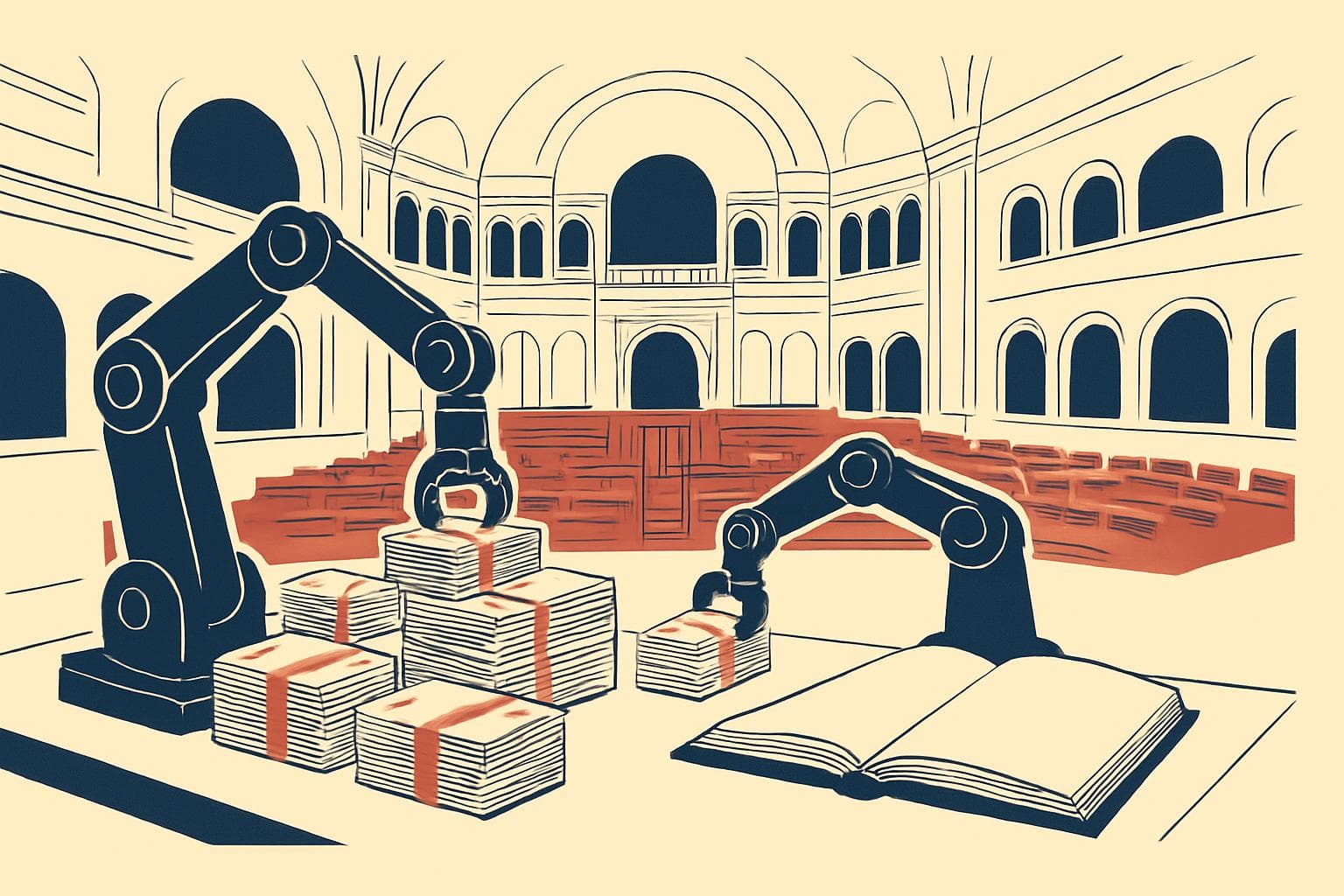
Several large companies are increasing hiring of graduates and interns, but the nature of entry-level work is changing. Salesforce is recruiting 1,000 graduates and interns for its "Agentforce" program. IBM plans to triple entry-level hiring in the United States, and McKinsey and Cognizant are also adapting their early-career recruitment. This shift is not a return to cheap junior labor; it is the reconstruction of the human layer that supervises AI agents.
What has changed in the job content?
Previously, technical graduates commanded a premium through routine tasks such as basic coding, cleaning data, drafting slides, filing tickets, and chasing emails. Those tasks are increasingly consumed by AI agents capable of performing them automatically and at scale.
As a result, entry-level roles are refocusing: the emphasis is no longer just on a CS degree or low-cost labor, but on who can effectively command and oversee agents. New responsibilities include:
- configuring workflows,
- writing prompts and instructions for AI agents,
- running evaluations and tests,
- auditing generated outputs and diagnosing errors,
- handling escalations that require human intervention,
- and developing controls to prevent autonomous systems from causing reputational or operational harm at scale.
Why this matters for companies
Automating routine technical tasks yields efficiency and cost benefits, but it also introduces new risks: poorly supervised agents can make bad decisions, produce inaccurate or harmful content, or create legal and reputational exposure. Consequently, recruiters now favour graduates who can not only operate agents but also specify expectations, test behaviours, and maintain governance over their outputs.
Who stands to win
The winners will not necessarily be those who only know how to write code, but graduates who excel at prompting and workflow design, auditing and evaluating AI outputs, and managing exceptions and escalations. Entry-level positions are shifting toward skills for supervising and controlling AI systems.
Conclusion
The actions of Salesforce, IBM, McKinsey and Cognizant indicate that rising entry-level hiring does not mean a revival of traditional junior tasks. Instead, companies are building a new human oversight layer around AI agents, seeking junior staff who can command, test and restrain machines so they deliver value without creating large-scale harm.