Bradley Tusk, a prominent political strategist who helped startups such as Uber and FanDuel navigate regulatory and political battles, warns that AI firms may be entering a period of tightening oversight. Building his career on making disruptive business models acceptable — in his phrase, to “legalize disruptive sh*t” — Tusk says the dynamics around artificial intelligence are fundamentally different.
"It is quite possible that this is the most permissive it’s ever gonna get for AI regulation," he said on the latest episode. According to Tusk, AI is too amorphous, its worst-case scenarios are too consequential, and it is too unpopular for the conventional playbook of mobilizing customers to pressure politicians to work effectively.
"I don’t think it’s inspiring people to say, ‘I must have access to Claude or ChatGPT or Grok, and I will fight to the death to keep it,’" he added, arguing that users are less inclined to mount the kind of passionate defense that previously protected other digital services.
Tusk pointed to Anthropic as an example of shrewd positioning, describing the company as casting itself the "Luke Skywalker to OpenAI’s Darth Vader." He noted that Anthropic has repeatedly warned the public about risks associated with its AI progress, while he views OpenAI as having adopted a more confrontational posture and being closer to the Trump administration.
"I think OpenAI has very willingly embraced the Vader role," he said. "I don’t quite understand why they’ve done that, but they have."
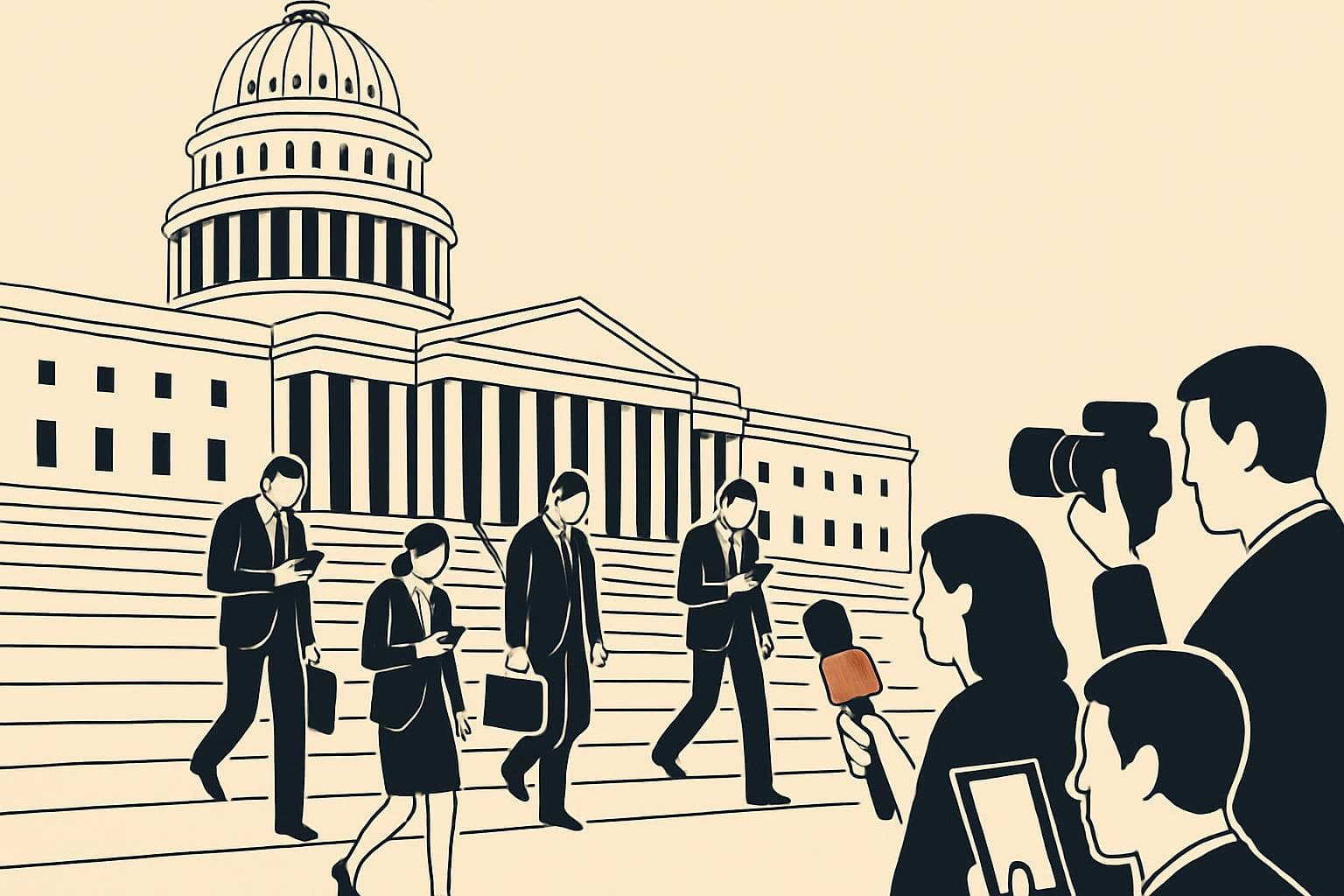
Despite the spotlight on Washington, Tusk stressed that many of the coming battles over large language models, data-center operators, application developers and power providers will be fought at state and local levels. That means executive orders or White House positioning may matter less in practice than restrictions and limitations enacted by state legislatures in places such as Texas, Tennessee, Minnesota and Indiana.
Original reporting by Liz Hoffman and Rohan Goswami.