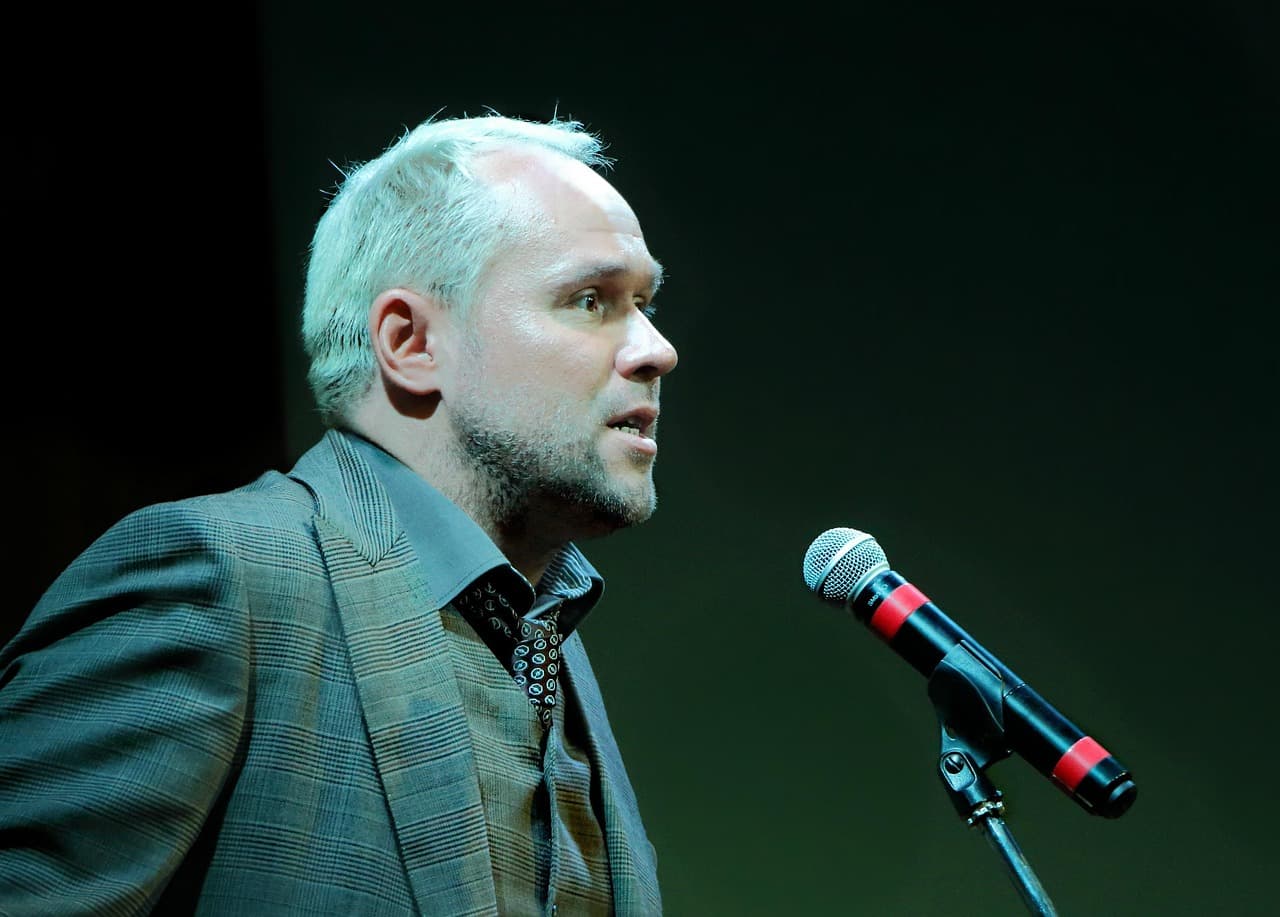
At the 2026 Data + AI Summit, Databricks cofounders Matei Zaharia and Reynold Xin laid out how the company is moving beyond the lakehouse into a broader data‑and‑AI operating system — with a particular focus on enterprise AI agents and the data infrastructure they require.
Omnigent: an open meta‑harness for agents
Databricks introduced and open‑sourced Omnigent, a meta‑harness designed to combine, control and share agents across multiple backends (Claude Code, Codex, Cursor, Pi, custom agents and internal tools). Omnigent provides a uniform API for agent sessions and supports features Databricks considers essential:
- a common API for agent sessions, including messages, files, streaming output, tool calls and cancellation;
- persistent, shareable sessions with history and search to enable collaboration;
- contextual, stateful security policies that track session state and make decisions based on what the agent has already done;
- session‑level spend tracking and caps so teams can prevent runaway costs.
Matei Zaharia framed Omnigent as solving the same problems for coding agents and enterprise agents: portability, collaboration, session history, security and a stable API above changing harnesses. Databricks moved Omnigent from internal prototypes to a public project; the open release quickly attracted numerous external contributions (the team reported hundreds of merges shortly after the Saturday release, with many contributions coming from other teams and startups adding integrations like Kubernetes and cloud sandboxes).
Security, contextual policies and spend controls
Databricks stressed that simple allow/deny rules are insufficient. Instead, they designed stateful policies that observe the session’s actions (for example: installing an npm package, reading many confidential documents) and make decisions using that context. Omnigent supports libraries that map low‑level events into higher‑level actions so policy authors can write expressive, reusable rules. The Panther acquisition complements this work on event processing.
Spend control is built into the session model as well: the system can count spend per session, enforce caps (for example restrict a debugging agent to $5 unless the user approves more), and surface prompts for approval when thresholds are reached.
Agent sandboxes, workflows and Databricks scale
Reynold Xin highlighted Databricks’ operational scale: the company runs roughly 50–60 million virtual machines per day across three clouds and processes exabytes of data daily. That scale informed the company’s ability to rapidly build persistent cloud sandboxes for development and agent execution, avoiding brittle local setups where engineers tether laptops or keep machines open to maintain sessions.
LTAP: rethinking transactional and analytical workloads
Reynold explained LTAP (Lake Transactional/Analytical Processing) as Databricks’ take on the old HTAP debate. Rather than building a single engine that collapses OLTP and OLAP into one query layer, LTAP aims to unify the storage layer so transactional systems write to an open, column‑oriented format (e.g., Parquet) in the data lake. Analytics engines can then read that data directly without change‑data‑capture (CDC) pipelines that are notoriously brittle. Databricks argues this approach delivers most of the HTAP benefits — real‑time availability of operational state for analytics and agents — while avoiding the compromises of a unified query engine.
A key practical insight: Databricks’ Lakebase/Neon‑inspired architecture can transcode row‑oriented transactional data into columnar files on the storage fleet, leveraging otherwise idle CPU for conversion and improving compression, so the analytic format becomes available with minimal overhead.
Why now and how Databricks prototyped it
Databricks says several factors made LTAP feasible now: maturity of open columnar formats (Parquet), separation of storage and compute, and the company’s ability to prototype quickly using real customer workloads. Reynold described a development approach that leans on decades of traces and telemetry: they sample and model traces to predict which algorithms and implementations will perform best for given workloads, enabling an incremental rollout of a new engine rather than a risky, all‑at‑once rewrite.
Models, Mosaic, DBRX, Genie and specialization
Databricks also discussed its model strategy. After acquiring Mosaic and developing DBRX, the company is focusing more on downstream value: specialized models for high‑volume, domain‑specific tasks (for example document parsing) and first‑party agents such as Genie, a data‑centric assistant. Databricks runs AI Runtime infrastructure and offers RL fine‑tuning and training services to preview customers; they are building tooling and pipelines for model customization and continuous improvement, arguing that specialization (and easier fine‑tuning) will become mainstream as base models improve.
Product and culture notes
Databricks emphasized a product culture that favors fast prototyping and incremental launches with tight customer feedback loops. The company contrasted tech‑native customers (more DIY) with traditional enterprises (stronger governance, procurement cycles, and preference for managed services) and explained how that difference shapes product and go‑to‑market decisions.
Strategic framing: data, context and agents
The core thesis Databricks presented is that model capability is becoming widely available, but durable competitive advantage will derive from company‑specific context: proprietary data, governed access, live operational state, transaction logs, workflows and feedback loops. Agents are only useful in production when they have secure, governed access to that context. Omnigent addresses the control, collaboration and governance plane for agents; LTAP aims to make operational data immediately available to those agents.
Technologies and names referenced
- Omnigent (open‑source meta‑harness)
- LTAP (Lake Transactional/Analytical Processing)
- Lakebase, Genie, Genie One, Panther, Mosaic, DBRX
- Unity Catalog (governance)
- Databricks cofounders Matei Zaharia and Reynold Xin; CEO Ali Ghodsi referenced in the keynote
The Summit conversation covered many technical topics — from agent APIs and security to database design, vector storage, and model customization — and included a range of demos and product announcements illustrating Databricks’ strategy to be the operating system beneath enterprise agents.