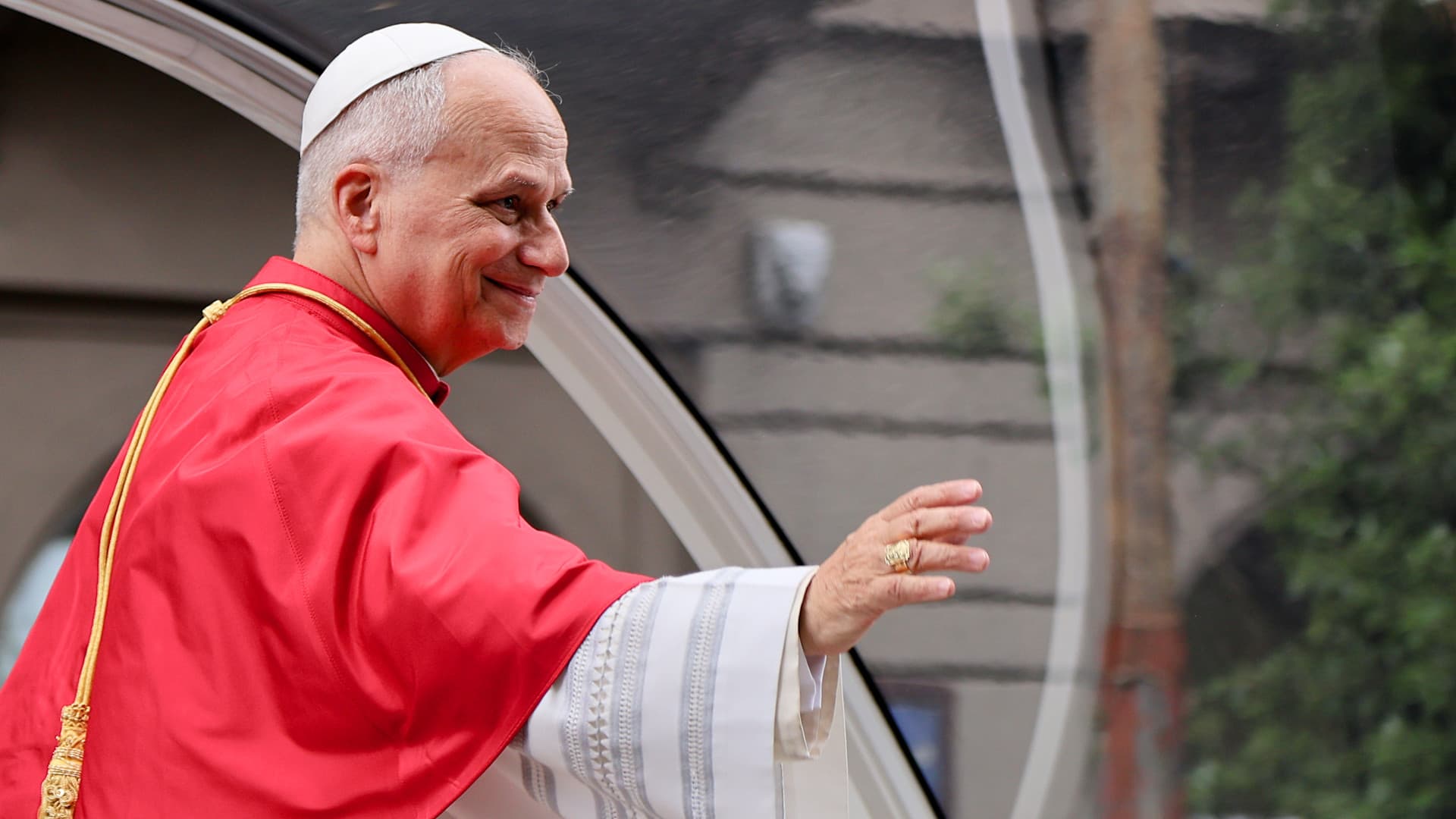
In his first encyclical, Pope XIV. Leó sets out detailed warnings about the risks posed by artificial intelligence (AI): he defends the dignity of human work, cautions against the military use of AI, and highlights the substantial energy and water demands of data centers. At the Vatican presentation of the encyclical, however, Chris Olah, co‑founder of one of the largest AI companies, Anthropic, sat beside the pope on stage — an appearance that provoked debate about the credibility and ethics of such a partnership.
Critics say the optics are hard to reconcile: the encyclical calls for protection of jobs and attention to environmental impacts while a company that develops technologies capable of replacing human tasks was given prominent visibility. Anthropic's own labour‑market analysis flags programmers, customer‑service workers and data‑entry clerks as particularly vulnerable. Separately, a survey by the nonprofit Epoch AI last year found that 20 percent of full‑time employees in the United States reported that AI had already replaced part of their job.
Pete Furlong, research director at the Center for Humane Technology, described a fundamental contradiction between the pope's language and industry practice: he argued it is hard to speak about dignity of work while technologies designed to substitute people are being developed. Paolo Carozza, a law professor at Notre Dame University and co‑chair of the Meta Oversight Board, warned that Anthropic's Vatican appearance risks creating a superficial, feel‑good dialogue without real self‑examination. Carozza suggested the company may be using the appearance to distinguish its security‑focused brand from competitors.
At the Vatican event Olah acknowledged that every leading AI lab operates amid incentives and constraints that can sometimes conflict with doing the right thing, and that these incentives exert influence even with the best intentions. Timnit Gebru, founder of the Distributed AI Research Institute, used stronger language on social media, calling the collaboration "Vatican‑washing" and arguing the church should instead have allied with exploited data workers and communities affected by polluted water around data centers.
There are also points of agreement. The encyclical explicitly opposed the use of AI as autonomous weapons and called for the introduction of "the strictest ethical limits." In line with that stance, Dario Amodei, Anthropic's CEO, this year refused to allow the company's models to be used for fully autonomous weapons or mass surveillance — a decision that brought the company into open conflict with the Trump administration. The White House placed Anthropic on a blacklist and classified it as a risk to the supply chain; the resulting legal case is currently pending.
Environmental concerns sharpen the tensions again: the encyclical highlights data centers' heavy energy and water needs and urges more sustainable approaches, while Anthropic's business model depends on such facilities. The company announced a $50 billion infrastructure investment last year, much of it directed at building data centers. Anthropic has also pledged measures to offset electricity price increases for consumers and to run energy‑saving modes during demand peaks.
The episode underscores the difficult question of how to engage in dialogue with technology firms while credibly addressing the social, labour‑market and environmental impacts their products and operations can produce. Related coverage includes articles on Anthropic's European expansion (2026. 05. 26) and other company developments (2026. 05. 28).