At the Portfolio business forum for SMEs in Pécs, participants argued that adapting to high and volatile energy prices is the immediate priority for Hungarian small and medium-sized enterprises (SMEs), while deliberate digitalisation and cautious deployment of artificial intelligence (AI) will determine medium-term competitiveness. Experts repeatedly emphasised pragmatic, fast-payback measures over following technology trends.
Artificial intelligence: expectations versus reality
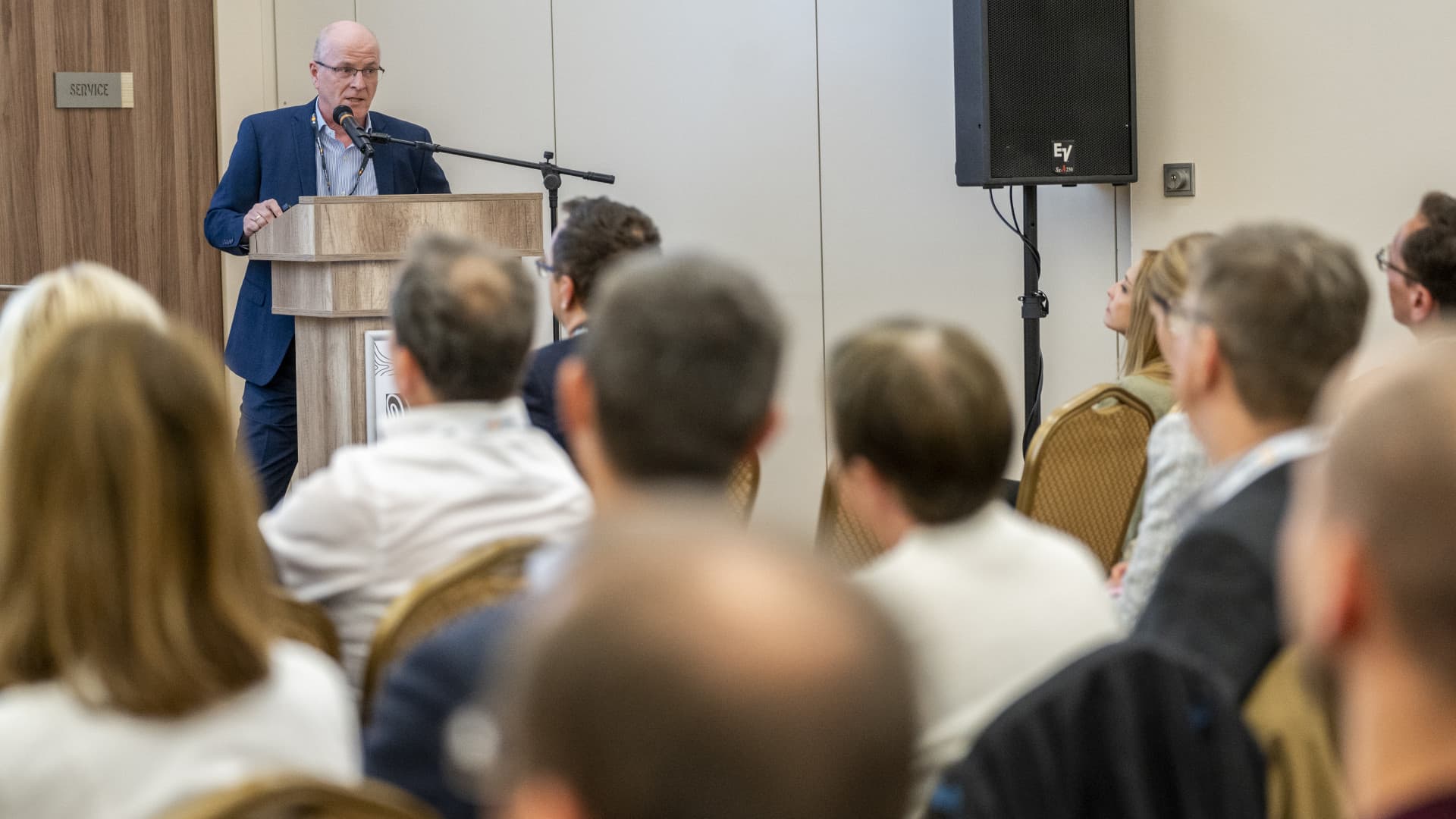
The panel moderated by Győrfi Attila, a lecturer at the University of Pécs, examined AI opportunities in the SME sector. Herbály István — president of the research and development and innovation college at the Hungarian Chamber of Commerce and Industry (MKIK), vice-president for innovation at PBKIK and CEO of Contrall Ipari Informatikai Kft. — warned about misconceptions and overoptimistic expectations around AI. His teams’ experience shows that not every problem needs AI; often a well-defined, simple measurement parameter is a better solution. He also noted that data preparation — consistent labelling of good and bad samples — consumes the most time and cost when training models.
Illés Kata, CEO of Indivizo, drew attention to lengthy legal and compliance onboarding at large companies that can take up to a year, and to SMEs’ frequent disappointment when out-of-the-box tools prove not to be magical fixes but require integration into existing processes (for example using agents). Inotai István, CEO of Körber Hungária, described production-side dilemmas: management may see the potential, but digitising disordered processes and poor-quality data only produces digital chaos. Based on their examples, AI works best in specific, measurable use cases, such as quick retrieval of customer quality standards via an agent or predicting scrap and inspection points.
Panelists agreed that excessive expectations, messy data and poorly chosen use cases lead to failure in AI adoption. They recommended first organising core processes, then proceeding with small-scale projects that return value quickly. Illés emphasised allowing time for learning and gradual rollout: AI projects should not be simply layered onto daily operations but supported with organisational rhythms, for example dedicated weekly learning slots.
HR and organisational readiness
Virányi Zsófia Anna, HR lead at Holcim, highlighted the need for an HR mindset shift: the key question is not whether AI will replace jobs but whether organisations — especially HR departments — can sensitise employees to higher expectations and unavoidable change. The forum discussed employee resistance and motivation, and suggested mini pilots, internal training and knowledge sharing as typical first steps for SMEs starting with AI.
Energy efficiency: an urgent short-term task
Energy efficiency was a central topic. Szalai Sándor, SME sales lead at E.ON Energiamegoldások, pointed out that Hungarian companies face energy costs at the higher end of the European range: for an average SME energy can account for around 10% of total costs, and in some sectors (for example HoReCa) up to 15%. Although gas prices have eased after geopolitical shocks, storage seasonality and tightening supply pose upside risks in the near term. Szalai recommended the April–early May “corporate decision window” as a favorable period to contract purchases for the coming year.
He also highlighted extreme intraday volatility on the electricity market. Fixed price contracts provide a simple, often securitising option, but they can be overpriced. In practice, quick-payback measures that deliver immediate savings — rethinking consumption and procurement decisions, modest automation and stronger control — may be more valuable than fashionable technology investments.
Family businesses, leadership and profitability
In the closing panel moderated by Virág Nikolett, CEO of VND Research, Szabóné Benyeda Zsófia, strategic director at Prophyl, discussed generational change and constraints on growth in family-owned SMEs. She said many family firms operate in an intuitive, manually controlled way that limits expansion. After a leadership transition, building organisation and management, developing processes and in some cases bringing in interim or permanent external CEOs helped reduce owner-operational burden and create sustainable operations. External leaders add value when their managerial and professional skills also fit the company culture.
Herbály István shared his firm’s experience: profitably often requires focus and the courage to say no. A strategy of taking on everything led to opaque chaos by 2012, so they spun off activities and focused on industrial software development. Later they moved toward boxed products (manufacturer ERP/production control), which took longer to assemble but made their business more scalable — product sales allowed growth without proportional headcount increases. He also noted many companies do not measure their own productivity or cash leakage; establishing transparency and control can itself become a source of profit.
Panelists agreed profitability stems from system-level operations, clear focus and honest leadership decisions — including difficult personnel choices. Even in a fast-changing environment, firms need goals and strategy combined with flexibility to adjust when conditions change.
Conclusion
The Pécs forum promoted a pragmatic, risk-aware roadmap for SMEs: in the short term, optimising responses to energy costs is the most urgent task; in the medium term, targeted digitalisation and AI adoption that deliver measurable benefits will underpin competitiveness. Concrete, quick-payback savings and greater transparency were identified as priority actions for sustaining profit and long-term resilience.