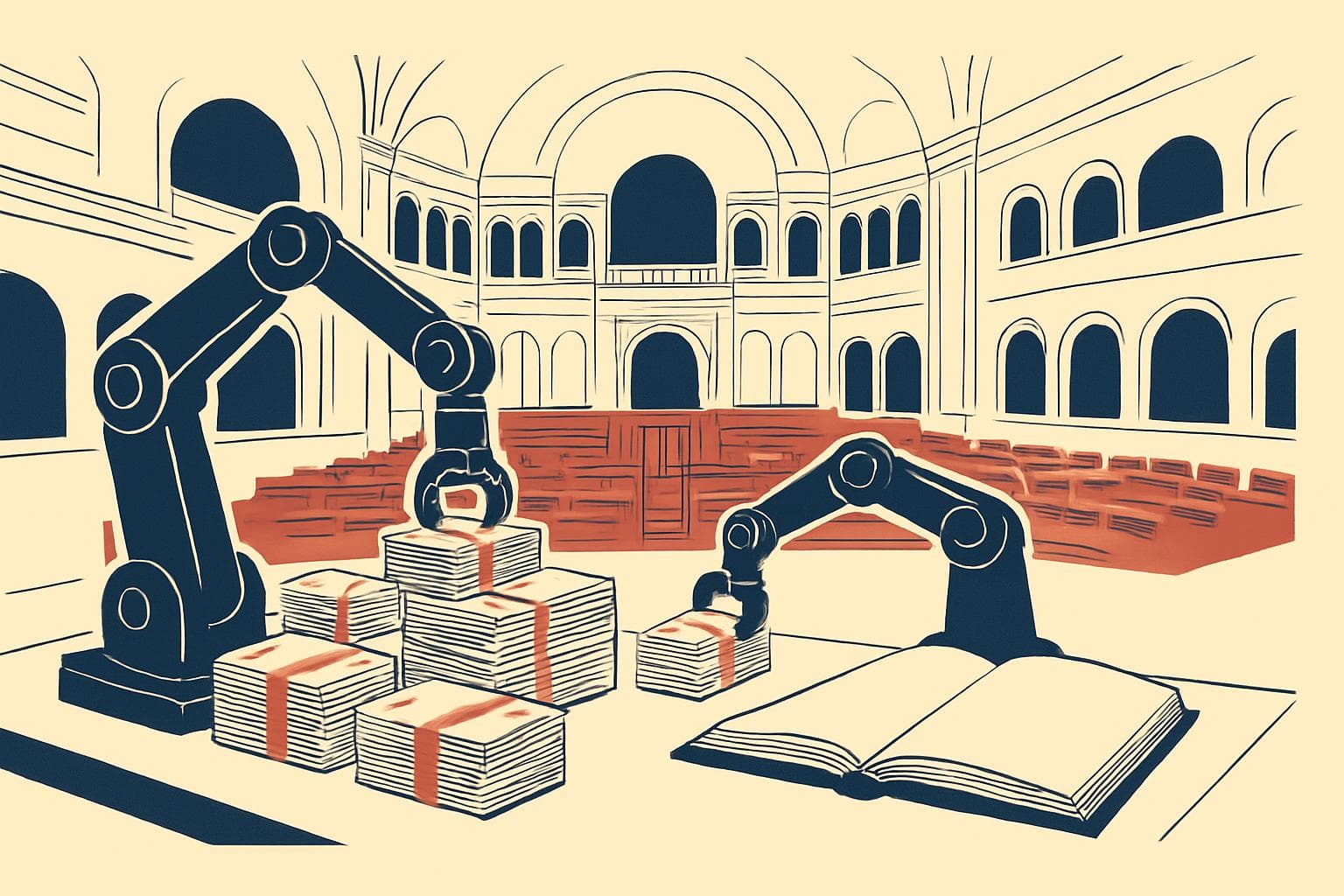
A proposed European Commission plan to set aside €20 billion for artificial intelligence infrastructure has prompted lively debate in Brussels even before an official tender was launched. The initiative envisages building four to five massive computing centres, each equipped with roughly 100,000 graphics processing units (GPUs), intended to train the most advanced AI models.
Ursula von der Leyen outlined the concept more than a year ago. The Commission frames the investment as a response to global technological competition, particularly from the United States and China. Officials emphasize „digital sovereignty”: Thomas Regnier, a Commission spokesperson, says the aim is to avoid reliance on infrastructure located on other continents and to keep data and models within the EU legal framework.
Questions about market demand and end users
A central criticism is that there is no clear market demand for the planned capacity. Sergey Lagodinsky, a German Green MEP, has openly questioned what business model would support the gigafactories, arguing some policymakers want simply „more compute” without specifying how it would be used.
Analysts echo these concerns. Nicoleta Kyosovska, a Brussels analyst, says it is unclear who the target users of the gigafactories would be, noting that only a handful of European companies — for example, Mistral AI of France — are currently developing models that require such scale.
Mistral itself is already investing in infrastructure: the company announced a €1.2 billion data‑centre development in Sweden and has raised a further $830 million to finance a Paris project. Those moves show some market actors are building their own capacity.
Financing, competition and delays
The Commission intends the project to be financed by a mix of EU and private capital, drawing on the allocated €20 billion. The Commission says interest is significant: an initial survey reportedly received 76 bids for 60 sites across 16 member states, including bidders such as French company Scaleway. Nevertheless, the process of finalising bids and cooperation structures has been delayed; the official tender has already been postponed twice and is now expected in spring.
Critics also point to the relative scale of EU investment versus global competitors. The article cites examples such as OpenAI’s and Anthropic’s announced infrastructure investment programmes — $500 billion and $50 billion respectively — which dwarf EU plans. Jeff Campbell, a Cisco executive, warned that these gaps could make the EU strategy insufficient to catch up.
Supplier concentration and sovereignty concerns
Another worry is that building gigafactories could increase the EU’s dependence on non‑EU suppliers, notably Nvidia, which dominates the GPU market. Several MEPs have warned that the data‑centre market is highly concentrated, raising questions about how to reduce external dependency.
The Commission counters that keeping infrastructure and models under EU jurisdiction will strengthen digital sovereignty, even if some short‑term reliance on foreign hardware cannot be avoided.
National initiatives: the Croatian example
While the Brussels debate continues, some member states are pursuing large projects on their own. In Croatia, the Pantheon project envisions an AI centre with an estimated value of €50 billion that would create thousands of jobs and have a substantial economic impact. The project has attracted US institutional investors, indicating private capital is already looking for opportunities in Europe.
This divergence — with Brussels warning of weak demand while some member states launch ambitious developments — highlights whether an EU‑level strategy can keep pace with national and market initiatives.
Conclusion
The EU’s €20 billion AI infrastructure proposal raises key questions about necessity, end users, and the risk of increased reliance on external suppliers. The Commission argues the plan will bolster digital sovereignty, but critics cite weak market demand, limited EU funding compared with global players, and supplier concentration. The outcome will shape how EU strategy interacts with member‑state projects and private investments going forward.