Within a single week the European Commission took two major steps on artificial intelligence: it opened the selection process for seven large AI data centers and, from August 2, gained enforcement powers under the EU AI Act to act against providers of general‑purpose or systemically risky models.
How much money and what for?
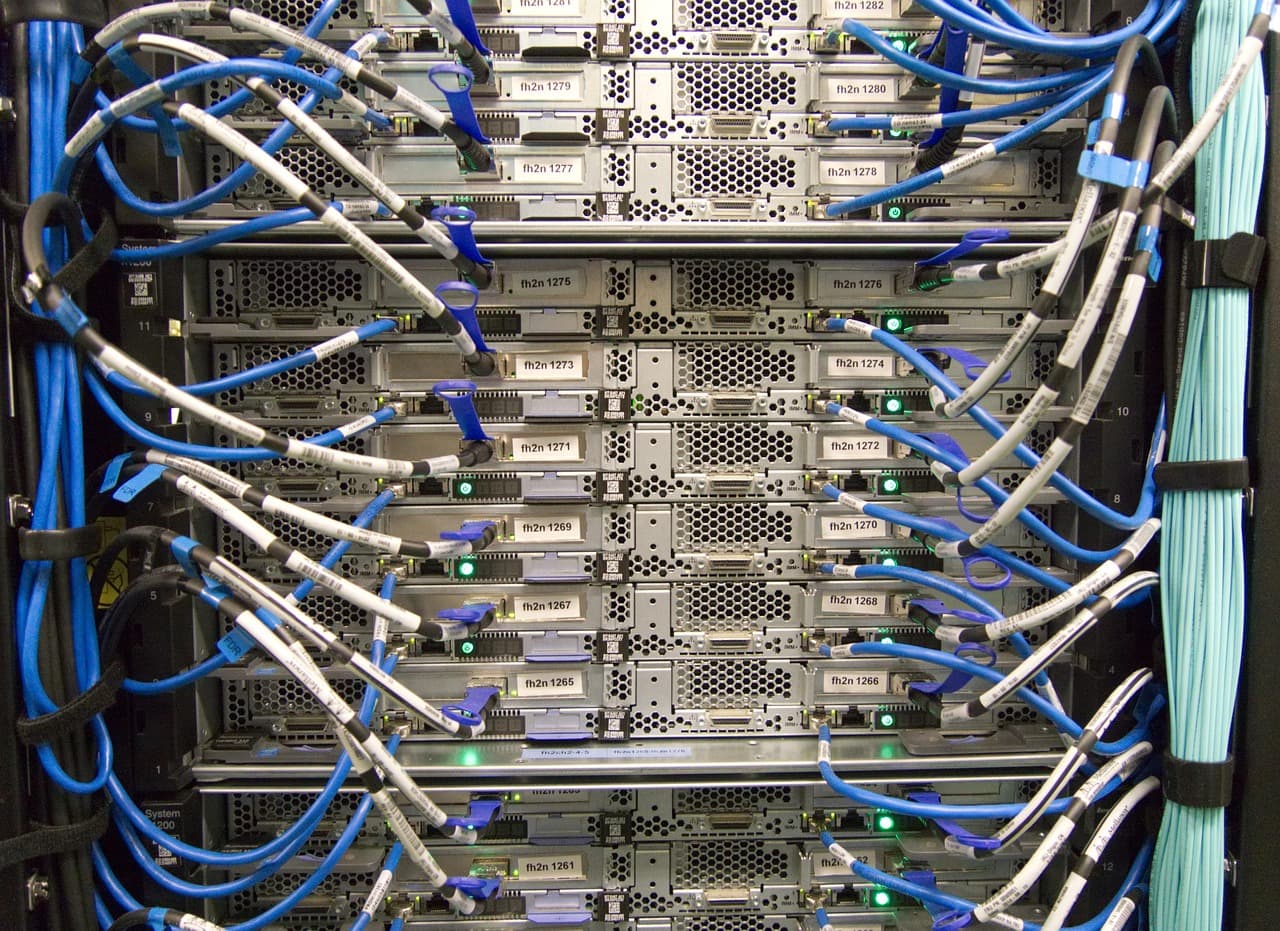
The Commission’s procedure enables industrial consortia to receive support to build very large AI data centers — so‑called "gigafactories." The planned facilities would be equipped with specialized processors: four smaller centers would host between 25,000 and 75,000 AI processors each, while three larger ones would house 40,000–100,000 processors. The EU and member states would mobilize up to €10 billion of public funds, and expect at least €20 billion of private investment, putting the overall program above €30 billion.
State aid caps are set by project size: smaller projects can receive up to €1 billion and larger ones up to €2 billion in public support, with public contributions limited to no more than 35% of total investment. Consortia must secure the backing of at least one member‑state government; applications are due by November 12. Winners are expected to be selected in early 2027, and will have 18 months to construct the data centers — which, barring major delays, would place initial operational results around 2029.
Who is bidding and what is Hungary’s role?
Germany, Greece, Italy, Portugal and Spain are preparing larger projects; the Czech Republic, Denmark, Finland, France and Poland are preparing smaller projects. Hungary joined a Polish‑led consortium that also includes the Czech Republic and Lithuania. The Hungarian government committed a total of €500 million over coming years for AI initiatives and participation in the gigafactory program, using concessional financing. Within that pledge Hungary would contribute €25 million in an initial phase and a further €100 million in a later expansion. Participation would secure ownership and access rights in a center with over 100,000 processors if the consortium wins, though the physical site need not be in Hungary.
Access through consortia would allow Hungarian stakeholders to use high‑performance compute on more favorable terms than building equivalent domestic capacity, which is extremely costly.
Technology and supply‑chain limits
The gigafactories will still rely heavily on processors supplied by US companies: the most advanced AI chips remain dominated by Nvidia, AMD and Qualcomm, which have already signaled willingness to supply. Thus key components are likely to be imported even if the data centers are based in Europe.
Energy and water demands are a material constraint. The International Energy Agency estimates that European data centers’ electricity consumption could rise by more than 45 terawatt‑hours — roughly 70% — by 2030. Applicants must detail how facilities will operate sustainably and energy‑efficiently. Higher electricity prices in many parts of Europe compared with the US or China could reduce long‑term competitiveness. Nuclear power, which now accounts for about 23% of EU electricity generation, is cited as the most reliable low‑emission option for continuous load; short‑term measures include extending the lifetime of existing plants, while small modular reactors (SMRs) are mentioned as a longer‑term possibility.
Enforcement: August 2 brings teeth to the rules
Although obligations under the EU AI Act have applied to new models for some time, from August 2 the Commission can enforce compliance. Oversight is concentrated in the Commission’s AI Office’s A3 unit, a 37‑person team that is responsible for checking whether developers such as OpenAI, Anthropic, Google, DeepSeek, Moonshot and others properly assess and mitigate model risks. The A3 unit reportedly lacked a permanent head between mid‑2024 and the end of 2025, and Matthieu Delescluse took leadership in January 2026.
The regulation identifies four priority systemic risk areas: whether a model could facilitate production of chemical, biological or nuclear weapons; whether human control over model behaviour could be lost; whether a model could carry out cyberattacks; and whether it could be used for large‑scale societal manipulation. Providers must perform model assessments, report serious incidents, implement robust cyber security and document training data and key development features.
If the Commission has serious, well‑founded concerns it can request information and direct access to models, order risk‑mitigating measures, and in severe cases restrict, recall or remove a model from the EU market. Firms that refuse cooperation or fail to implement required measures can face fines of up to €15 million or 3% of global annual turnover.
Questions about enforcement capacity
Practical enforcement raises legitimate questions. A 37‑person A3 unit will oversee a fast‑moving global market where leading AI labs compete by offering high salaries and rapid innovation. The Commission tried to prepare industry through a voluntary code of conduct in the prior year; most large providers signed up, but Meta did not. Voluntary adherence eases later proof of compliance under the AI Act, while firms outside the code must demonstrate conformity by other means.
The EU’s twin goals are to reduce technological lag and to constrain systemic risks. Achieving both requires coordinated action on financing, supply chains, energy and regulatory enforcement. Without such alignment, Europe risks remaining primarily a regulatory power while lagging in comparative advantages such as cheaper energy, abundant raw materials, large cloud providers and a more advanced chip industry in the US and China.
Strategic and geopolitical context
The growing energy needs of AI centers also affect EU–US economic ties: one element of a transatlantic deal envisions the EU buying up to $750 billion in US LNG, oil and nuclear energy products by the end of 2028. The feasibility of that commitment is uncertain and may be complicated by tariff disputes and other trade tensions.
Previous Hungarian governments showed interest in US nuclear technologies; under the current plan Hungary’s participation in the EU gigafactory program is primarily about compute access rather than new civilian nuclear construction.
Conclusion
The EU has launched parallel tracks: large‑scale investments to grow local compute capacity and new enforcement powers to police the most powerful AI models. Both are necessary but neither is sufficient on its own — the program’s success will depend on financing, supply chains, energy provision and the Commission’s ability to enforce rules effectively. If coordination falters, Europe may end up as a strong regulator but a weaker competitor in the AI‑and‑energy race.