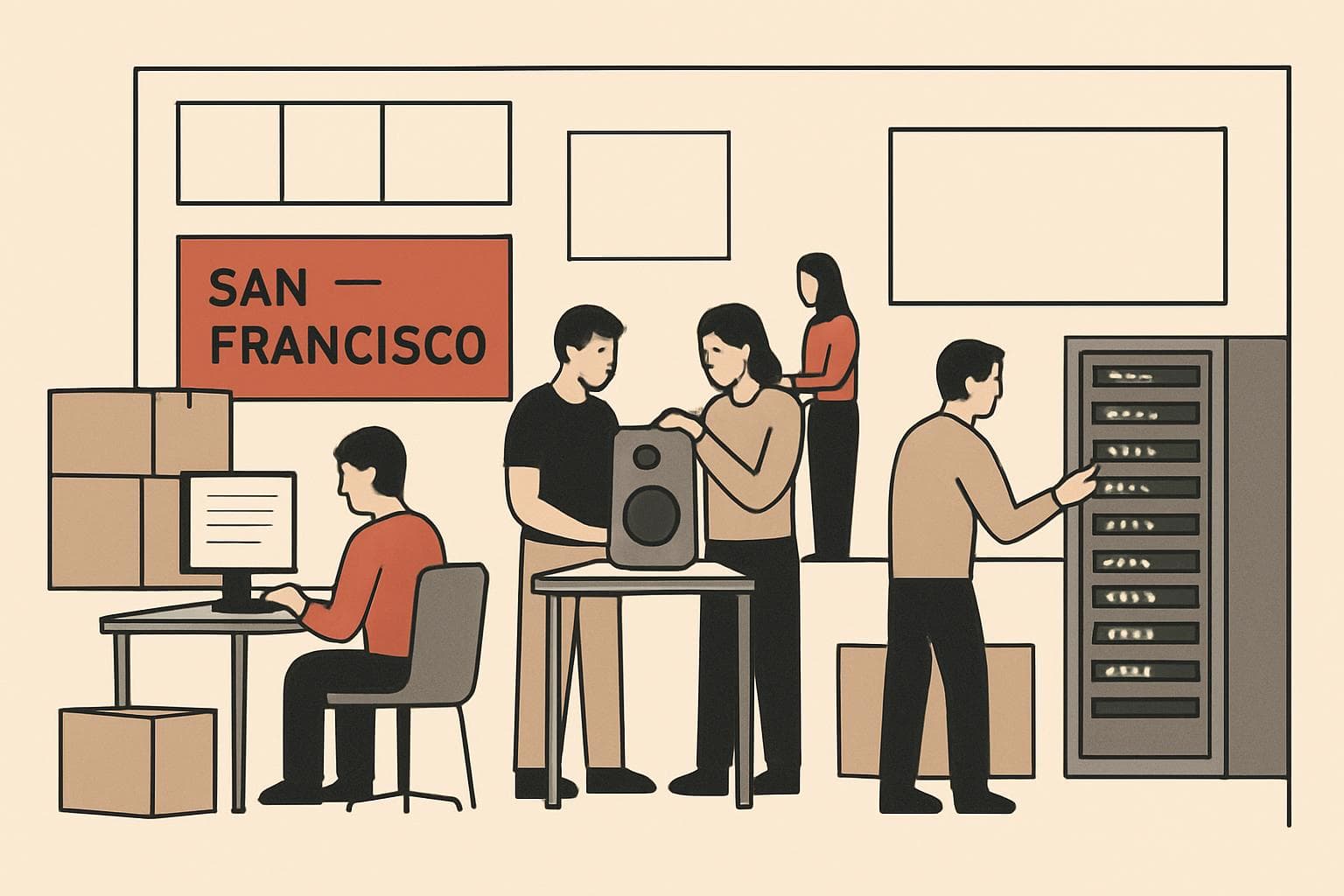
AI is accelerating how quickly organizations can execute: initiatives that once took months can now ship in days or even hours. That speed is valuable, but it introduces a new challenge. When teams can move rapidly and independently, they are more likely to act in different directions at once — marketing launches a campaign, product deploys a feature, and support updates scripts almost instantly. The result can be activity without coordination. As execution speeds up, the need for teams to move together grows: collaboration, co-creation, and alignment must increase rather than decrease.
Dashboards don’t make the decisions
AI and real-time data provide more information than ever: dashboards, live metrics, instant customer feedback. A dashboard can show that cart abandonment jumped 12% this week, but it cannot explain why or tell marketing, product, and support how to respond together. Decisions still require people. A shared conversation — people looking at the same evidence, arguing about its meaning and deciding what to do next — is necessary to translate data into coordinated action.
The map freezes a moment so people can talk about it
Experience mapping is the broad practice of visualizing human experiences — journey maps, service blueprints, and related diagrams. These artifacts don’t hand you an answer. Their value lies in making a fast-moving, chaotic situation visible long enough for a team to point at it, question it, and align around it.
Imagine a working session where people from different parts of the business gather around a customer experience map. Each person already knows a piece of the picture, but few see the whole at once. The map creates that simultaneous view. Often a surprising insight emerges — not because the map contains secret data, but because it consolidates scattered knowledge in front of the people who own each piece. The visual format is crucial: laying out an abstract concept like “customer experience” enables new engagement and conclusions that spreadsheets or raw metrics rarely provide. A single visual overview helps teams grasp cause and effect, identify meaningful behavioral patterns, and design plausible interventions.
AI can surface patterns in seconds, but it cannot produce the moment of collective recognition that comes when cross-functional people confront a single picture together. Only people looking at the same map can do that.
The map isn’t the point
Some argue that journey mapping is obsolete because static maps can’t keep up with real-time data and AI-driven personalization. That confuses the artifact with the activity. A map built, presented once, and filed away does nothing — like a report that no one discusses, it loses value. The value was never in the diagram itself; it’s in the conversation the diagram makes possible.
For example, Jim Kalbach described a case where he interviewed about a dozen customers about their billing experience. Initial responses were routine: receive invoice, check it, pay it. But several customers mentioned in passing that they had disputed a charge yet still received late-payment warnings while the dispute remained open. Kalbach created a draft invoicing journey map deliberately labeled a draft so stakeholders would engage with and modify it rather than merely approve it. He convened a working session that brought together people who had not previously collaborated: billing, support, and product.
They didn’t rush. The group slowed down to examine each section and used structured exercises to identify the moments that mattered most to customers. That’s when someone realized a disputed invoice could still trigger a warning notice — a gap between two systems that didn’t communicate. Once that issue appeared on the map in front of the people who owned each part of the flow, it became impossible to ignore. The room went quiet, then erupted into discussion. People were upset — not at one another, but at what customers were experiencing.
The problem had been visible in the interviews and on the map, but the core benefit was the shared learning. That reaction didn’t come from a dashboard; it came from people confronting the same evidence together.
What actually changed
Before the workshop, the issue was invisible in a specific way: support knew customers complained about warning notices, billing knew disputes existed, and product knew systems didn’t sync — but no one held all three pieces simultaneously. The map brought those pieces into a single field of view. Mapping doesn’t create new information; it organizes existing, scattered information into a shared picture seen at the same time by the people who own it.
After the session, billing and product agreed to flag disputed invoices so no warning could be sent; support received a way to check dispute status before responding to complaints; and the three teams committed to monthly follow-ups — a cadence they hadn’t had before. The map didn’t make these changes happen by itself; the conversation the map enabled did.
What good collaboration looks like
The process began with customer evidence and a deliberately unfinished map. It included the people who owned different parts of the experience and invited them to question the map’s assumptions, identify knowns and unknowns, and explore gaps between systems. The session ended with concrete commitments and a cadence for ongoing meetings as the teams learned more.
Those are the conditions for effective collaboration: the right people in the room, shared evidence, visible disagreement, clear ownership of the next decision, and a regular rhythm for revisiting assumptions. Without them, mapping easily becomes another aesthetically pleasing workshop artifact that drives little change.
What this means for your team
As AI speeds execution, don’t cut the time you spend aligning as a team — protect and expand it. AI won’t be a durable competitive edge on its own: competitors have access to the same models, trained on much of the same data. If everyone moves at the same speed, speed becomes the baseline to stay in the game rather than an advantage. AI also acts like a spotlight, amplifying existing strengths or weaknesses: if teams collaborate well, AI makes that visible quickly; if they’re siloed, AI exposes that just as fast. Now is the time to get collaboration right while keeping focus on the customer. Waiting until AI forces the issue is waiting too long.
In the end, AI can accelerate customer discovery and insight generation, but it does not replace human judgment and decision-making. Rallying around a map — a visual depiction of customer experiences — creates a natural forum for discussion, debate, and shared understanding before action. The tools will keep getting faster; the organizations that win will not necessarily have the best dashboards, but those that are best at coming together repeatedly to make sense of what the dashboards show.
Further learning
If you want to explore mapping in more depth, Jim Kalbach will host a free Beyond the Book conversation about the latest edition of Mapping Experiences on October 9 with host Vicki Reyzelman. They will discuss how mapping evolved from a UX technique into a strategic organizational capability, how AI is changing map creation and analysis, and how mapping can align business goals with customer needs, foster cross-team collaboration, and drive large-scale transformation. Register to attend.