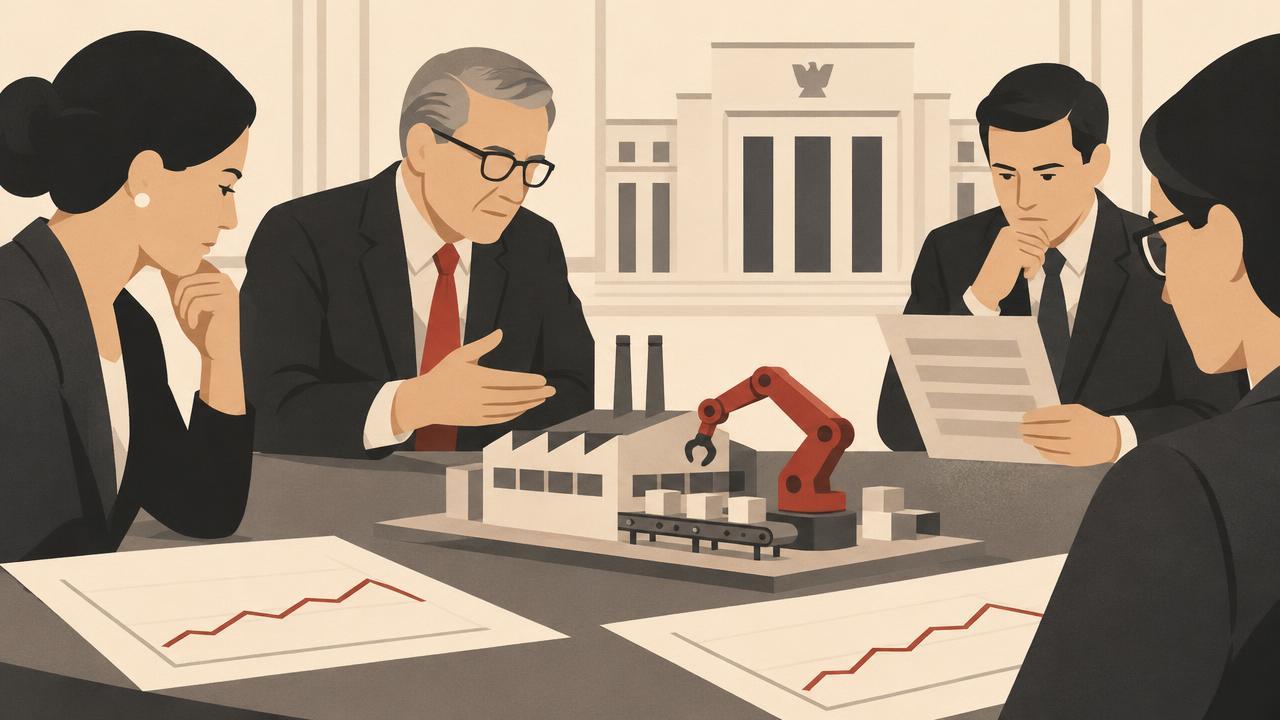
The economic effects of artificial intelligence may be smaller than both its strongest enthusiasts and its most pessimistic critics expect, venture capitalist Marc Andreessen said at a hearing at the Federal Reserve Bank of San Francisco on Monday. Andreessen co-leads the central bank’s Jobs and Productivity Task Force.
His position offers an early look at the thinking that may shape the task force’s recommendations to Federal Reserve leaders. The issue matters because the central bank’s assessment of AI’s economic consequences could influence its outlook for growth, inflation and interest rates.
Andreessen appeared alongside former Commerce Secretary Gina Raimondo at the hearing in the San Francisco Bay Area. The task force was created by Federal Reserve Chair Kevin Warsh, who studied at Stanford University and later spent 15 years teaching and conducting research there.
Another task force member, Stanford economist Chad Jones, was in the audience. Jones is currently working at Anthropic, and Andreessen said he did not speak because the company is preparing to go public.
Fast- and slow-changing sectors
Previewing his contribution to the task force’s report, Andreessen divided the economy into two groups. In fast-changing fields such as technology and media, innovation raises productivity and lowers prices. In health care, education and housing, he argued, regulation, limited competition and other barriers make technological progress more difficult.
Those slower-changing areas account for some of the largest expenses facing American households. Andreessen said rules and other obstacles could also restrain AI’s transformative effect across a substantial part of the economy, limiting both job losses and productivity gains.
In his view, a more modest impact could be welcome news for people concerned about widespread job losses. But it could also be negative for growth: if productivity improves very little, economic stagnation may continue.
Companies report gains
Warsh is bringing in outside experts and executives to introduce new perspectives into the central bank’s thinking about the economy. Max Levchin, chief executive of Affirm, told him that AI had made the company’s engineers five times more productive and reduced the cost of developing new features by 80%.
Patrick Collison, chief executive of Stripe, said the number of new businesses launching on its platform each week had doubled from a year earlier, a surge without precedent in the company’s 15-year history. Unlike established companies, startups are more willing to let AI independently develop products and fix bugs, potentially allowing them to grow faster with fewer employees.
Executives said the technology is already improving productivity in traditional industries, including some that Andreessen considers more resistant to change. Erik Wexler, chief executive of Providence, a large nonprofit health system, said AI tools that transcribe patient appointments are saving some physicians two to four hours of paperwork a day. He said one doctor described the tool as life-changing.
Warsh has asked all five task forces to recommend ways to improve Federal Reserve policymaking by the end of the year, though he cautioned last month that some might miss the deadline.