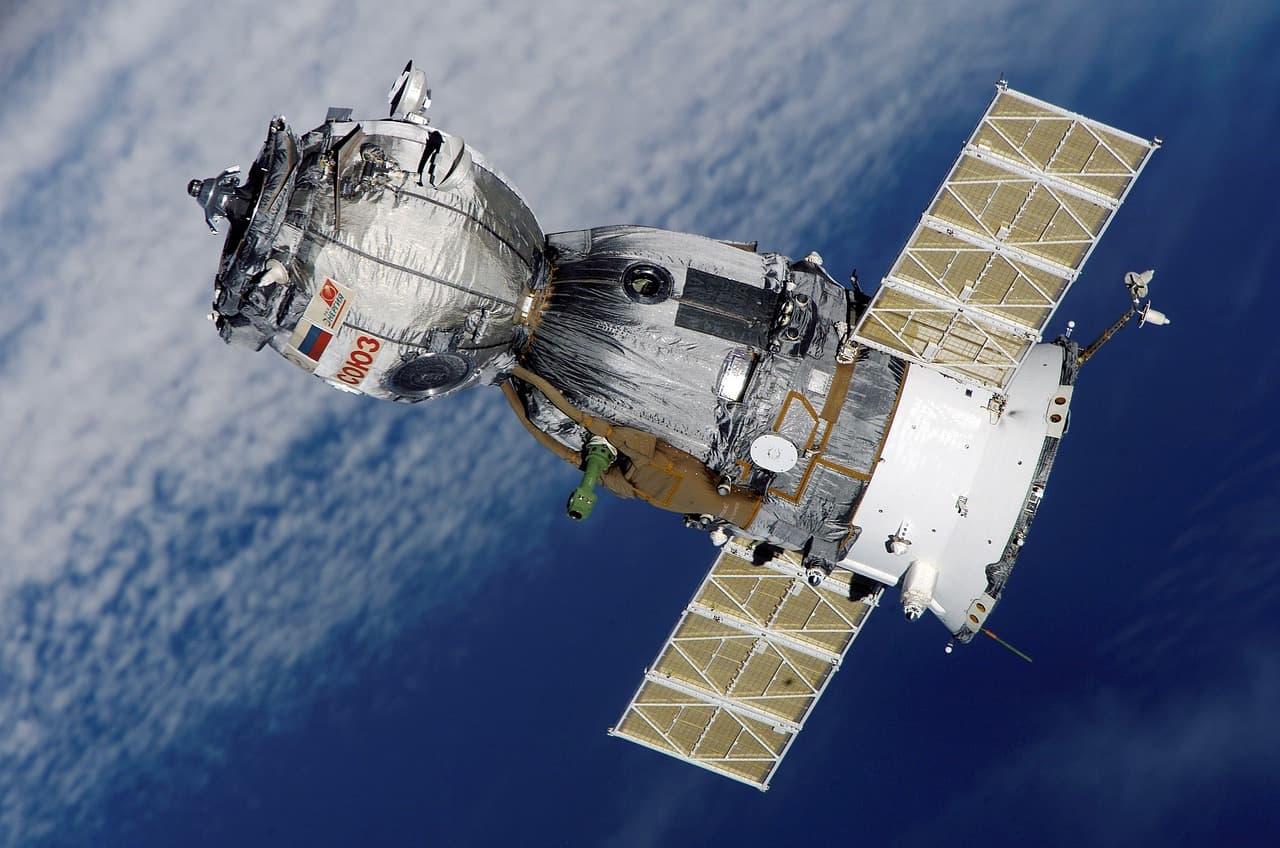
Google launched a prototype orbital compute satellite today aboard a SpaceX rocket that lifted off from California — the company’s first time sending one of its advanced chips into space. The satellite, built by Planet Labs, will test whether a Google Tensor Processing Unit (TPU), positioned as an alternative to Nvidia GPUs, can operate reliably in orbit.
The trial will verify that the system can supply roughly a kilowatt of continuous power, manage chip cooling, and run a variety of models to check for failures in real operational conditions. “We’ve done testing on the ground, but you know, there’s no test that’s completely as good as the real thing,” said Travis Beals, the Google executive overseeing Project Suncatcher.
How the satellite will operate and next steps
Once commissioned, the satellite will power up its TPU in 15-minute bursts to avoid overstressing the satellite’s power and thermal control systems. The current unit rides on a standard platform manufactured by Planet Labs; the two companies are also developing a demonstration expected to fly next year that will use two satellites more purpose-built for advanced compute. Those later versions will attempt to cooperate via a laser communications link.
This SpaceX launch carried more than 100 different payloads, including missions from Satlyt and Cowboy Space Company. What distinguishes Google’s payload from many of these startups (and even from some SpaceX efforts) is that Project Suncatcher is framed as a long-term program rather than a one-off demonstration.
The long-term vision and infrastructure constraints
What Beals calls a “long-term moonshot” targets the future space infrastructure and AI workloads. Google envisions a formation of 81 satellites flying in close proximity and processing in parallel.
“The bandwidth and the latency between TPUs really, really matters when you’re trying to run a multi-rack workload…we’re trying to look ahead to not just what workloads exist today, but where they will be in five years,” Beals said. One limiting factor is that the rockets required to scale orbital data centers cost-effectively are not yet widely available.
White paper and assumptions about launch costs
On Thursday, Google released a peer-reviewed version of its white paper on orbital data centers, one of the more rigorous analyses of how compute gets to orbit. The paper will be published in Joule. Although the researchers emphasize this is not an economic feasibility study, it lays out how the company expects rocket costs to decline over time.
Like other data-center operators, Google is looking to SpaceX for launch capacity; Google is also a major investor in SpaceX. The paper argues that SpaceX has achieved a roughly 20% per-year cost-reduction “learning curve” since the Falcon 1 era, and projects it’s reasonable to expect launch prices near $200 per kilogram by 2035.
To accomplish a similar trajectory based on Falcon 9 payload quantities, the authors estimate Starship would need to deliver roughly 370,000 tons of payload to orbit. That would equate to about 1,800 launches over the next 10 years — or 180 launches per year — assuming each mission carries 200 metric tons. That is a substantial assumption for a vehicle that has never flown more than a handful of times in a single year. SpaceX, however, projects much higher cadence; Elon Musk has even suggested Starship could reach an hourly flight rate by 2029, though such claims are highly ambitious.
Radiation tests, error rates and satellite lifespan
Google’s updated research offers a positive outlook on chip survivability in space. The company had to repeat particle-accelerator radiation tests after realizing the chip configuration used in earlier tests provided more shielding than the chips would experience in orbit. The corrected tests showed slightly higher error rates in the chip logic circuits, but Google remains confident the TPUs can handle large inference workloads over a satellite’s five-year lifespan.
“The error rate is very low if you’re thinking about typical inference operations, right? Like one in a million,” Beals said. “On the other hand, it was already problematic for doing, say, some mega-scale training run where you’re going to have many thousands of chips running for months.”
Why this matters
Google’s experiment is more than a technical demo: if successful, it could lay groundwork for a new class of orbital data-center infrastructure that reduces latency for certain AI workloads and increases parallel compute capacity. At the same time, building a cost-effective, fully scaled network will depend heavily on advances in the launch industry and the realization of sustained, low-cost Starship flights.