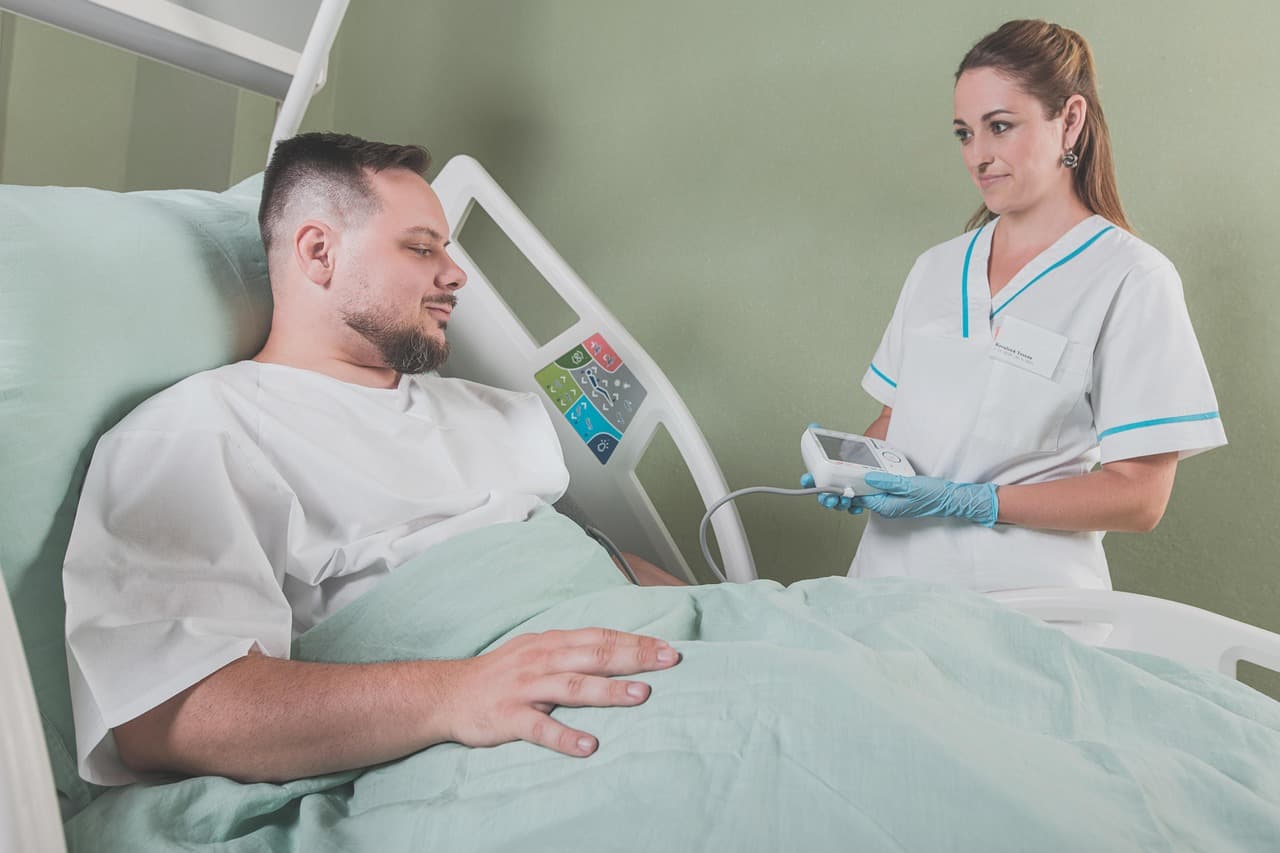
Healthleap, a startup developing an AI platform that reads patient records and clinician notes to flag in-hospital patients at risk of undiagnosed conditions, has raised $38 million in combined seed and Series A financing. The round includes an $8 million seed co-led by Sequoia Capital and First Round Capital, and a $30 million Series A led by Hummingbird Ventures. The company has not disclosed its valuation.
Founding and product pivot
Founded in South Africa in 2022 by siblings Jemima and Josiah Meyer, Healthleap began with a clinical nutrition tool Jemima built for dietitians. The company later pivoted to a broader platform designed to identify patients admitted to hospitals who may be suffering from conditions that are often missed early, such as malnutrition and delirium, Josiah Meyer, CEO and co-founder, told TechCrunch.
How the platform works
Healthleap integrates with hospital electronic health record (EHR) systems and uses language models to extract information from clinicians’ written notes — for example mentions of recent weight loss, poor appetite, or difficulty swallowing. Those signals are combined with structured data like lab results, vital signs and weights and fed into risk models that surface patients who warrant closer review. The company emphasizes that its software does not make diagnoses, but highlights items for further clinical evaluation.
According to Josiah, the system analyzes every adult inpatient record each night — labs, vitals, weights, medications, diet orders, diagnoses and clinicians’ notes — and writes a risk score into the care team’s existing workflow each morning. A dashboard provides additional patient trend information for clinicians.
Uses, validation and clinical focus
The platform is currently deployed in more than 50 hospitals and screens patients for conditions including malnutrition and delirium. Healthleap has also developed programs to identify aspiration pneumonia, pressure ulcers, and risk of readmission for congestive heart failure; these applications are undergoing further clinical validation.
Malnutrition was a logical initial focus because it often goes undiagnosed and can negatively affect recovery. Research suggests that 20% to 50% of hospital inpatients are malnourished, and studies have linked malnutrition to longer stays, impaired wound healing, infections and higher morbidity and mortality.
Customers, revenue and ROI claims
Healthleap says it has grown from three hospital partners to more than 50 over the past year. Its customers include Penn Medicine, Cedars-Sinai, Intermountain, Houston Methodist and Emory Healthcare. Revenue has grown more than 10x in the same period, though the company did not disclose exact figures.
The startup sells three-year contracts priced according to a hospital’s licensed bed count and also uses outcome-based pricing. Josiah said Healthleap measures the hard ROI that a hospital finance team validates and attributes to the company, and contracts to deliver multiples of the contract price based on that metric. He stated that every customer to date has seen at least a 5x hard ROI, with some reporting more than 20x annual total ROI.
As an example, Healthleap reports that at the Hospital of the University of Pennsylvania its malnutrition program generated $23.8 million in annualized financial impact, consisting of $6.3 million from additional reimbursement and $17.5 million from shorter lengths of stay.
Use of proceeds and future plans
Healthleap plans to invest the new capital in engineering, product, sales and customer success while adding support for identifying additional conditions. Meyer said the company ultimately aims to cover more than 40 major health conditions and to expand into outpatient and home-care settings.
The company’s rapid partner growth and reported financial impacts illustrate its early traction, while ongoing clinical validation will be important as it broadens its scope of screened conditions.