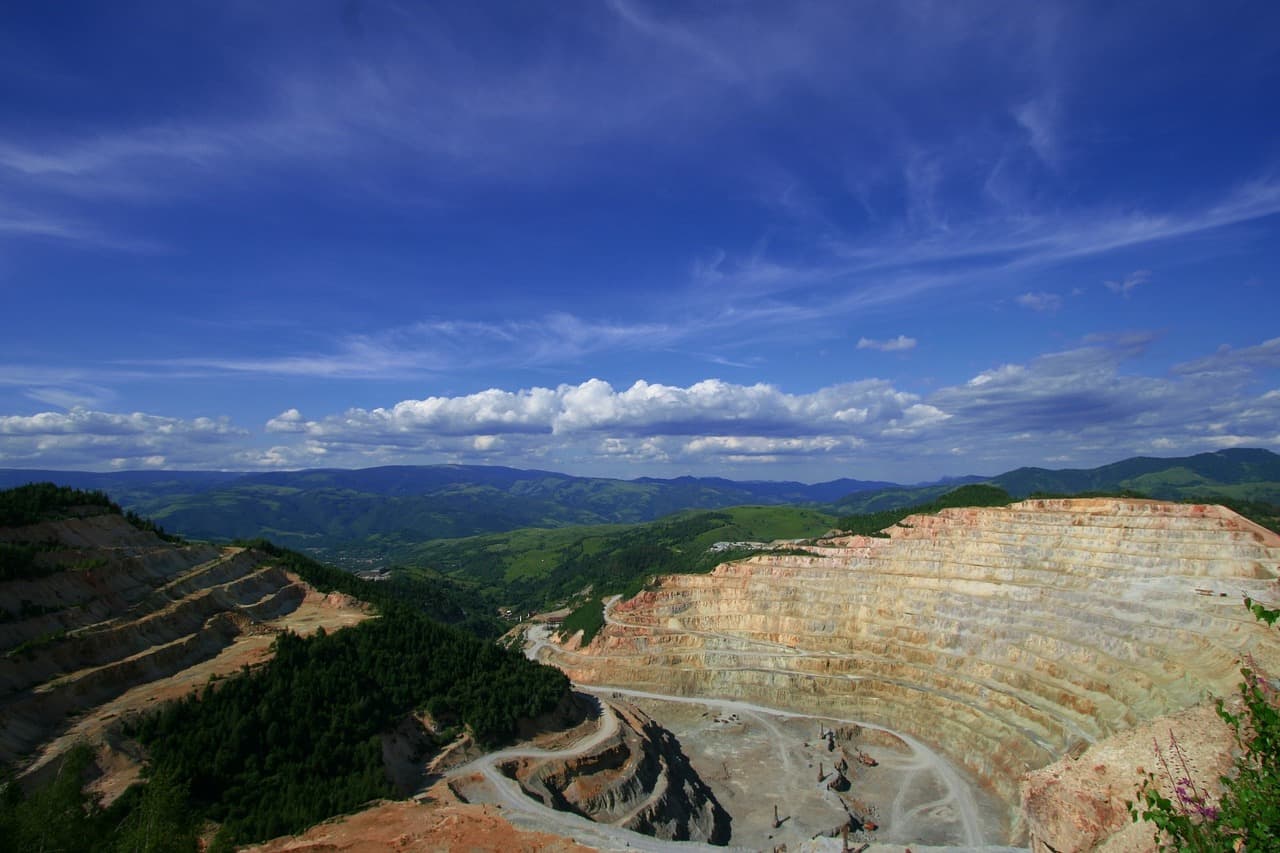
Mining is expected to expand its role in the global economy because it supplies key materials—such as copper, lithium and nickel—needed for electrification, renewables and battery storage. The International Energy Agency’s Global critical minerals outlook 2024 (May 17, 2024) projects significant demand growth for these minerals through 2040.
Despite this importance, mining remains among the world’s most hazardous industries, with fatality rates that vary widely by region. Members of the International Council on Mining and Metals (ICMM) reported 42 fatalities and more than 6,400 recorded workplace injuries in 2024 (Safety performance: Benchmarking progress of ICMM company members in 2024, July 10, 2025). Even in tightly regulated markets with strict safety standards, eliminating lost-time injuries and fatalities is still difficult.
Human and business consequences
Safety failures have extensive consequences. The human cost of lives lost or workers injured affects families, coworkers and communities. Incidents also create financial and reputational liabilities: catastrophic accidents can lead to multi‑billion‑dollar cleanup costs, production shutdowns and share price declines, and reputational damage can persist for years, eroding community trust and investor confidence.
Conversely, organizations with strong safety cultures often see a more engaged and stable workforce, better operational discipline and fewer disruptions—factors that support higher productivity.
Technological progress and remaining barriers
Over the past 15 years technological improvements have contributed to declines in mining injuries, but reductions in fatalities have recently stalled. In the United States, Mine Safety and Health Administration (MSHA) data show a fatal injury rate of 10–15 deaths per 100,000 workers; this rate has plateaued over the past five years after decades of improvement.
Meaningful safety transformation remains uneven across the sector, and several structural barriers continue to impede progress. These challenges persist even as new technologies provide avenues for improvement.
Spread of automation, remote monitoring and IoT
Starting around 2010, automation (including autonomous haulage and other autonomous equipment) and remote monitoring began to spread across the industry. Companies progressively increased deployment of these technologies; in recent years, autonomous hauling and equipment with Internet of Things (IoT) capabilities have become more common, typically with human oversight “in” or “on the loop.”
These technologies can enable safety improvements across four complementary levers: hazard and risk identification, real-time monitoring and intervention, learning and analytics from incidents, and controlled automated responses to emerging dangers.
Role of generative and agentic AI
Generative AI and agentic AI systems can extend and in some cases redefine these levers. Gen AI copilots in control centers can summarize safety data, identify root causes of near misses and draft incident reports in seconds. While human intervention and monitoring remain essential, agentic AI systems operating within predefined safety parameters are beginning to orchestrate preventive responses—such as adjusting ventilation or rerouting autonomous vehicles away from unstable ground.
Miners are experimenting with large language model (LLM)–based hazard and incident analytics that can process thousands of hazard reports, near‑miss narratives and investigation summaries to identify recurring precursors (for example, disabling or overriding alarms or breakdowns in contractor interfaces) and suggest targeted monitoring questions for future supervisors that could help avoid incidents.
Practical impact and what is required for scale
These approaches have the potential to remove some of the structural barriers mentioned earlier. To unlock the full potential of digital and AI‑driven safety, leading mining companies treat safety as a core enterprise priority tied explicitly to productivity, environmental, social and governance (ESG) performance and long‑term resilience. They translate objectives into an integrated, multiyear road map supported by strong data governance and cybersecurity standards that build the reliability and trust necessary to scale solutions across sites and functions.
Key success factors include an integrated multi‑year implementation plan, robust data governance, high standards of cybersecurity, and alignment between technological systems and human oversight.
Safety as a competitive foundation
Intelligent safety is becoming a source of competitive advantage in mining. Safety technology and operational excellence are converging into a single, data‑driven ecosystem. Combining automation with AI‑powered safety platforms and appropriate human oversight can contribute to better performance and worker protection, reduce unplanned downtime, improve asset utilization and support sustainability goals. The outcome is mines that are not only safer but also more productive, efficient and resilient.
Authors and editing
The article’s authors are Henrique Fagundes (partner, McKinsey New Jersey office), Vishal Agarwal (senior partner, McKinsey Singapore office), Yanto Yanto (partner, McKinsey Jakarta office) and Narendra Adoe (associate partner, McKinsey Jakarta office). The piece was edited by Jessica Marshall, executive editor in the Seattle office.