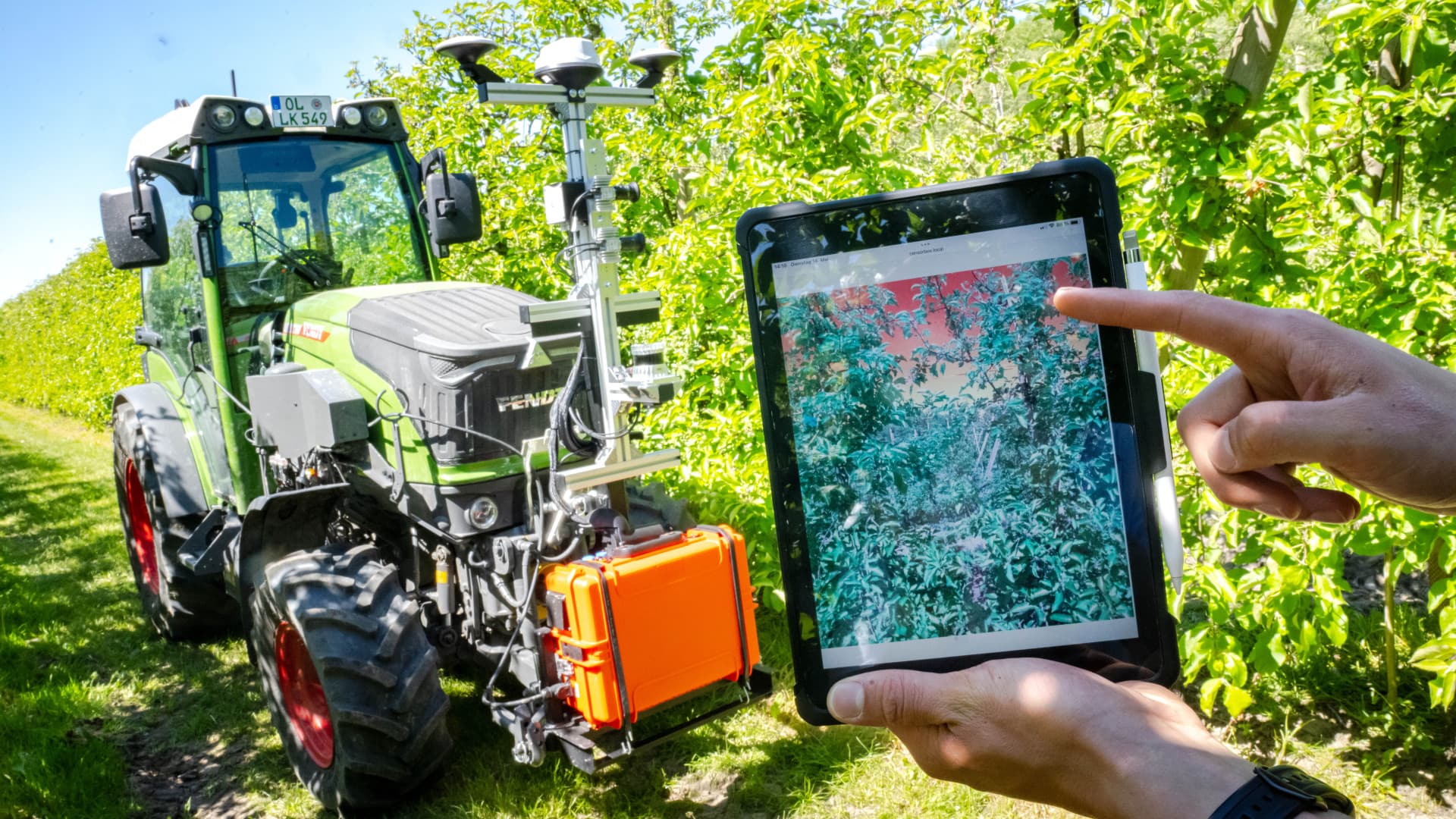
At the Portfolio AgroFuture 2026 conference, Maróti Miklós, CEO of AgroVIR, argued that artificial intelligence (AI) often produces its most significant gains in non‑glamorous areas: decision support, cutting administrative workload, and improving farm profitability. While image recognition remains a visible application (weed detection, targeted application), the biggest business impact can come from systems that assist decisions and handle routine admin tasks.
Three main AI directions: imagery, language models, decision support
Maróti outlined three primary AI directions in agriculture:
-
Imagery and image recognition: processing satellite, drone or real‑time camera feeds, particularly useful for targeted applications. This area typically attracts large machinery manufacturers and big IT players because of the volume of data and computing power required.
-
Language models and knowledge systems: farmers increasingly use these for information about varieties, technologies and cultivation recommendations. Such models significantly speed up work that previously required manual search and source‑checking.
-
Decision support: AgroVIR sees the greatest potential here. Decision support systems do more than present data; they seek correlations, provide benchmarks and offer concrete recommendations for decision points. These systems rely on structured data ingestion, anonymized and aggregated benchmarks, and KPIs, and can be trained and refined from their databases.
Cross‑learning and location specificity
Data sharing across countries and regions is useful: algorithms can learn from diverse practices. Maróti gave the example that solutions used successfully in chronically drier regions—such as methods to grow wheat without irrigation—can provide algorithms and farmers with ideas on how to adapt profitably or which alternative crops to consider.
Model errors and the need for critical use
Language models still suffer from inaccuracies or so‑called “hallucinations.” Maróti cautioned that these systems must be used critically: models can be biased if exposed to strong content and marketing signals that push them in a particular direction. Nevertheless, language models provide substantial time savings for routine information gathering.
Where does decision support begin and end?
Decision points range from strategic questions—what crop rotation suits a given soil, climate and machinery fleet under current subsidy conditions—to day‑to‑day operations such as which machine should work where tomorrow, timing operations, or optimal cultivation depth for a specific implement. AgroVIR aims to provide recommendations based on structured inputs, benchmarks and KPIs, continuously refining suggestions from collected experience.
Next big leap: full annual agrotechnical plans
Maróti said the next tangible breakthrough would be systems that do more than make partial recommendations and can assemble a complete annual agrotechnical plan: nutrient management plans, application maps and operational logic. Such integrated plans could eliminate significant administrative workload and replace weeks of planning effort.
Accessibility: can smaller farms benefit?
Although many assume AI is only for large enterprises, Maróti argued that simple, high‑value solutions exist—one example being speech‑to‑text data capture. A machine operator dictating: “I’m on field X, applied Y amount with this machine in Z time” immediately feeds into work time records, field registers and cost calculations without manual entry. One of AI’s promises is to compensate for the shortage of expert analytical capacity, making benchmarking and recommendation generation accessible to smaller farms.
Personal consultancy vs. scalable digital support
Some advisory tasks can be replaced—e.g., system usage support can be provided scalably by a chatbot—while complex, farm‑specific decisions still require professional oversight. The main change is that AI takes over many manual, repetitive tasks rather than fully replacing expert judgment.
Measurable business impact
Maróti emphasized that a digital system is sustainable only if it provides financial benefit to the producer. Practical indicators of success include cost and profitability optimization, better timing, more efficient input use and improved variety choice.
Conference and practical demonstration
Portfolio AgroFuture 2026 is a major domestic meeting on agrarian digitization, precision farming, and data‑driven decision making. Maróti Miklós will present at the event, showing concrete examples of how data and AI can be applied to everyday farm decisions.