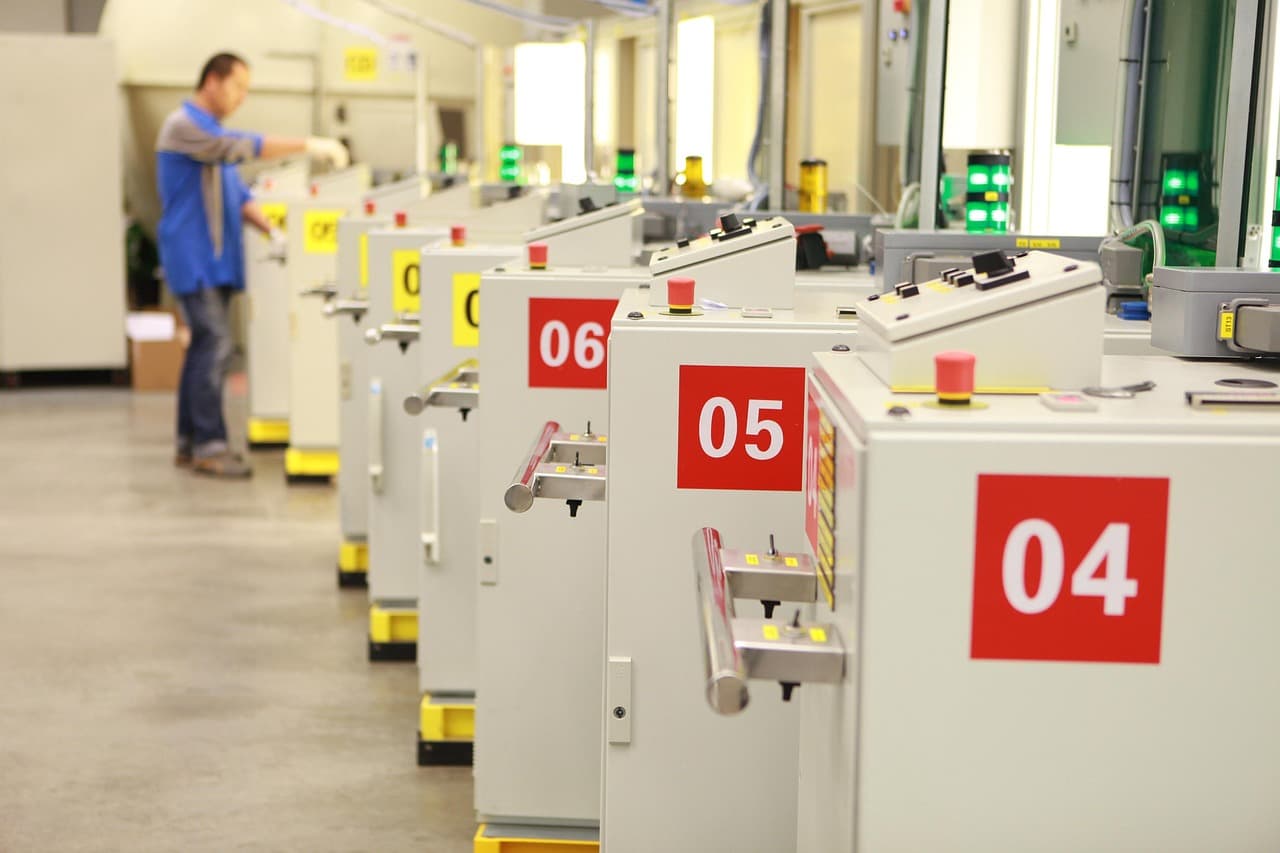
Most factory automation is fixed: robots and machines are programmed for a single task and product. Reconfiguring a line typically requires reprogramming, physical retooling or equipment swaps, a process that can take weeks or months. San Francisco-based Industrial Next says it has developed a different approach.
At TechCrunch Disrupt 2026 the startup presented self-contained robotic stations that run on proprietary foundation models linking vision, task context and motion control. Industrial Next says these stations let production lines be retooled in minutes rather than weeks without traditional programming, enabling automation of complex, delicate tasks that today often require human hands.
The company also announced on stage a partnership to evaluate its AI-powered dexterous manipulation with BMW Group Technology Office.
Founders and background
Industrial Next was founded in 2021 by Lukas Pankau and Allen Pan, both formerly of Tesla. Pankau served as a lead electrical architect at Tesla before moving to Waymo, while Pan led Tesla’s autonomous factory efforts and later became a chief architect at Neolix, an autonomous driving company. The idea for Industrial Next originated during their time at Tesla, where they encountered a gap between modern software-driven capabilities and decades-old factory equipment.
Their personal history informs the company story: Pankau has recounted that he once literally tripped over Pan sleeping on a factory catwalk after an all-nighter. Although their relationship did not start smoothly, they discovered complementary skills and a shared drive to improve industrial tooling.
Technical approach and industrial challenges
Pankau highlighted a fundamental problem: traditional industrial robots are usually programmed for very specific, repeatable tasks, so even small process or product changes can cause failures or costly downtime. That reality pushes manufacturers to simplify products to maintain repeatability.
Making robots truly flexible requires lots of training data, and robotics does not benefit from the vast internet-scale datasets available to other AI domains. Industrial Next’s approach is to rely heavily on high-fidelity simulation.
"We can make robots do all these cool things like dance around, because there’s data for that, but we can’t make them assemble high-precision things," Pankau explained. "This is where we’ve made a lot of progress on using simulated environments to do these high-precision and high-dexterity tasks. The secret sauce for the robots that we have is that we have given them an understanding of the process in general, but we build that understanding using an extremely high-fidelity simulation engine that is close to the real dynamics to where we can let the robot do these kinds of high precision tasks almost without seeing the parts at all."
In practice, Industrial Next’s robots practice in detailed virtual environments that closely mimic real-world physics. Their stations can be reconfigured, combined and redeployed across product lines. New tasks are introduced through simulation and demonstration rather than hard-coded scripts.
Early deployments
According to the company, some of its workstations are already used in manufacturing one of the world’s most popular smartphones. They perform tasks that manufacturers had struggled to automate for years, such as threading a delicate flex cable and snapping a tiny connector cap into place. Industrial Next did not disclose the customer.
Pankau also described a "film peeling" station where AI-powered robots remove protective film from camera modules and buttons at or above human speed with 100% accuracy, and retain that performance when moved to a new phone model and production line they have never seen before.
Vision and next steps
Pankau said the company was founded because the founders wanted capabilities they had lacked at Tesla, where they often bypassed robot stations because traditional programming proved ineffective. Industrial Next aims to apply its approach to tasks more complex than phone assembly and ultimately to end-to-end car manufacturing without human touch.
The demo at TechCrunch Disrupt 2026 and the evaluation with BMW Group Technology Office suggest that Industrial Next’s solution has moved beyond research into pilot deployments. Its effectiveness will be tested in real-world production environments, particularly on products and processes that have been difficult to automate so far.
Summary
Industrial Next aims to reduce production line changeovers from weeks to minutes using AI-driven, simulation-trained robotic stations. Founded in 2021 by former Tesla engineers, the startup has early customers in consumer electronics and is beginning formal evaluations with BMW Group Technology Office.