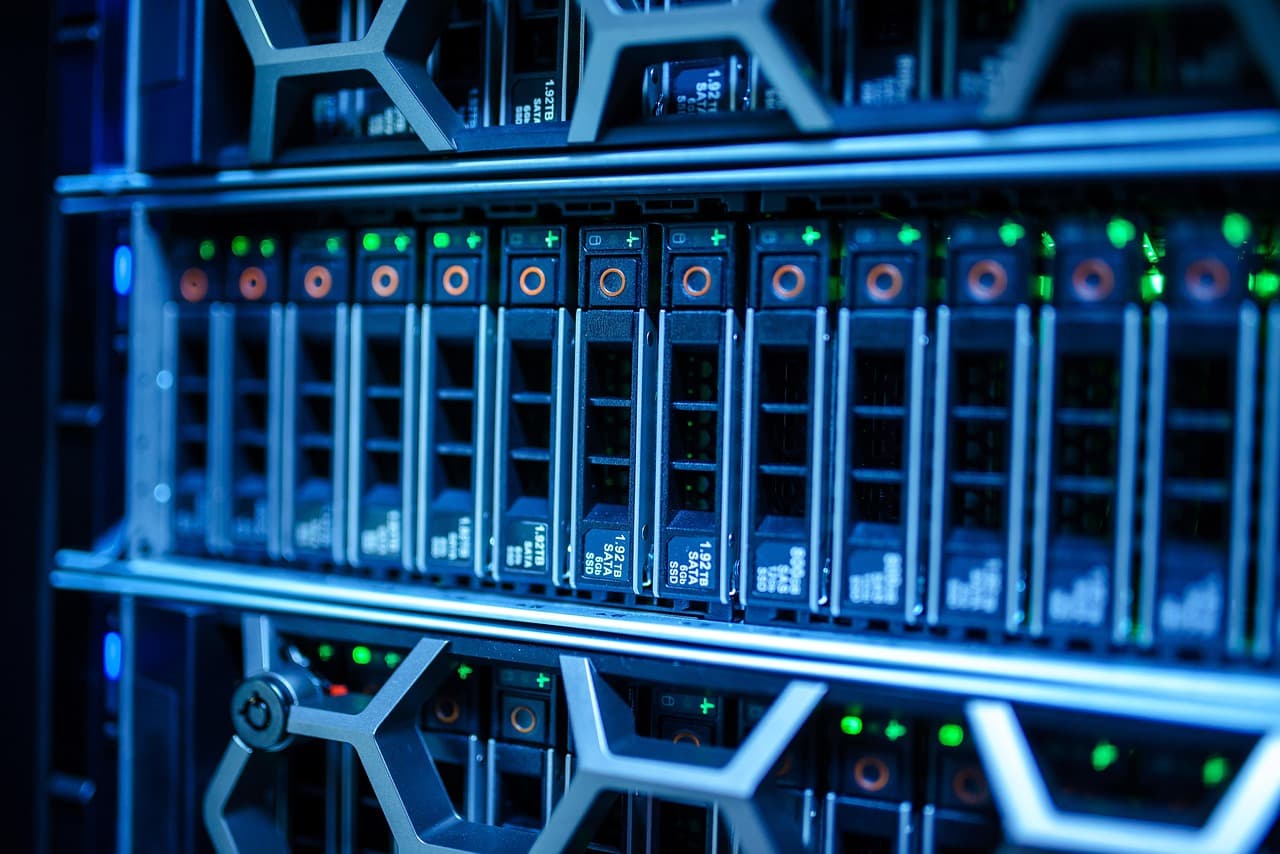
Digital Realty opened an innovation lab in Ashburn, Northern Virginia, in September that lets the company test new data-center technologies and show customers, lawmakers and journalists what it looks like inside one of the world’s densest data-center regions.
What the lab reveals
The most immediate impression inside the test server hall is a persistent, loud fan noise from the cooling systems that manage racks of AI chips. The servers produce substantial heat; beneath a glass floor visitors can see pipes and infrastructure of a closed-loop cooling system. The environment felt like standing inside a single, very large computer.
One closet-sized rack contained a gold-colored Nvidia AI system populated with multiple AI chips. The gold finish is symbolic — Nvidia associates it with high value and performance — and Digital Realty engineer Tor Nyström estimated the entire rack’s cost at about $1 million.
Access and secrecy
Gaining entry to operational data centers is difficult. Some companies declined tour requests outright, while others require non-disclosure agreements; server halls themselves are typically off-limits. That secrecy contributes to local backlash against data centers, alongside concerns about electricity and water demand.
Digital Realty allowed photography of its innovation lab and a look at a nearby campus under construction, demonstrating that companies can illustrate facility operation without exposing proprietary details.
The physical reality of AI
AI workloads are not intangible: they are racks of servers, cabling, cooling systems and large electricity consumption — and sometimes significant water use. From the outside, data centers often resemble massive, windowless warehouses. The more controversial elements are the infrastructure used to power and cool these facilities.
A short drive from the lab is Digital Realty’s Digital Dulles campus, which the company says could eventually include 13 data centers and more than $10 billion of investment over the next decade.
Cooling and power
Digital Realty is planning cooling approaches that rely more on energy than on water, and on the site visited there were no large water-cooled towers that would be clearly visible where water-based cooling is in use. Visible infrastructure includes multiple electrical substations and whichever cooling technology is deployed — from water circuits to rows of industrial air conditioners that require significant power.
The author counted nearly 40 diesel generators connected to one data-center building. Digital Realty spokesman Kevin Gundersen said those generators are used for backup power and intermittent testing, not continuous operation. Normally the campus draws power from the broader grid; in Virginia that supply is largely natural gas and nuclear generation.
International expansion
Digital Realty is also considering at least three more innovation-lab locations: Singapore, São Paulo (Brazil) and Johannesburg (South Africa).
Conclusion
The Ashburn lab provides a tangible view of how AI is physically realized: expensive racks of hardware, robust cooling systems and significant energy resources. The site and the company’s expansion plans underline the practical pressures behind debates over data-center growth and local resource impacts.